The mattress affects sleep quality and back health more than the bed itself — and a mistake here is not noticeable at once, but builds up over months of back pain or sleepless nights. Consider five things: firmness for your weight and position, type (spring or springless), size and height, special needs, and the manufacturer. We go through each one using MeBelle mattresses.
Sleeping position and the right mattress firmnessPocket Spring or springless — how both types are built
Step-by-step guide
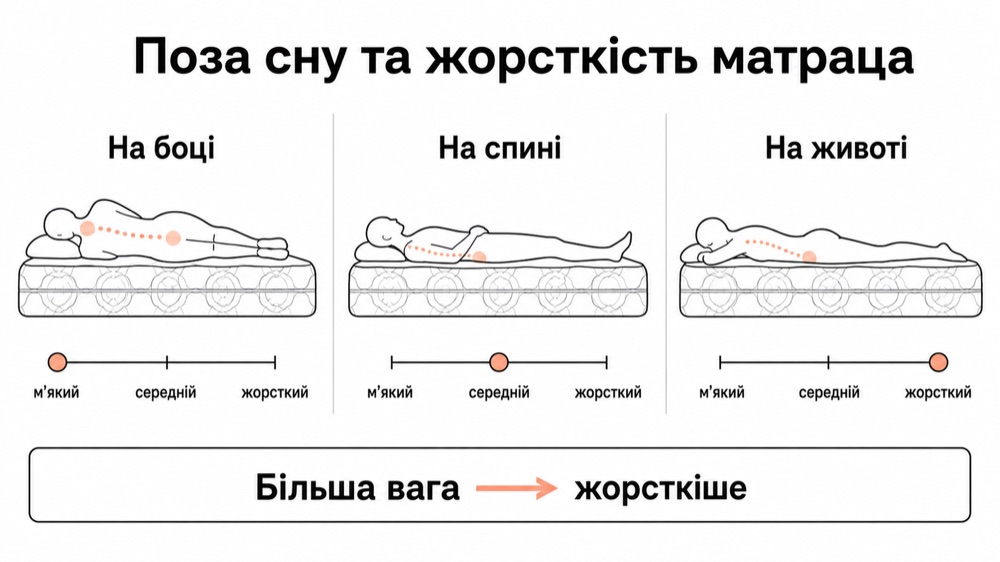
Match firmness to your weight and sleeping position. Side sleepers are more comfortable on a medium or softer mattress — the shoulder and hips need to sink in, otherwise the spine bends. Back or stomach sleepers need more support — medium or firm. The heavier the body, the firmer the mattress needs to be: a soft mattress feels fine to a lighter person, while a heavier person sinks too deep.
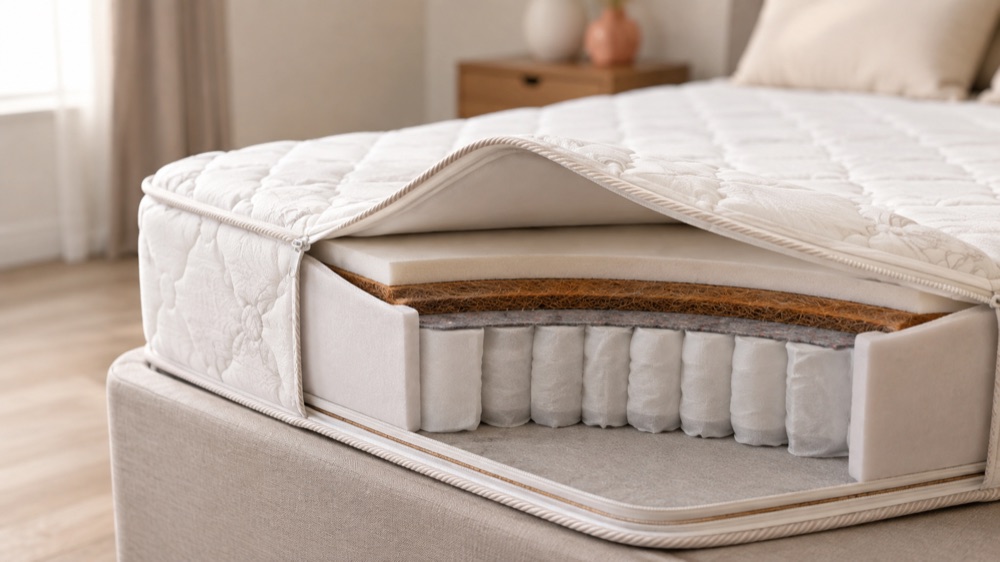
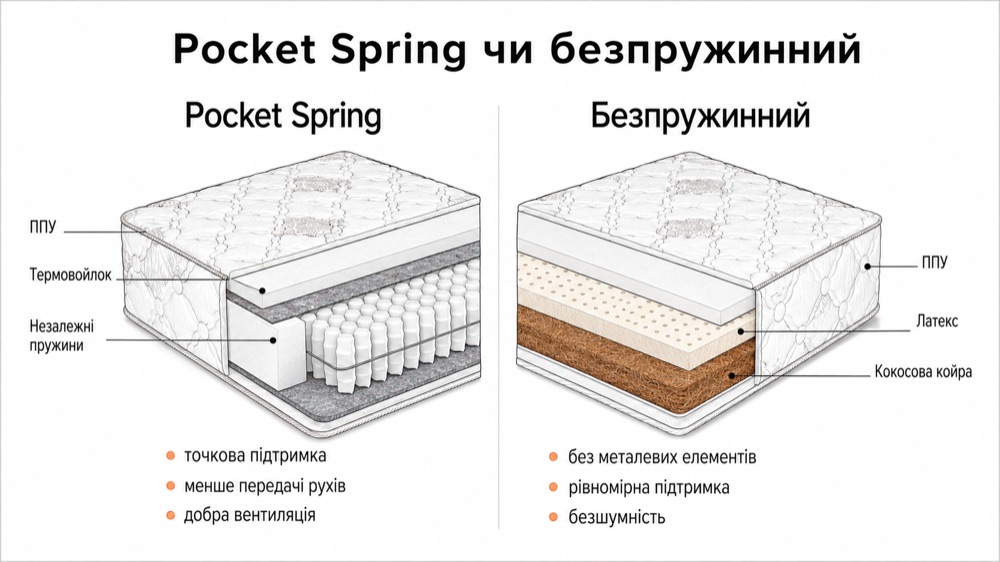
Choose the type: spring or springless. Pocket spring units support each area of the body individually and pass on almost none of your partner's movements — a good balance of orthopaedic support and price, with good ventilation. Springless mattresses (polyurethane foam, latex, coconut coir) have no metal parts, are silent and have a clearly defined firmness across the whole surface.
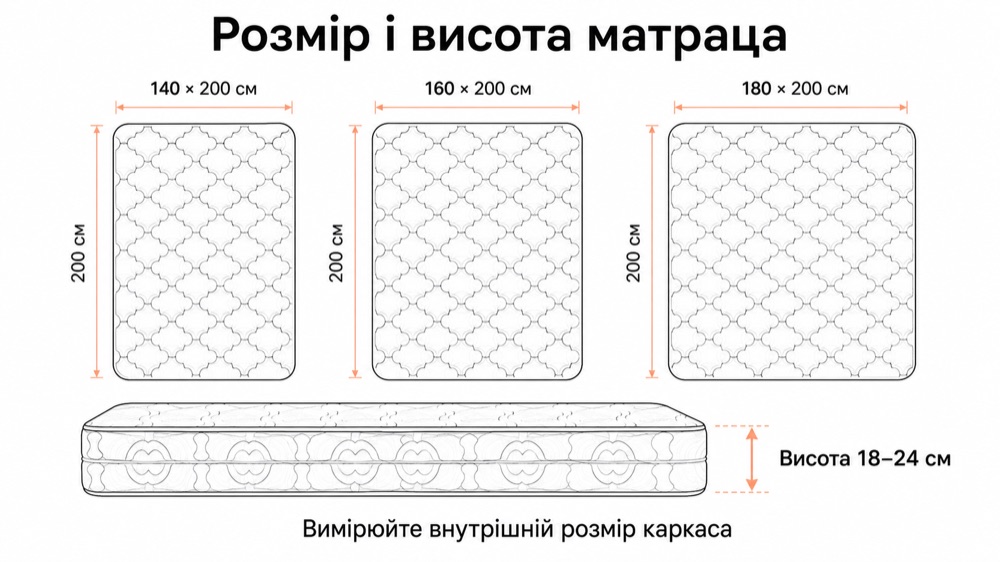
Work out the size and height. The mattress must exactly match the inner size of the bed frame (for example, 160 × 200 cm) — measure the mattress recess itself, not the overall dimensions of the bed. A height of 18–24 cm is standard for a full orthopaedic mattress; taller models are easier to get up from and look more substantial in the interior.
Consider special needs: children, allergies, weight. For children — moderately firm springless mattresses: the spine is still developing and needs even support without sinking deep. For allergy sufferers — hypoallergenic fillings (latex, coconut) and a removable, washable cover. For higher body weight — reinforced spring units or mattresses with high-density polyurethane foam. Two-sided “winter/summer” mattresses with a different firmness on each side last twice as long.
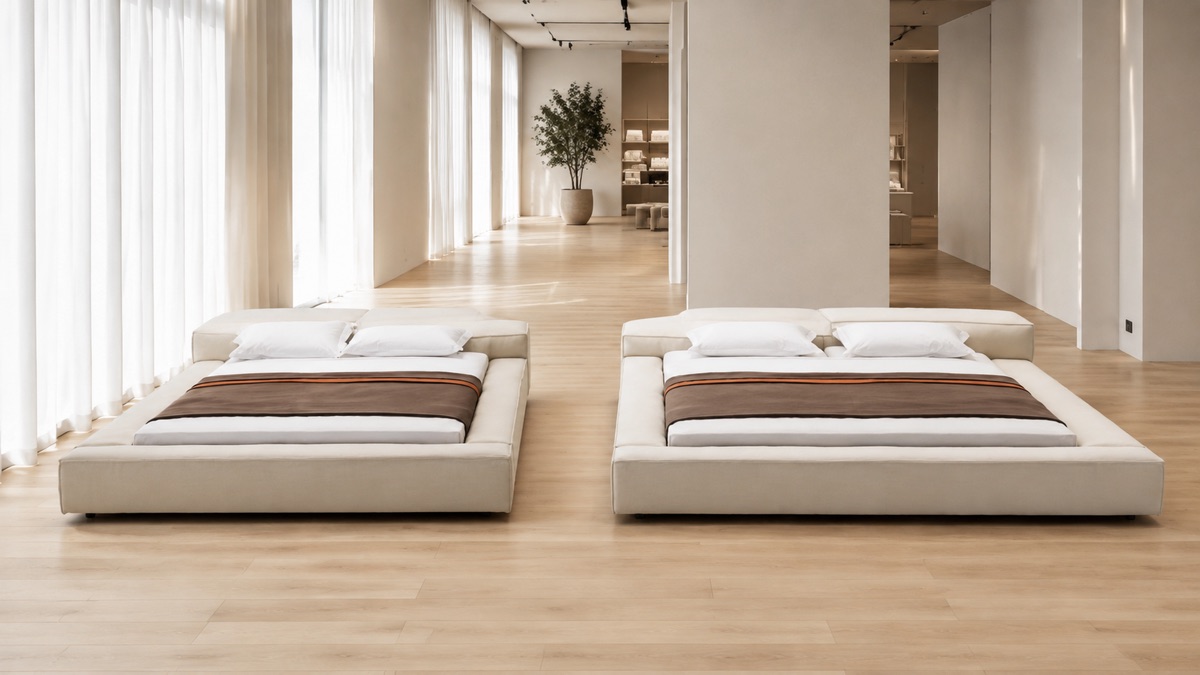
Order a bed + mattress set. It is easiest to choose the mattress together with a bed of the right size — the size then carries over automatically and a mistake is impossible. MeBelle offers orthopaedic mattresses of different firmness: 24-month warranty, free storage of your order at our warehouse for up to 6 months, delivery across Ukraine.
Common mistakes when choosing a mattress
Choosing firmness “like my friends have” rather than for your own weight and position. Firmness is individual: the same mattress feels ideal to one person and like a plank or a sagging hole to another. Go by your own weight and usual sleeping position, not by other people's reviews or advertising.
Measuring the outer dimensions of the bed instead of the inner recess. A bed frame is several centimetres wider than the sleeping area (side panels, decorative piping). The mattress is chosen to fit the inner size of the recess it actually sits in — check this figure in the bed model's specifications.
Not checking the filling type against your body temperature. Memory foam follows the contours of the body well but can feel hot in summer because of weaker ventilation. If you tend to feel the cold or live in a hot climate, look at mattresses with an open structure (Pocket Spring, coconut) for better airflow.
Buying the cheapest thin mattress “just in case” or for a guest bed. A mattress less than 15 cm high rarely keeps its orthopaedic shape for more than a season or two, even if it is not used every day. The filling degrades over time regardless of load — a thin budget option will need replacing sooner than makes it worthwhile.
Ignoring whether the mattress is two-sided. A one-sided mattress wears unevenly where you lie most often. A two-sided model (“winter/summer” or simply symmetrical) lets you flip the mattress every few months and significantly extends its life at no extra cost.
Frequently asked questions about choosing a mattress
What mattress firmness should I choose?
It depends on your weight and sleeping position: for side sleeping, medium or softer; for sleeping on your back or stomach, medium or firm. The heavier the body, the firmer the mattress needs to be to support the spine properly.
Which is better: a spring or a springless mattress?
Pocket springs give targeted orthopaedic support, pass on almost none of your partner's movements and are well ventilated. Springless mattresses (polyurethane foam/latex/coconut) have no metal, are silent and have a clearly defined firmness. Both are good options — the choice depends on your budget and preferences, not on which one is objectively “better”.
How do I choose the mattress size?
The mattress must exactly match the inner size of the bed's sleeping area, for example 160 × 200 or 180 × 200 cm — measure the recess, not the overall dimensions of the frame. If you order a bed from MeBelle, the mattress is matched to its size automatically.
What is the best mattress height?
18–24 cm is standard for a full orthopaedic mattress with several layers of filling. Thinner models (up to 15 cm) are only suitable for occasional guest use and lose their shape faster.
Which mattress should I choose for a child?
A moderately firm springless mattress — a child's spine is still developing and needs even support without sinking deep. A soft mattress that feels cosy to an adult is not suitable for a child.
How long does it take to make a mattress to order?
Our manager will give you the production time for your specific order; delivery across Ukraine. You can order the mattress together with the bed as one set — the size is then matched automatically.
In short
Firmness — for your weight and sleeping position, not “like my friends have”.
Type — Pocket Spring for ventilation and targeted support, springless for silence and no metal.
Size — by the bed's inner recess; a height of 18–24 cm is standard.
Special needs — moderately firm for children, a hypoallergenic removable cover for allergy sufferers.
Two-sided design — flipping every few months extends its life.
From 80×160 for a three-year-old to 120×200 for a teenager: how many years each size lasts, when you need a safety rail, and whether it's worth buying a bed "to grow into".