

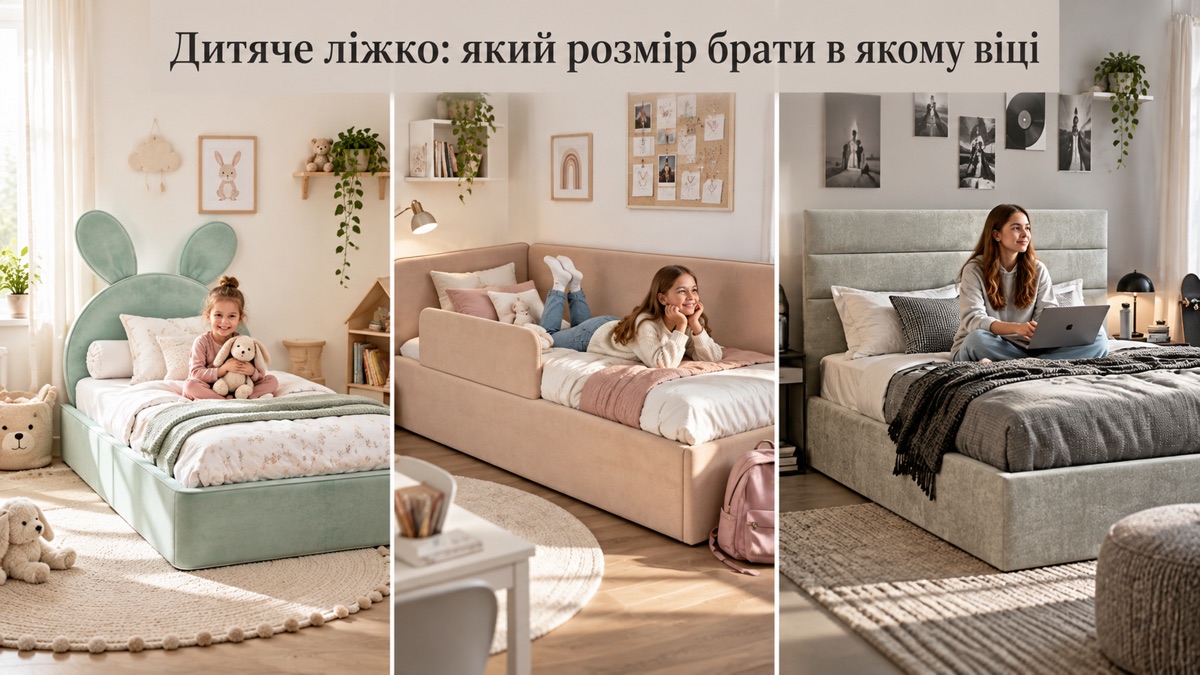
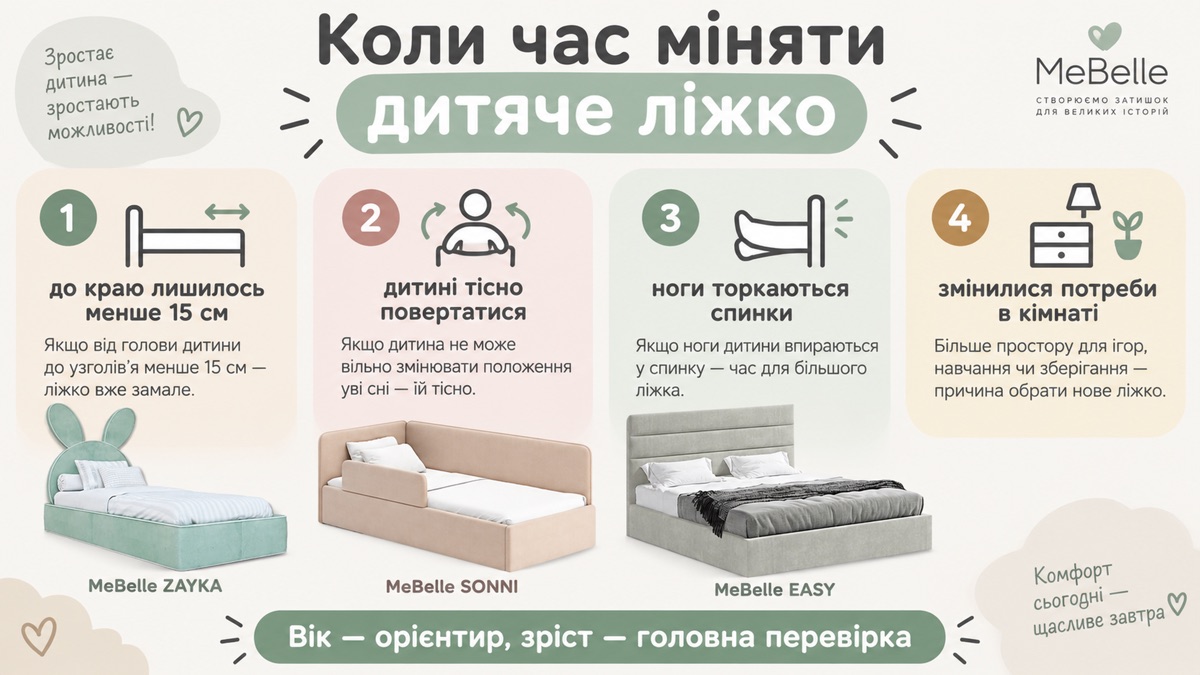
On average, a kids' bed is bought twice: first when the child moves out of the cot, and again when they no longer fit into it. The only question is when the second time comes.
Let's go by age: how long each size lasts and where the limit is beyond which "to grow into" stops working.
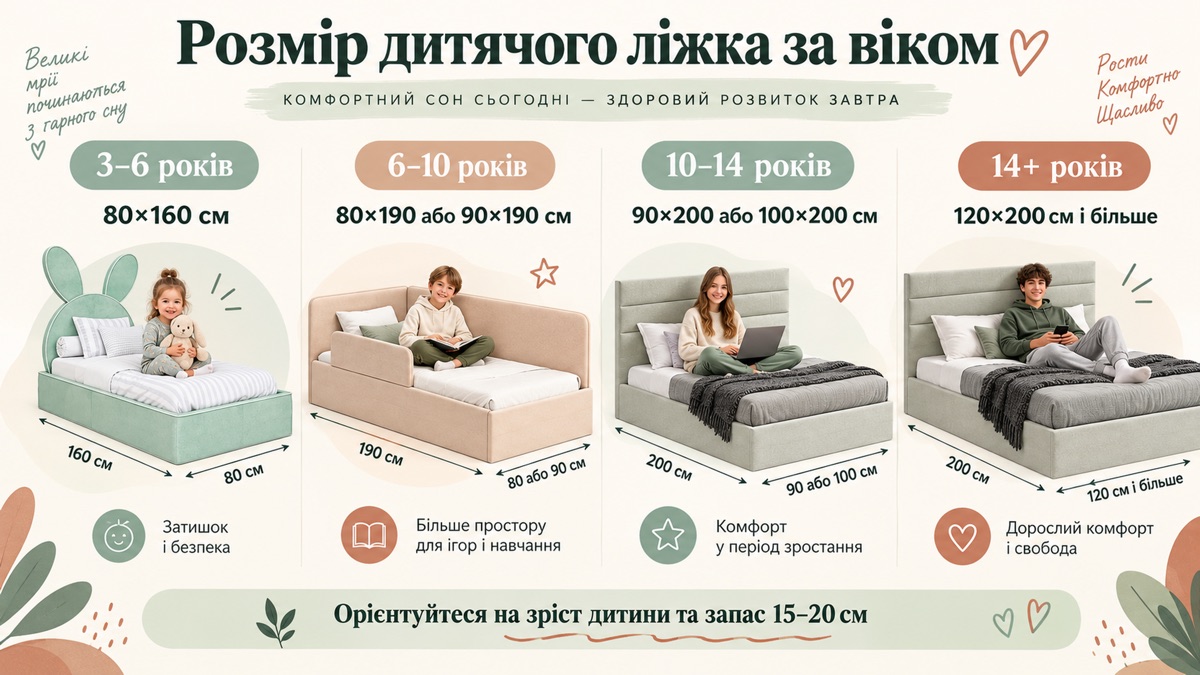
3–6 years: 80×160 cm
The most common first size. At this age a child is about 110–120 cm long when asleep, so 160 cm gives about four years of margin.
What matters most here is the safety rail. A three-year-old falls out of bed not because they sleep restlessly but because in the morning they forget where the edge is. The rail isn't needed for ever: usually it stops being relevant at around five or six.
We have ten models in this size. A safety rail — 80 × 30 cm, ₴1,890 — can be ordered for any of them: on the model page it is a tick box among the optional extras, and if it isn’t there yet, our manager will add the rail to your order. See the kids’ beds with a safety rail selection.
What not to do: buy a 90×200 straight away "so it lasts". A large bed in a small room eats up space for play, and at this age play matters more than extra length.
6–10 years: 80×190 or 90×190 cm
By now the child sleeps in the bed rather than plays in it, and 190 cm is enough up to a height of about 175 cm — often right until they leave school.
The difference between 80 and 90 cm of width is more noticeable than it seems. Eighty is just a bed. Ninety is a bed where you can lie across it with a book, sit together with a parent in the evening, and not fall off when you turn over.
If the room allows, take 90.
We have eight models in 80×190 and three in 90×190.
10–14 years: 90×200 or 100×200 cm
The point where the bed stops being a kids' bed. Two hundred centimetres of length is already the adult standard, and it will be enough for good.
A new requirement appears here: storage space. A teenager has more things, and a kids' room usually has just one wardrobe. A pull-out drawer or a compartment under the base solves the question of where to put seasonal clothes and bedding.
A drawer is confirmed on SLEEPY, KAYA and NIMBA. A lift-up storage base is a separate option, available on any of our beds.
From 14 years: 120×200 and larger
Formally this is no longer a kids' bed but a small double. Yet it's the one most often bought for teenagers — not because of the child's size, but because it keeps serving: through student years, in a guest room, in a first rented flat.
Our MALFIE model is made in seven sizes — from 90×200 to 180×200 cm. So the same model can be bought for a teenager and kept by an adult.
Should you buy "to grow into"?
The short answer: length — yes, width — according to the size of the room.
Length is what runs out suddenly: a child shoots up over one summer, and their feet hit the end. Here a margin is justified, and 190 cm instead of 160 cm doesn't cost much more.
Width is another story. A 120 cm bed in a 9 m² room takes up a third of the floor, and instead of a desk or a play area you get an empty mattress. Take the width that's needed now.
A practical guide: leave a walkway of at least 60 cm along the side of the bed, otherwise you'll have to stand on it to make it.
Plan the mattress at the same time
The bed comes without a mattress. For a kids' bed this matters for two reasons.
First: a gap between the mattress and the side of the bed is unacceptable. In an adult bed a two-centimetre gap is a trifle; in a child's bed it's a place where a hand or foot can get caught.
Second: firmness. Until the teenage years a child needs a medium-firm surface — the spine is still developing, and a soft mattress that an adult finds pleasant works against it here.
So it's better to order the mattress together with the bed: then the size is matched automatically and a mistake is impossible.
In short, by age
- 3–6 years — 80×160 cm, always with a safety rail
- 6–10 years — 80×190 or 90×190 cm; if the room allows, take 90
- 10–14 years — 90×200 or 100×200 cm, ideally with a drawer or a storage compartment
- from 14 — 120×200 and larger; this is a bed "for good"
If the room is non-standard or the bed has to fit into a recess, give our manager your figures. For us, size is a parameter, not a product code: we'll make it to the exact centimetre.
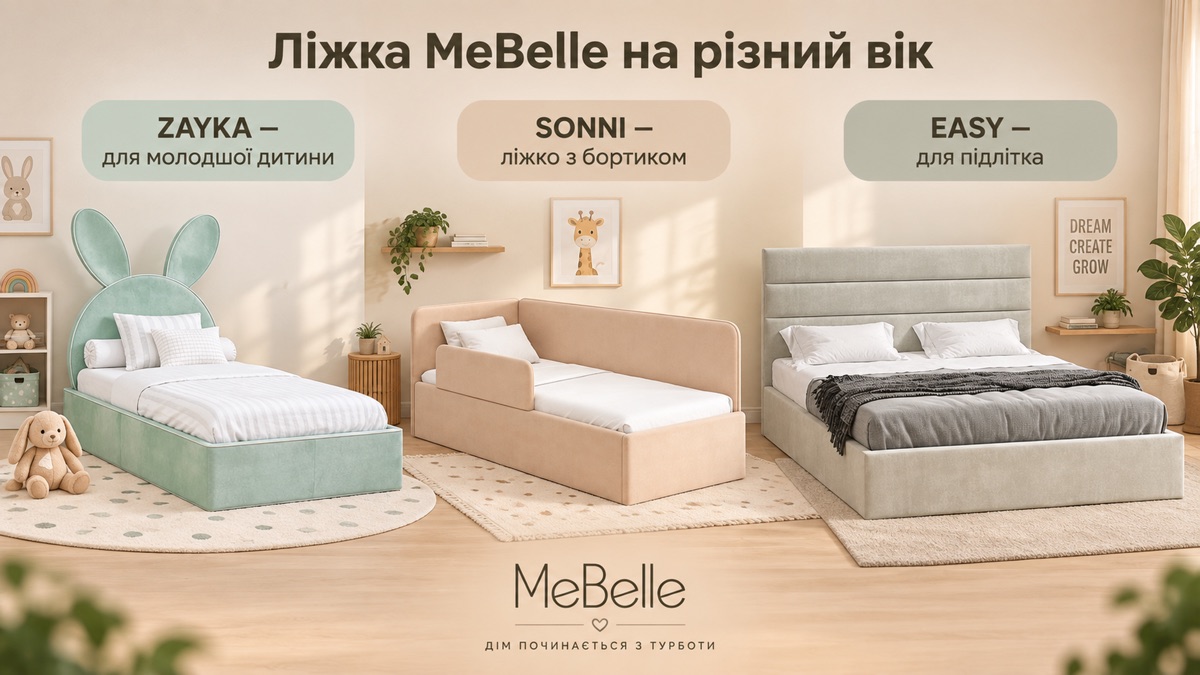
Read also: a bed for a child aged 3–6 and a bed for a teenager.
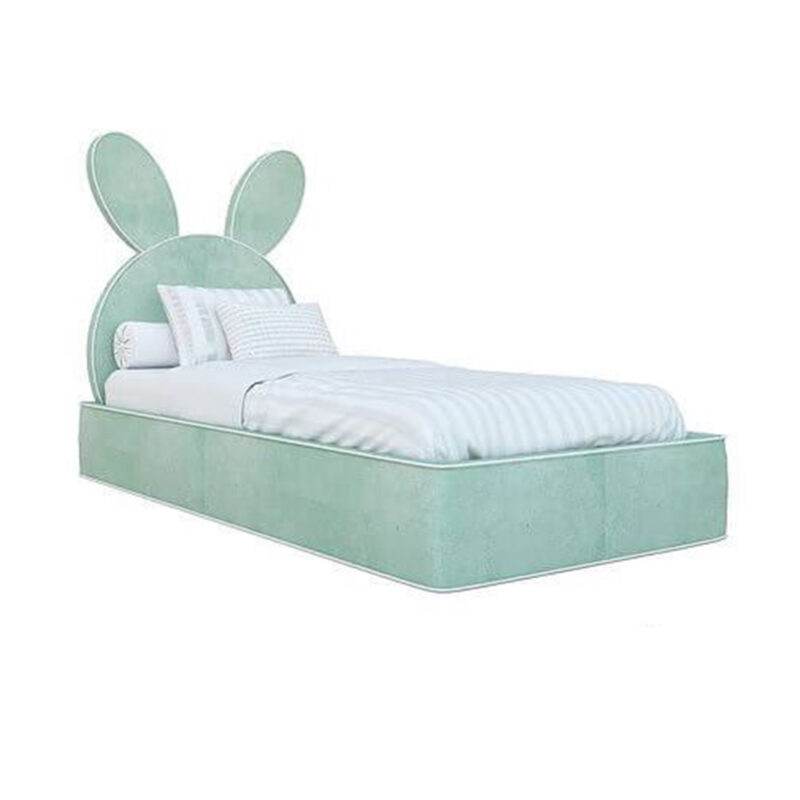
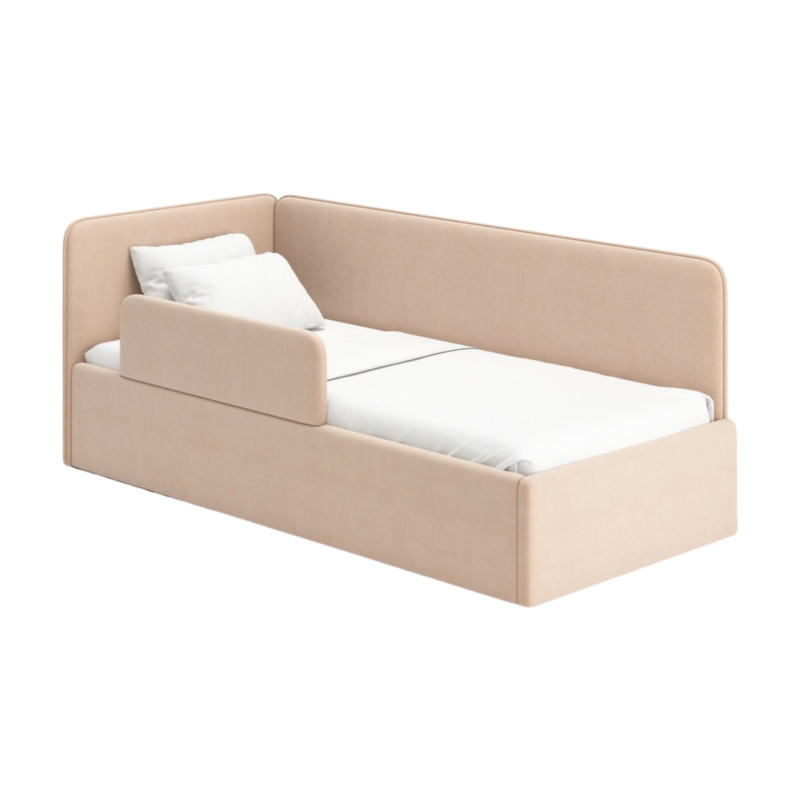
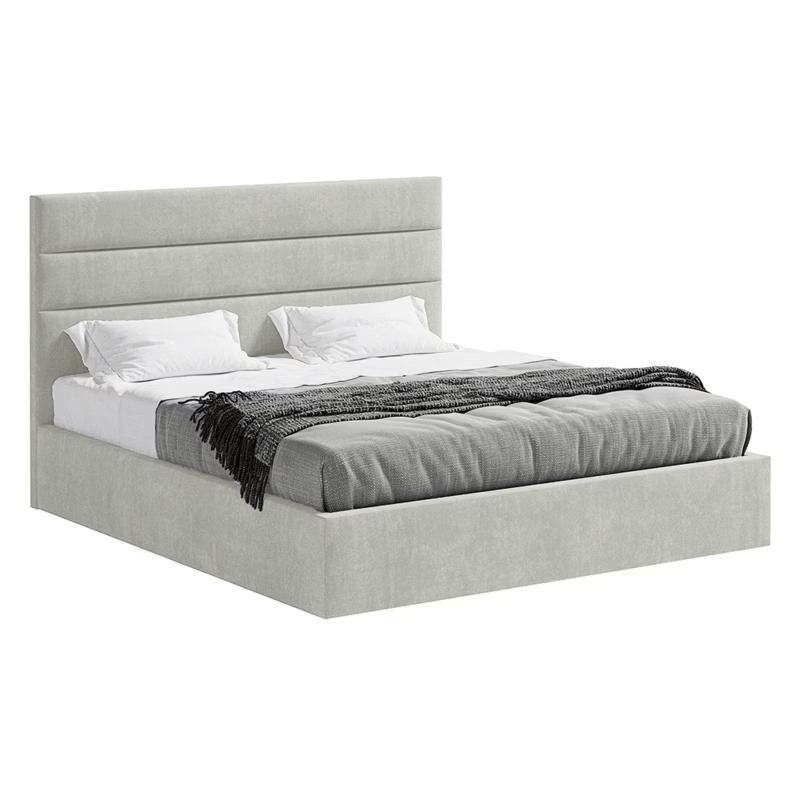
From a first bed to a teenage one — the whole range from one manufacturer.
Choose by age →