

The second bed purchase for a child is almost always late. Parents go by the length ("they still fit") and don't notice that the bed has stopped working for another reason.
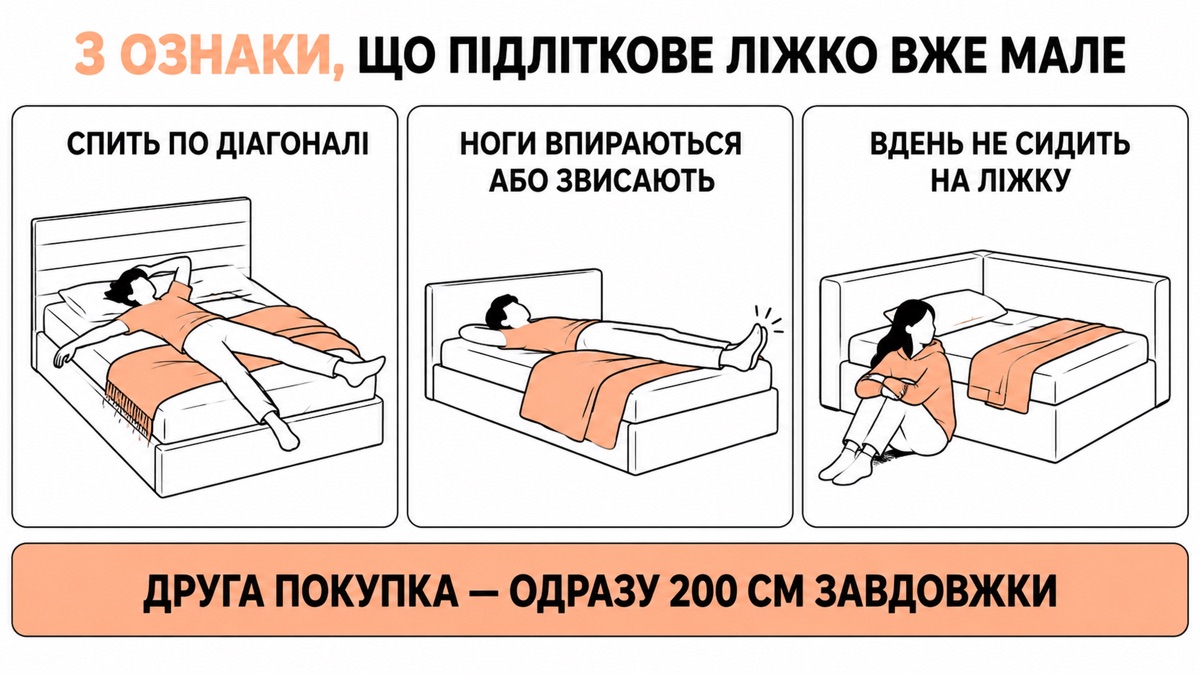
Three signs the bed is already too small
The child sleeps diagonally or across the bed. The most reliable signal, and it is usually put down to "tossing and turning". In fact the body is looking for space that isn't there in the width.
Feet push against the end or hang over. This one is obvious, but it comes last: the length runs out later than the width.
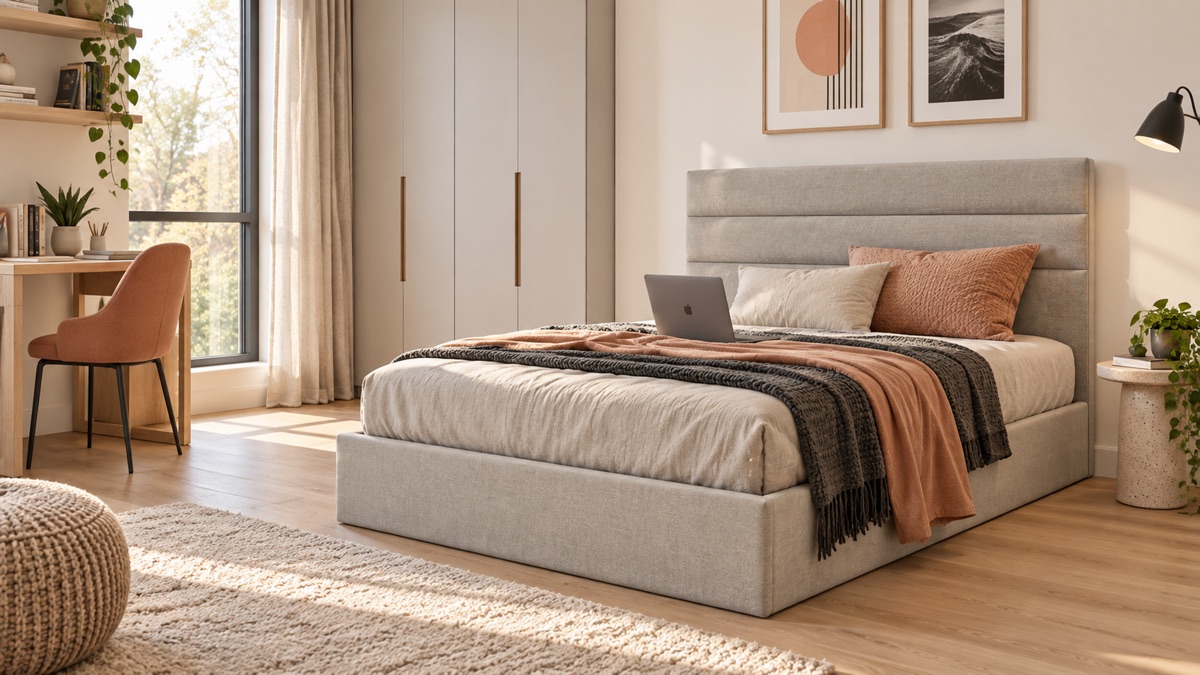
Nobody sits on the bed any more. A teenager spends much more time in their room than a younger child, and their bed is also a sofa: they sit there with a laptop, they sit there with friends. A narrow bed is no good for that, and the child simply stops using it during the day.
The third sign is the most important, because it is what determines the size. A bed for a teenager is not just a sleeping place but the main piece of furniture in the room.
Length: 190 or 200
The rule is simple: bed length minus height should leave at least 20 cm. A teenager 165 cm tall sleeps comfortably on 190 cm. But growth doesn't stop there.
Boys grow until 18–19, and their final height often exceeds 180 cm. So for the second purchase it makes more sense to go straight to 200 cm: a bed that won't need replacing again, at 17 or at 25.
The price difference between 190 and 200 is less than the cost of a third purchase.
Width: where "kids'" ends
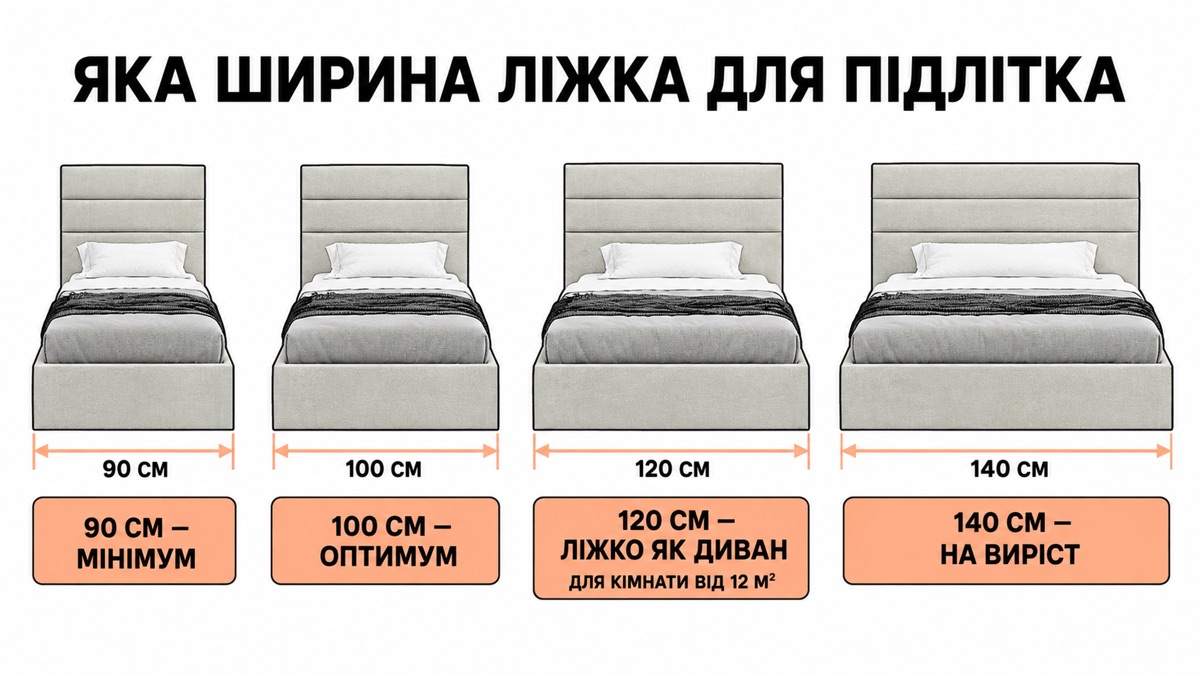
80 cm is out of the game. This is a size for a younger child. A teenager sleeps on 80 cm but doesn't rest, and sitting on such a bed is uncomfortable.
90 cm is the working minimum. A classic single. You can sleep properly and sit on it too. If the room is small, this is an honest option.
100 cm is the optimum for a teenager. Ten centimetres over the standard are barely noticeable in the room but give a margin you feel every night. And sitting on the bed during the day becomes comfortable.
120 cm, if the floor area allows. On 120 cm a teenager lies with a laptop, sits with a friend, spreads things out: the bed really works as a sofa. This is the best solution when the room is 12 m² or more.
140 cm, with an adult in mind. This makes sense if you are buying the bed "for good": after school the room will become a guest room, or your child will stay in it as a student.
A detailed comparison of widths is available separately: single or small double: 90, 120 or 140 cm.
Models that cover the transition in one product
The convenient thing is that a number of our models come in several sizes at once, so you choose the design once and the size for your current needs:
- VERTA: from 90 × 200 to 180 × 200 cm, seven sizes. The widest size range among our kids' models.
- TEAMO and TOPPY: six sizes each, from 80 × 190 to 140 × 200 cm.
- Kaya: six sizes, from 80 × 190 to 140 × 200 cm.
- Malfie: 90 × 200, 120 × 190, 140 × 190 and 160 × 190 cm.
- SON and PLAINE: six sizes each, up to 140 × 200 and 180 × 200 respectively.
This is handy when two children of different ages share a room: one model in two sizes looks like a set rather than a random mix.
What people forget with the second purchase
The mattress. The old one won't fit: the size is different. Budget for it from the start, otherwise the new bed will be waiting for a mattress.
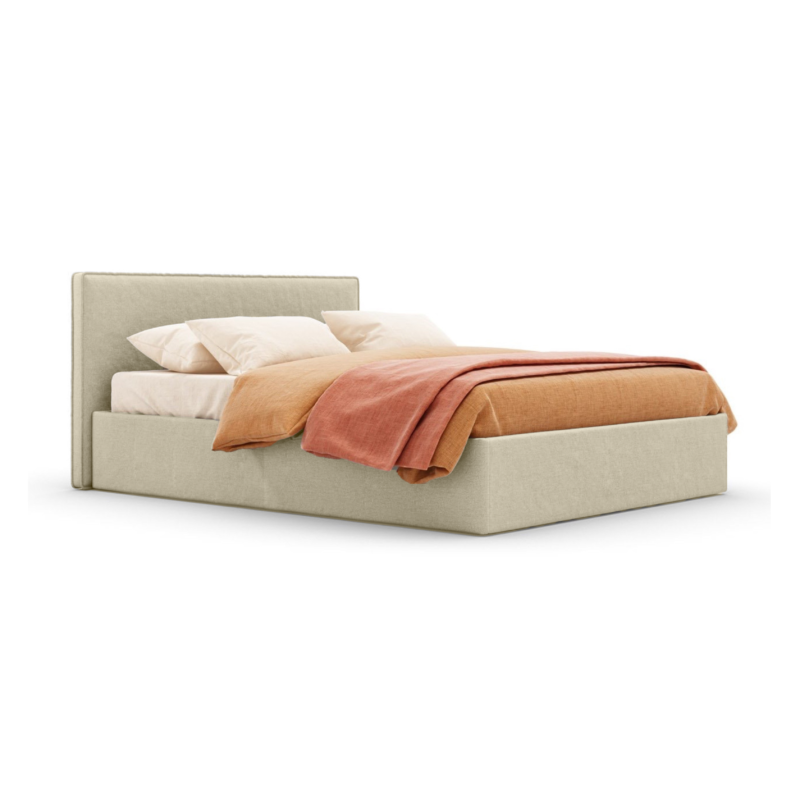
Headboard height. If a teenager sits on the bed with a laptop, the headboard works as a backrest. An upholstered headboard is much more comfortable here than a low or wooden one: people really do lean on it every day.
Storage. A teenager has more things than a child, but the room is the same. A storage compartment under the base or a pull-out drawer solves part of the problem; there is a separate article on choosing: a bed on legs or with storage.
Your child's taste. It sounds obvious, but at this age it is no longer a decorative question. A bed chosen without the teenager becomes a subject of argument rather than part of the room. Let them choose the fabric colour: a choice from the catalogue will still stay within your limits.
How much space the room needs
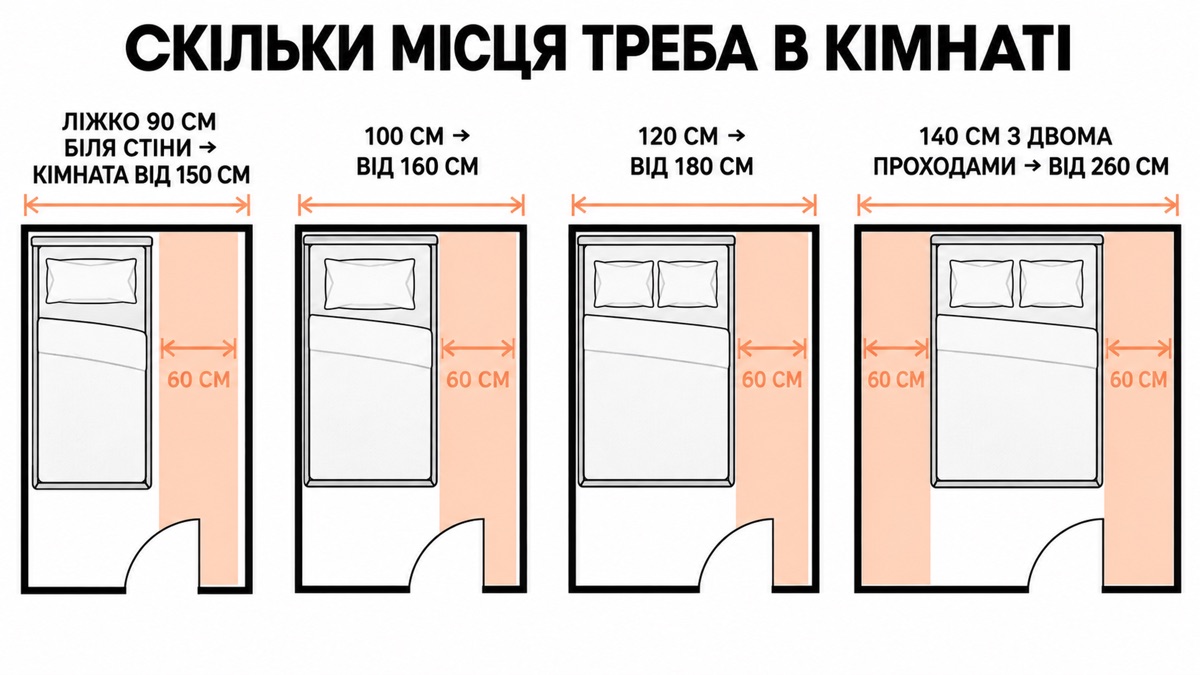
The calculation is the same as for an adult bed: the width plus 60 cm for each walkway. If the bed stands against a wall, one walkway isn't needed.
- 90 cm against a wall: 150 cm of room width
- 100 cm against a wall: 160 cm
- 120 cm against a wall: 180 cm
- 140 cm with two walkways: 260 cm
And work out the space for a desk separately: a teenager definitely needs one, and it is usually what the battle for square metres is about. On desk dimensions: a desk for a schoolchild.
If you need a size outside the range
A 172 cm recess, a sloping wall, a bed under a window: we make the dimensions to fit your space. And a model from a reference too: send the manager a photo, and our technologist will look at the construction.
Read also: a kids' bed by age and single or small double.
In brief
- Sleeping diagonally or no longer sitting on the bed during the day means the size is used up
- For the second purchase, go for a length of 200 cm, not 190
- 100 cm is the optimum, 120 cm if the room is 12 m² or more
- VERTA, TEAMO, TOPPY, Kaya, SON, PLAINE come in six or seven sizes
- An upholstered headboard isn't decoration here: a teenager leans on it every day
A bed a teenager won't outgrow in a year: see the sizes.
Choose a bed →