

A desk for a schoolchild is bought once in the hope that it will last until they leave school. In reality it rarely does — not because of quality but because of height.
Almost all desks on sale are 74–76 cm high. That's a standard designed for an adult from about 175 cm tall. For a child who is 130 cm, such a desk comes up to the chest.
How the right height is worked out
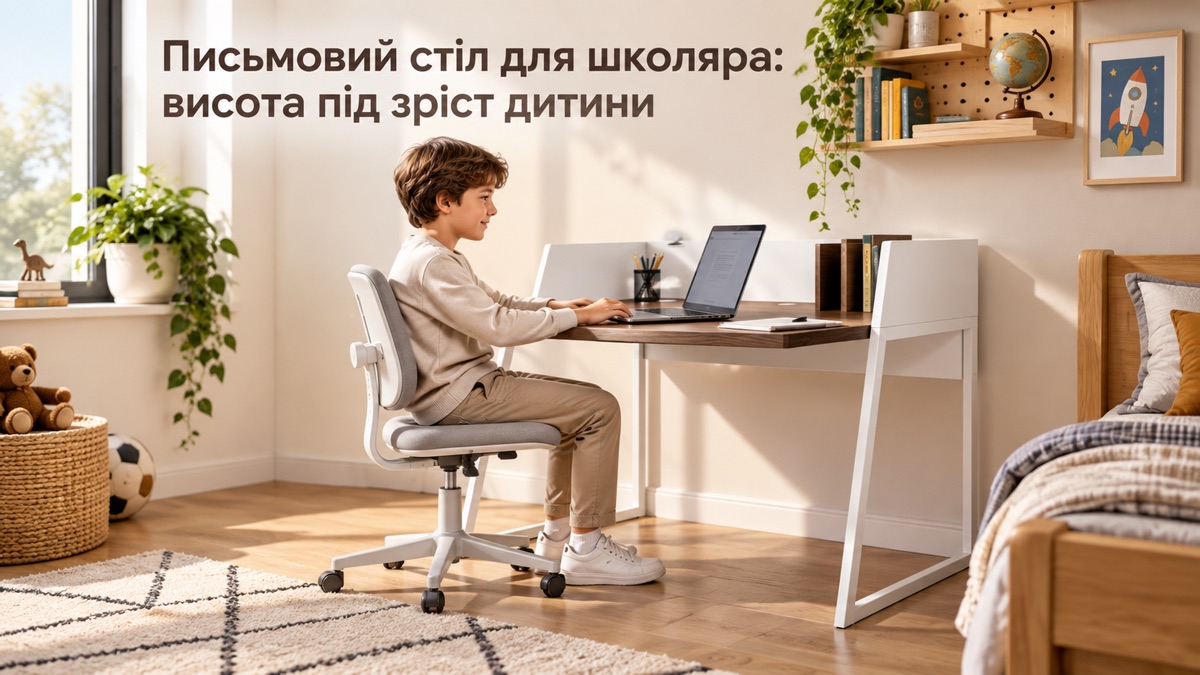
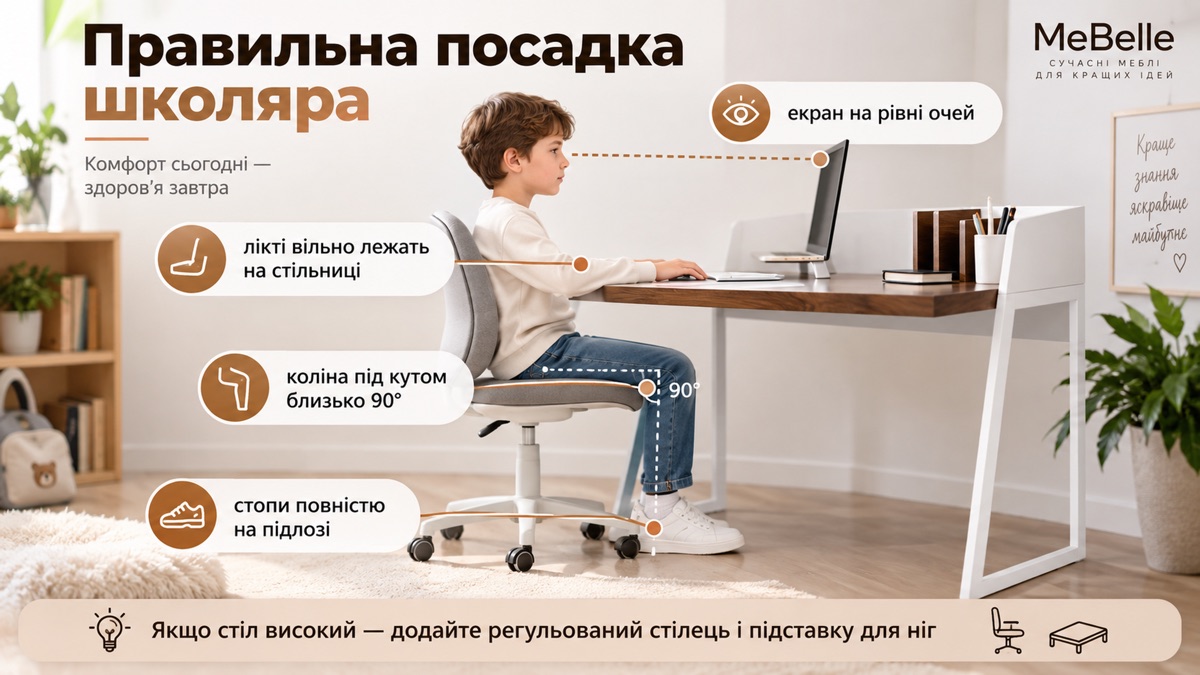
The rule is simple: when the child is sitting, their elbows should rest on the desktop at a right angle, with the shoulders lowered. If the desk is too high, the child lifts their shoulders and reaches — after an hour of homework that's neck pain, and after a year it's a stoop.
A rough table of desk height by the child's height:
- 120–129 cm — a desk of about 57 cm
- 130–139 cm — about 62 cm
- 140–149 cm — about 67 cm
- 150–159 cm — about 72 cm
- from 160 cm — 75–76 cm, which is already the adult standard
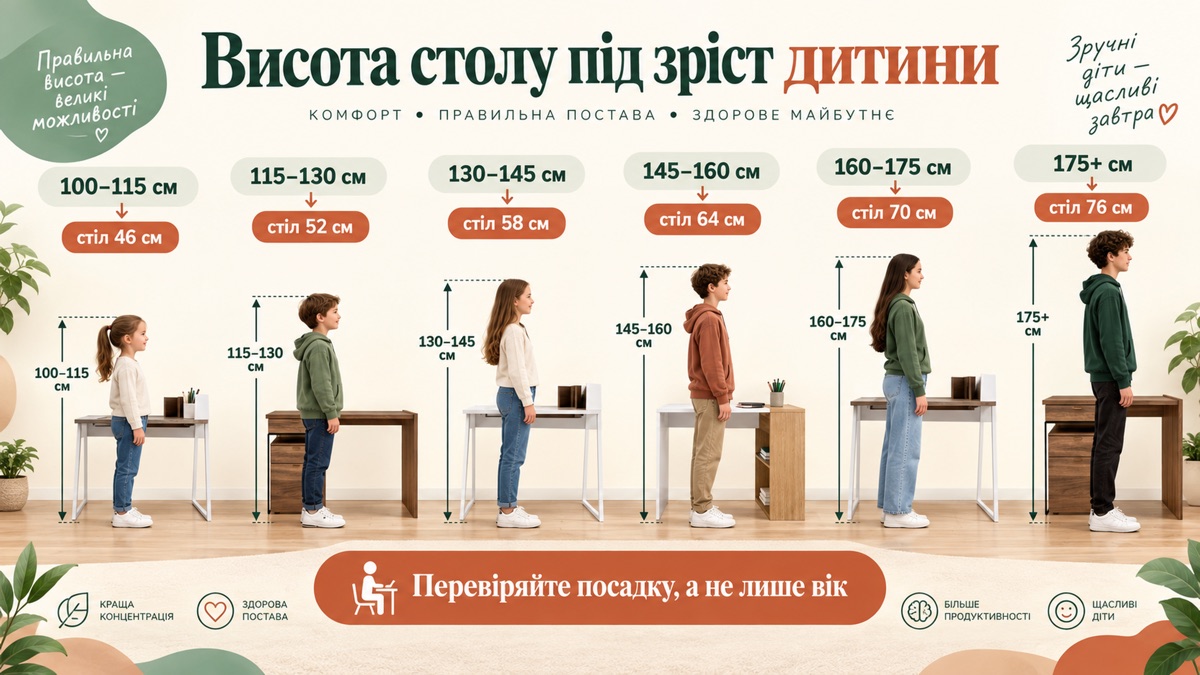
You can check without a tape measure: sit the child at the desk and look at their elbows. If the forearm lies horizontally, the height is right.
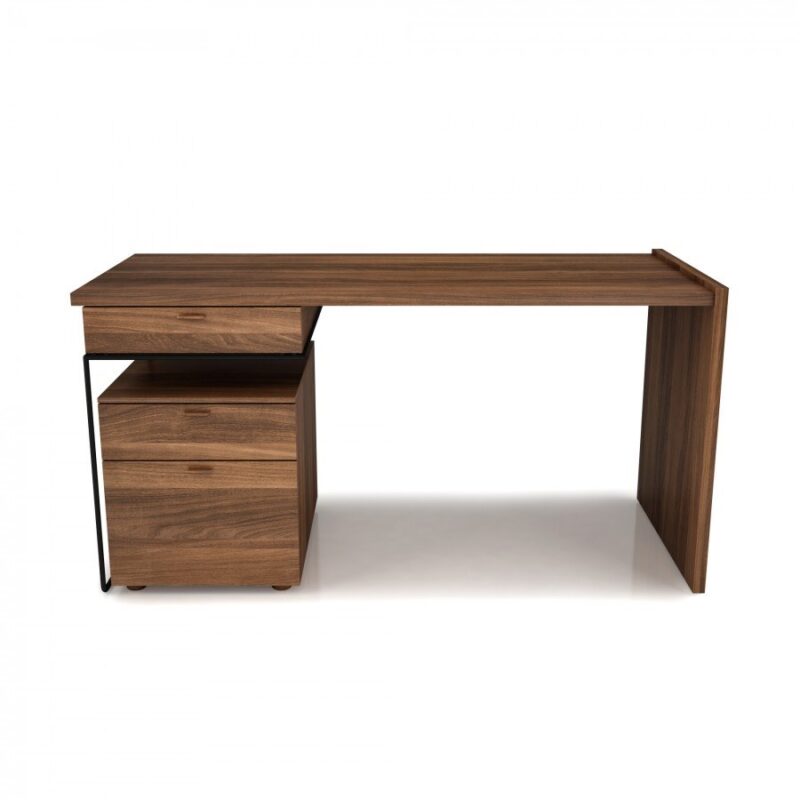
Honestly about our desks
The desks in our catalogue are 74–76 cm high. That's the adult standard, and it suits a child from about 160 cm tall — that is, from the age of twelve or thirteen.
For a younger child there are two workable options, and both are more honest than "they'll grow into it".
Option one: a chair and a footrest
The desk stays adult-sized, and an adjustable chair makes up the height. The main condition people forget: the feet must rest on a support. If the child sits high with their legs dangling, the load goes onto the lower back.
So the chair needs a footrest — and its height will have to be changed every year.
Option two: a desk to fit the child's height
We're a factory, so the height of the desktop is a parameter we change to order. A 62 or 67 cm desk is made the same way as a standard one: the same model, the same construction, different leg height.
This makes sense when the child is 7–10 and will spend the next few years at this particular desk. After a few years the desk can be re-ordered or raised — or you can allow a margin from the start and use a chair.
What to measure besides height
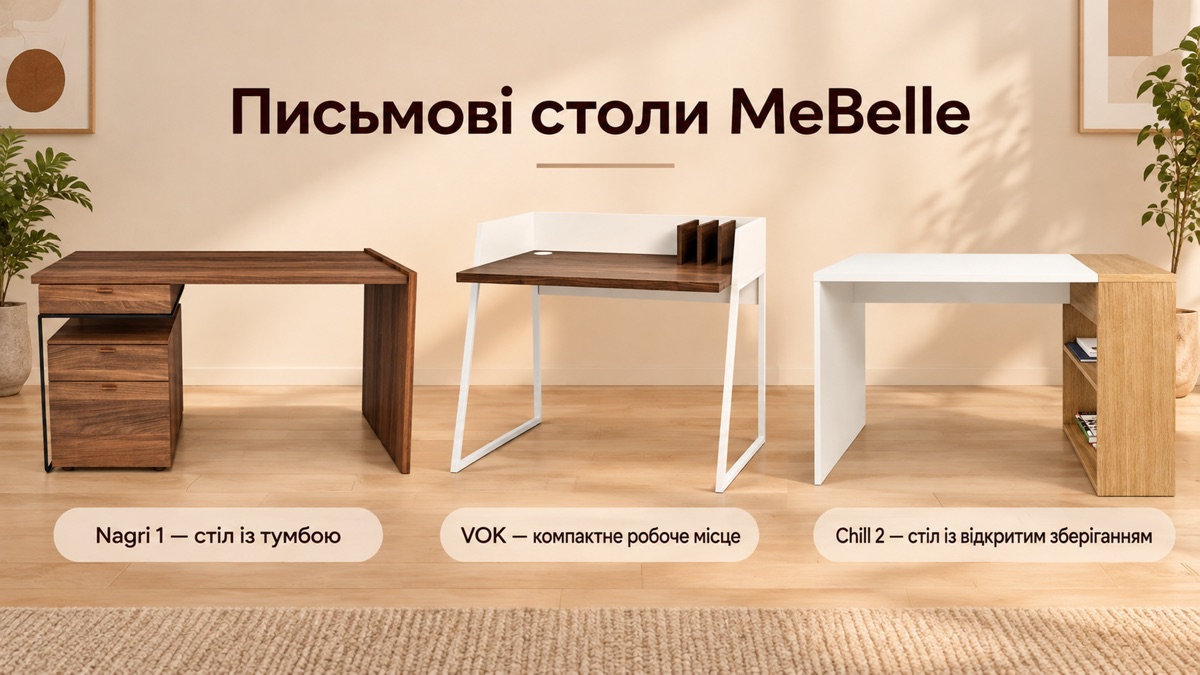
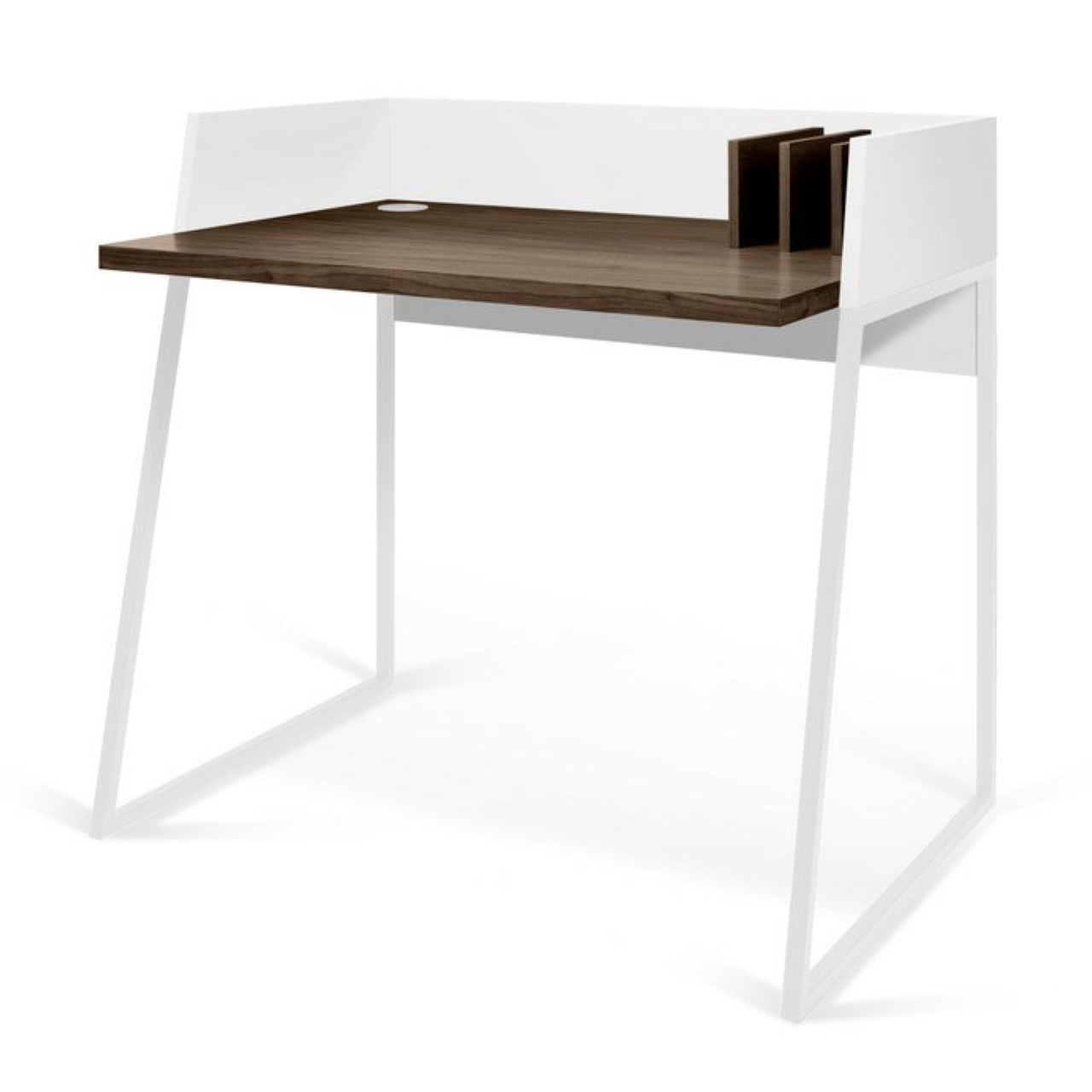
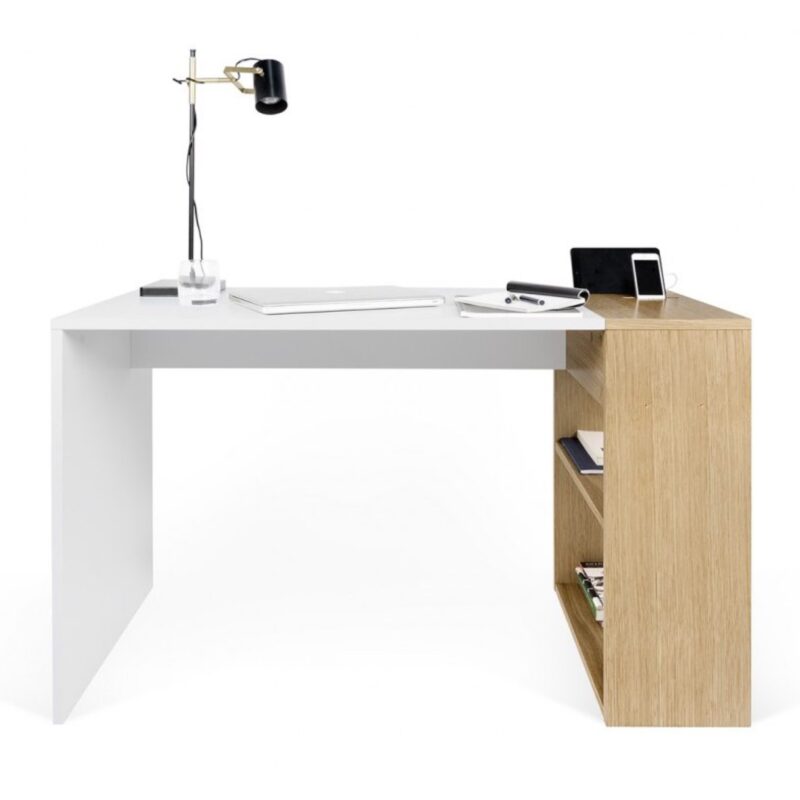
Depth. At least 60 cm if there's a monitor on the desk: the eyes should be an arm's length from the screen. In our range, Chill 2 and MODE are 60 cm deep, CASUAL and Lofty 1 are 90 cm.
Width. 120 cm is enough for an exercise book, a textbook and a laptop at the same time. Any less and something will always have to be moved aside. Our most compact is Chill 2 at 120 cm, the largest is Lofty 3 at 210 cm.
Space under the desktop. The knees shouldn't hit a drawer. If the desk has a pedestal, check which side it's on and whether it gets in the way of a left-handed child.
Where to put it
There's one rule, and it's about light: for a right-hander the window should be on the left, for a left-hander on the right. Otherwise the hand casts a shadow over the exercise book.
A desk facing the window looks nice in photos but gives you backlight — the eyes tire faster. If there's no other place, you need a proper desk lamp.
Read also: a desk for working from home and desk depth for a monitor.
In short
- The standard 75 cm is for a height from 160 cm, not "for a schoolchild"
- Check by the elbows: forearm horizontal, shoulders lowered
- The feet must rest on a support — the floor or a footrest
- Depth from 60 cm, width from 120 cm
- We make the desktop height to suit the child — it's a regular order
If you don't know where to start, tell our manager the child's height and the size of the room. We'll work out the height and pick a model that will fit into that room.
A desk that's comfortable to grow at — see the sizes in the catalogue.
Desks for schoolchildren →