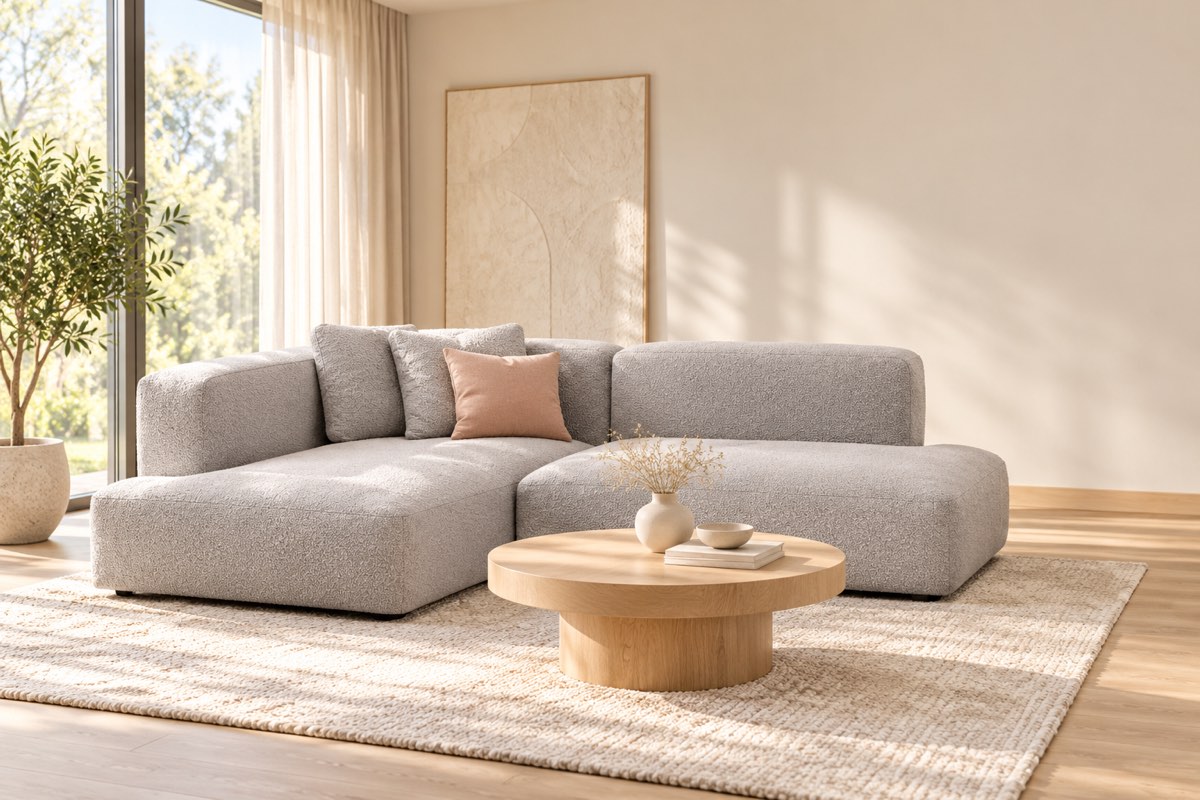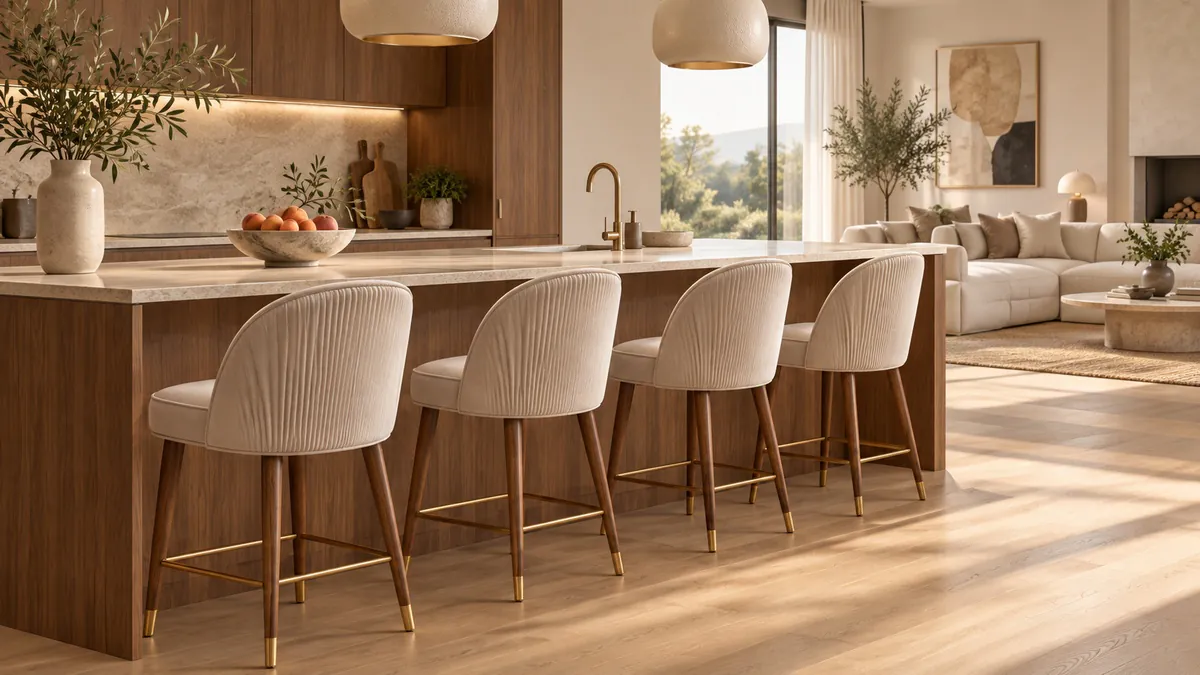



Working from home has one awkward feature: the desk stands where you live. It's not in a separate study but in the living room, bedroom or kitchen — and it competes for space with the sofa, the wardrobe and the walkway.
So the question isn't "which desk is better" but "which one will fit without spoiling the room".

Depth matters more than width
Width is usually chosen by the space available along the wall. Depth, though, is where people most often get it wrong — in both directions.
A depth of 60 cm is the working minimum for a laptop or one monitor. Your eyes end up roughly an arm's length from the screen, which is exactly right.
A depth of 43 cm is already a console format. It's enough for a laptop but too little for a monitor: the screen is too close. But this depth is a lifesaver when the desk has to go in a walk-through room — it barely eats into the space.
A depth of 80–90 cm is only needed if there will be two monitors on the desk or you work with paperwork. In a living space it's a noticeable block of furniture.
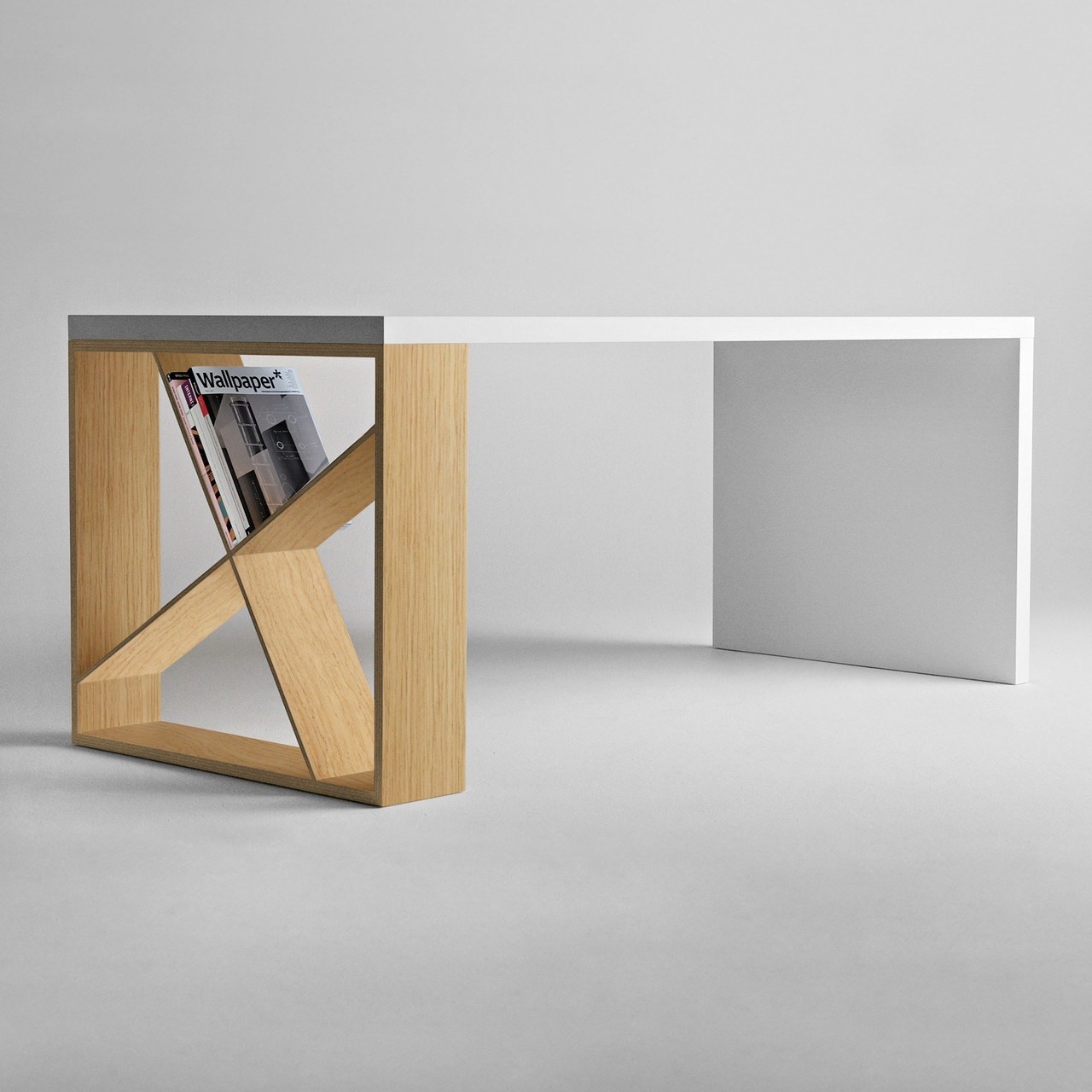
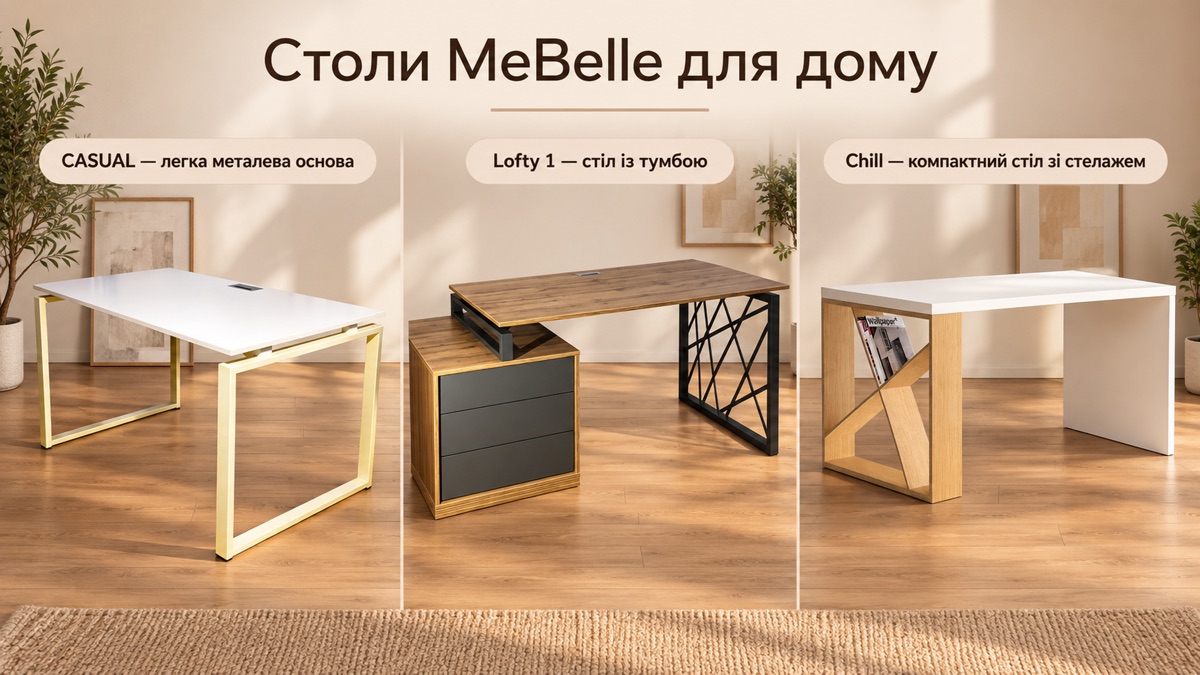
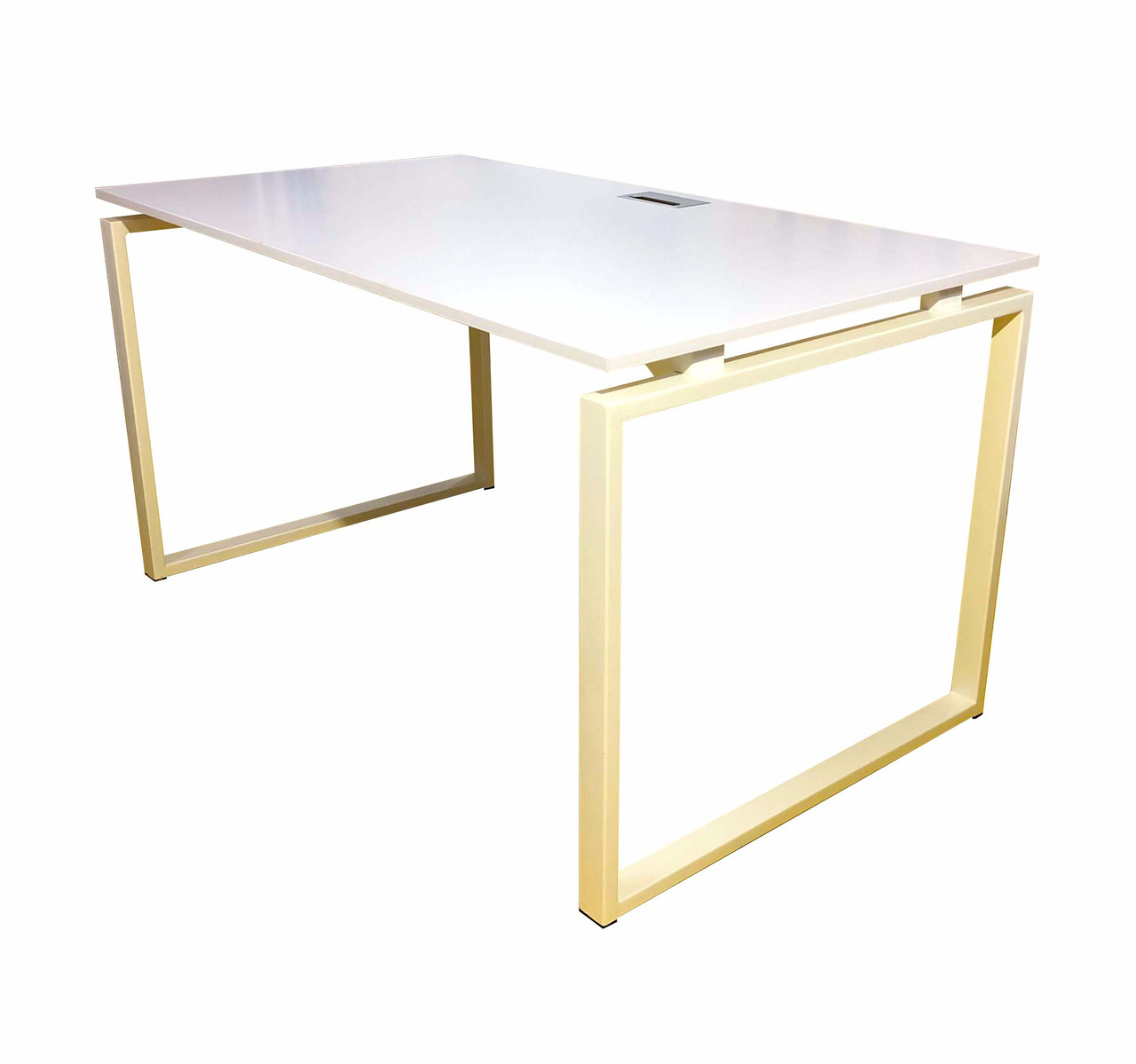
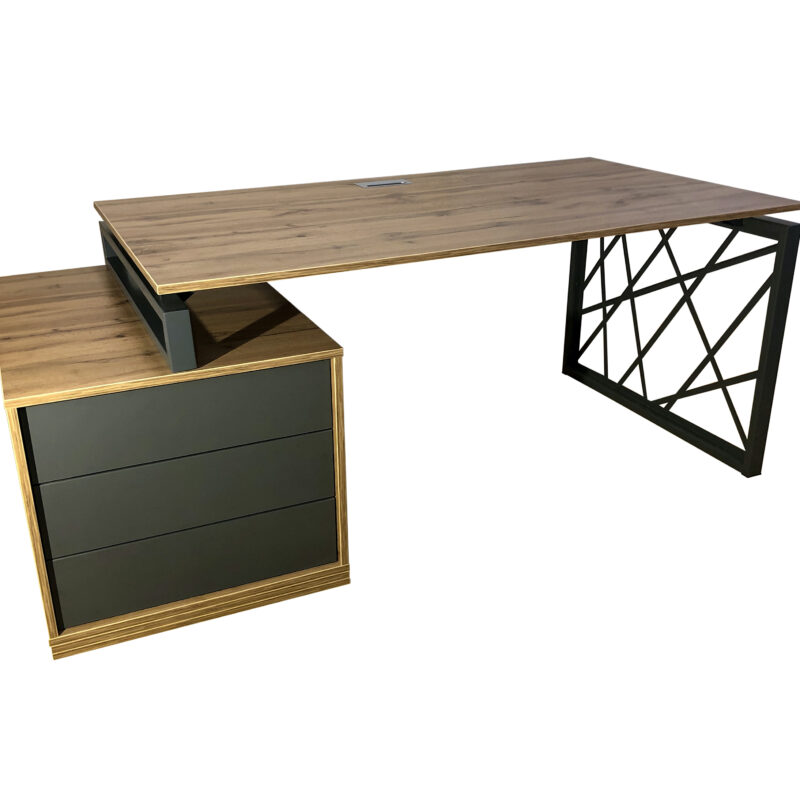
Our catalogue has all three options: Nagri 2 and Nagri 3 at 43 cm deep, Chill 2 and MODE at 60 cm, CASUAL and Lofty 1 at 90 cm.
Where to put the desk
By the window, side-on to it. The best option: daylight falls from the side, not onto the screen or on your back. For a right-hander the window should be on the left, for a left-hander on the right.
Facing the window looks impressive but gives you backlight: the screen seems dark and your eyes tire faster. If there's no other place, you'll need heavy curtains or blinds.
With your back to the room is the worst for concentration if someone else is at home. Your brain keeps tracking movement behind you, and it's harder to focus.
When there's no free wall
The most common case in a flat where every wall is already taken.
A narrow desk along a walkway. A depth of 43 cm lets you place a desk where 60 cm would already block the way. You can walk past, and the room isn't split in two.
A desk instead of a windowsill. If the windowsill is wide and low, the desk can be pushed right up to it — it becomes a natural extension. Height matters here: the standard 75 cm rarely matches the height of the windowsill, so the top has to be made to a specific figure.
A desk in a recess. Recesses between a wardrobe and a wall are usually not round numbers — 118 cm, 132 cm. A ready-made desk won't fit, and this is exactly where it makes sense to order the width to a specific measurement.
A workspace should switch off
The main problem with working from home isn't ergonomics but the fact that work never ends. When the desk is in view from the sofa, your brain doesn't switch to rest.
Techniques that work:
- Turn the desk to face the wall, not the room — that way it's less "present" in the evening
- A pedestal or a drawer where the laptop and cables disappear in the evening — an empty desktop reads as furniture, not as a workspace
- A desk in the same material as the rest of the furniture in the room. An office desk in the middle of a living room looks out of place because of its material, not its shape

We solve the last one simply: the desk can be ordered in the same finish as the chest of drawers or TV stand in the same room.
Read also: desk depth for a monitor and desks for the office.
In short
- 60 cm deep — for a monitor, 43 cm — for a laptop and a narrow walkway
- Window to the side: on the left for a right-hander, on the right for a left-hander
- For a recess of non-standard width, the desk is made to measure — it's a regular order
- An empty desktop in the evening matters more than any ergonomics
If the space is non-standard, send our manager the room dimensions. We'll work out what will fit and suggest specific models.
A workspace at home starts with a desk of the right depth.
Desks →