


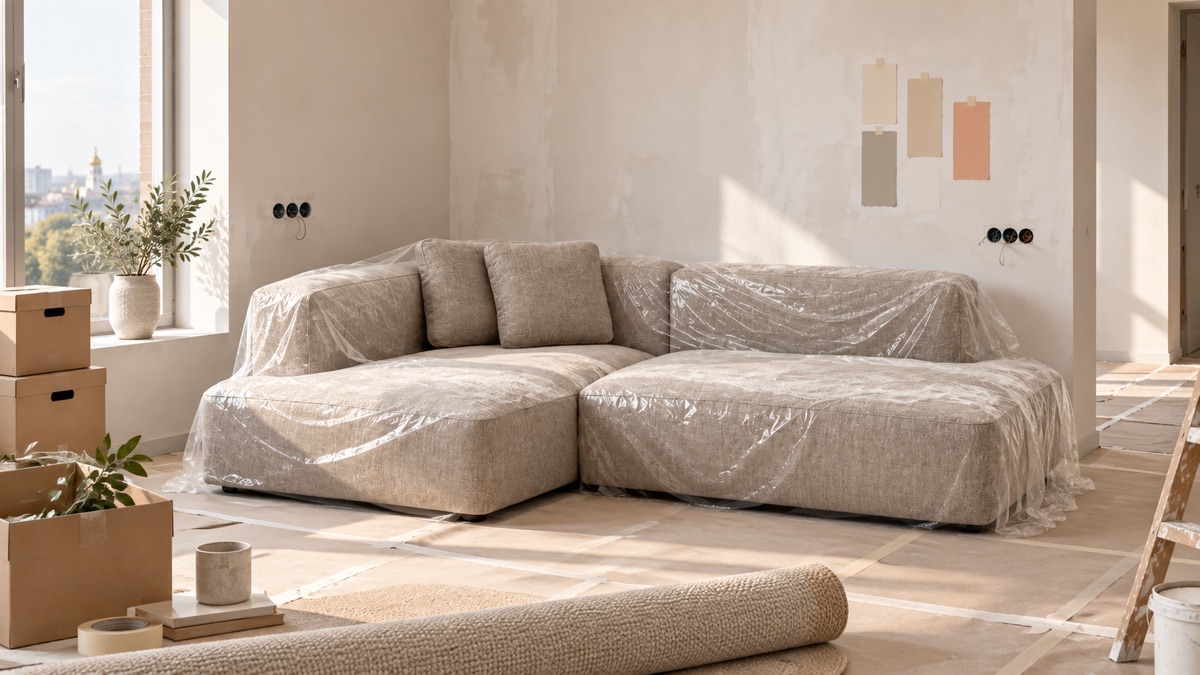
Almost everyone who has renovated knows the scenario. Furniture is put off "until later, because of the dust". The renovation ends, the flat is ready to move into, and it turns out there is no sofa, and making one takes time. For several weeks the family lives in a finished flat without furniture.
The reason is simple: made-to-order furniture isn't an off-the-shelf product. It needs to be planned together with the renovation, not after it.
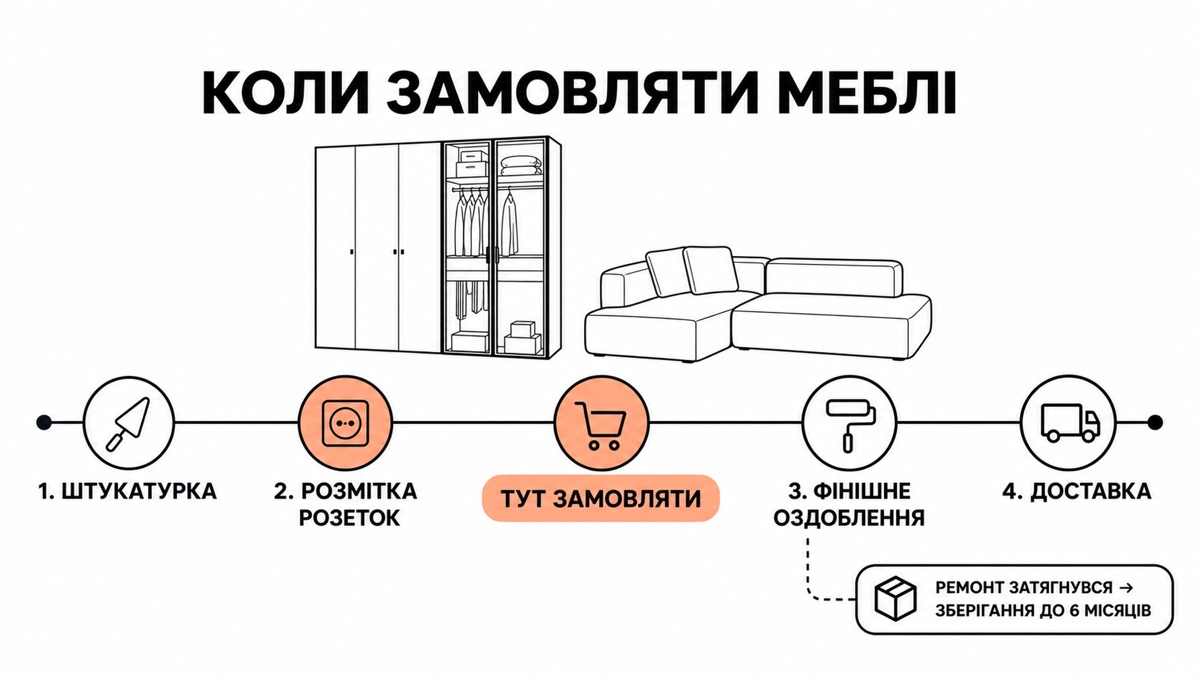
When to actually order
The right moment is when the walls have been levelled and the sockets marked out. That is earlier than most people think, and here is why it is then:
- The dimensions are final. After plastering and plasterboard, a recess won't change width. Measuring against a rough wall is pointless: the difference can be up to 5 cm.
- The sockets can still be moved. This is the main reason to order early. When you know the exact dimensions of the sofa and TV stand, the electrician puts the sockets where they will be needed, not where they "usually go". After the finishing work, moving a socket means dust and paint all over again.
- There is time to choose properly. Fabric shouldn't be chosen from a photo on your phone. Samples come by post, and you look at them in your own lighting, next to your own tiles and floor. That takes a week or two, not an evening.
What to measure before ordering
Three things the manager will ask about first, and which it is better to know in advance:
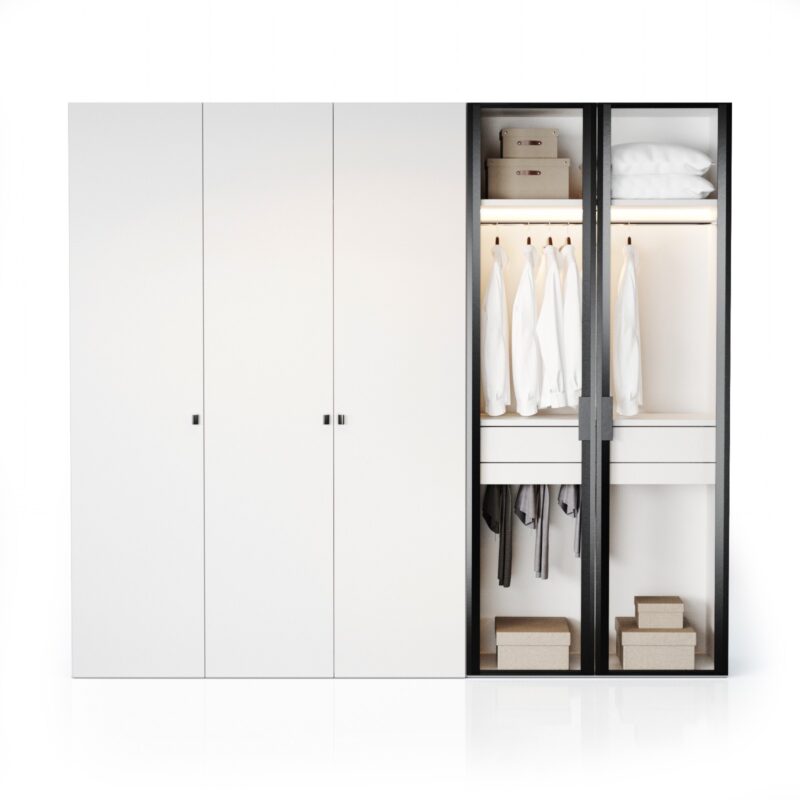
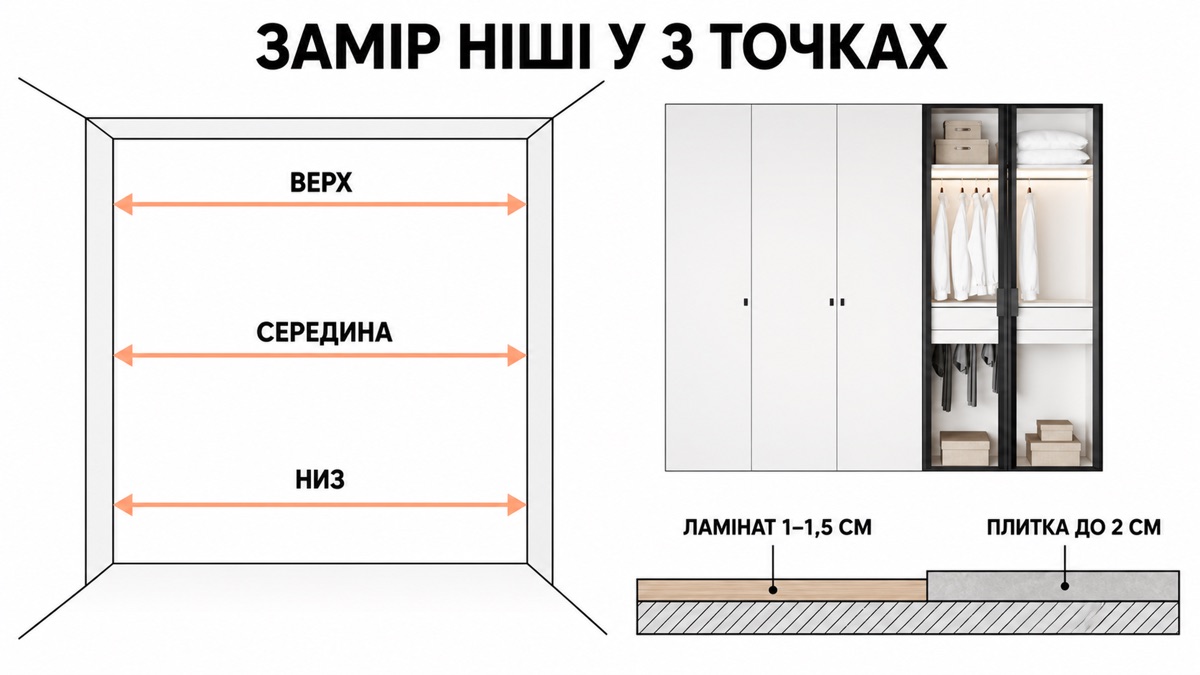
The recess for the furniture. The width at three points: near the floor, in the middle and under the ceiling. Walls are rarely perfectly parallel, and for a built-in solution the smallest of the three is what counts.
The route in. The width of the doors in the entrance, the depth of the lift, the turn on the landing. A large corner sofa more often fails to get in than fails to fit the room. Modular models are carried in in parts, which solves the problem, but you need to know about it before, not on delivery day.
Height from the floor. If the floor hasn't been laid yet, add the thickness of the future flooring and screed. Laminate with underlay is 1–1.5 cm, tiles with adhesive up to 2 cm. For a bed or a TV stand this usually doesn't matter; for a built-in walk-in wardrobe it is critical.
The problem that comes next: the renovation doesn't finish on time
That's normal. Renovations almost never finish on the planned date: the tiling slips, the plumbing is delayed, the builder falls ill.
And this creates the situation that makes people put off furniture: the furniture is ready, but there is nowhere to put it. Keeping a sofa in its packaging in the middle of a room with a screed that hasn't dried is a guaranteed way to ruin the fabric.
That is why we store a finished order in our warehouse for up to 6 months free of charge. You order now, at today's price, while offers are running and the fabric is in stock, and collect it when the flat is actually ready. Just message the manager a few days before the delivery date.
In practice this removes the main planning risk: you no longer have to guess the renovation end date to within a week.
How long production takes
Catalogue models are in stock. Custom pieces take 7–21 days depending on complexity: a simple change of dimensions is closer to the lower end, a piece made from a reference with a new construction closer to the upper.
Together with the time to choose the fabric and agree the details, this means: allow a month between the first call and the furniture being in the flat. If the renovation ends in November, you need to talk to the manager in September or October, not in November.
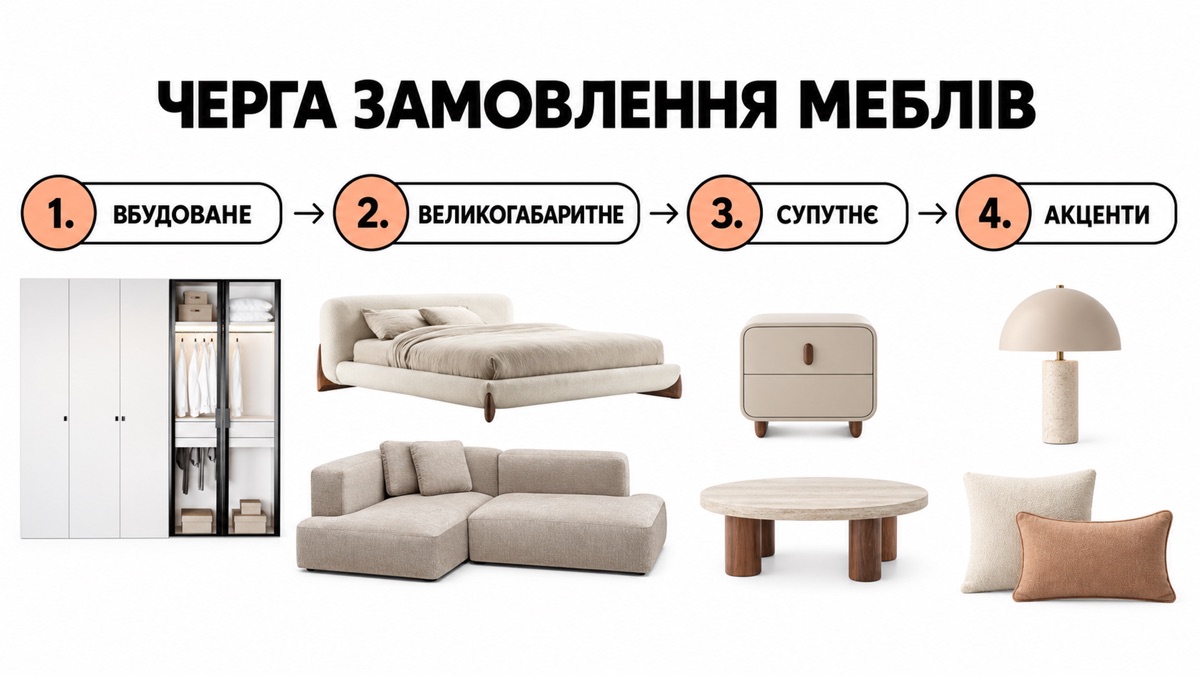
In what order to order
If you are furnishing a whole flat, there is a logical sequence:
- Built-in pieces and those tied to the walls: walk-in wardrobe, kitchen, built-in wardrobes. They depend on the layout and cope worst with changes.
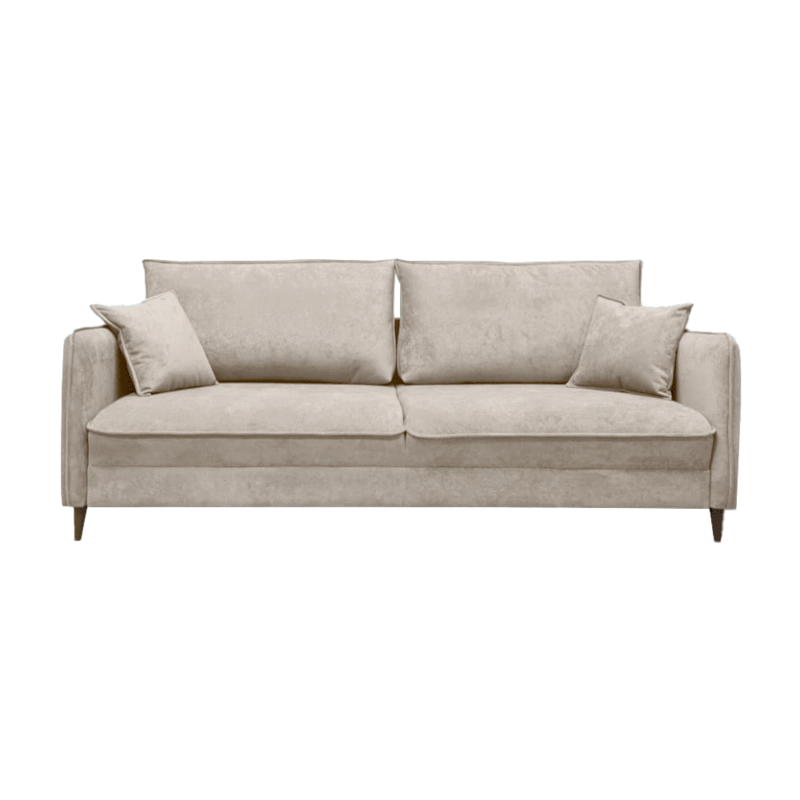
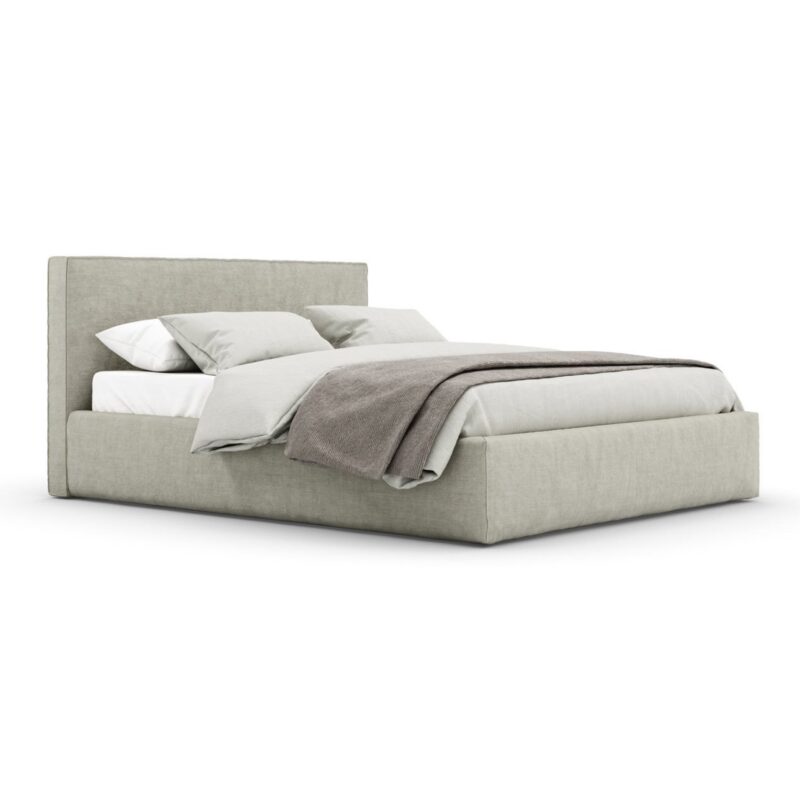
- Large items: sofa, bed. They define the room layout, and all the other distances are measured from them.
- Supporting pieces: TV stand, chest of drawers, bedside tables. These are chosen to match the sofa or bed you have already chosen, not the other way round.
- Small and accent pieces: armchair, pouf, cushions. This is the last layer, and you can easily buy it after moving in, when you can see what is missing.
The mistake is to start with the armchair and cushions because they are cheaper and quicker to choose. Then you have to fit the sofa around them.
Fabric: two practical warnings
Look at the sample in your own light. The same grey under cold lamps in a shop and under warm lamps in a flat are two different colours. Hold the sample against the wall and look at it in the evening, not just during the day.
Consider what will be next to it. Fabric is usually chosen for the sofa, but it sits next to the floor, the curtains and the wall. Bring a laminate sample or a photo of the tiles to your meeting with the manager: it saves one round of changes.
Read also: how much a made-to-order sofa costs and how MeBelle furniture is made.
In brief
- Order when the walls are levelled and the sockets can still be moved
- Measure the recess at three points and check the route in
- Custom production takes 7–21 days; allow a month for the whole cycle
- Renovation running late? We store a finished order in our warehouse for up to 6 months free of charge
- Sequence: built-in → large items → supporting pieces → accents
Planning furniture for after the renovation? We'll make it to match your completion date.
Order for your renovation →