

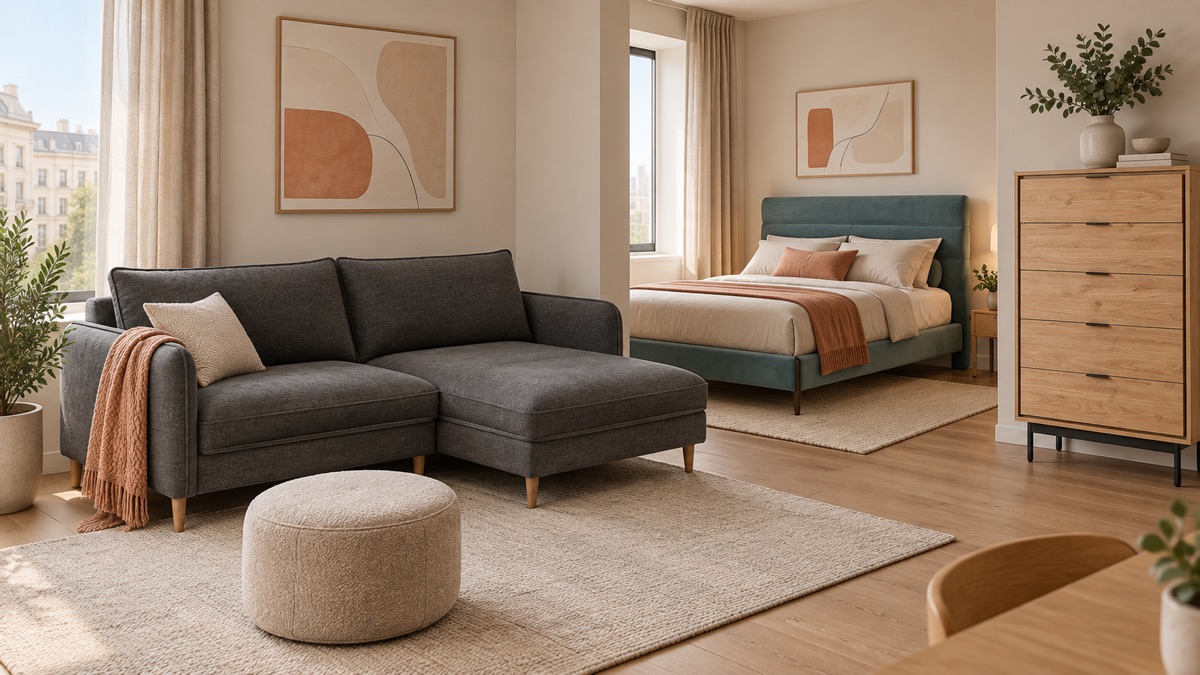
The main difference between a rental flat and your own home is simple and unpleasant: the tenant isn't planning to live with this furniture for ten years. They won't put a coaster under a hot mug or wonder whether the mechanism will survive another rough fold.
This isn't a complaint about tenants: it is how people normally treat other people's things. But it means the furniture has to be chosen differently.
The rule everything follows from
Fewer moving parts means a longer life.
In a rental flat it is always the same things that break: mechanisms. The sofa bed, the bed's lift-up mechanism, the soft-close drawers. Every moving part is a point of failure, and you are the one who repairs it, usually between tenants, when the flat should be standing ready.
So the logic of choosing is turned upside down: what is an advantage at home ("the sofa folds out too") becomes a risk in a rental.
The sofa: folding or not
If the sofa isn't a place to sleep, choose a non-folding one. It is simpler, cheaper and has nothing to break.
If it is a place to sleep (a studio, an extra bed for guests), you need a sofa bed, but then choose the simplest mechanism available. The fewer the parts and the simpler the unfolding movement, the less chance of it being broken by a wrong move.
A comparison of mechanisms: Eurobook or Dolphin. For a rental the same applies as for everyday sleeping at home: a sofa for everyday sleeping.
Fabric: three requirements instead of one
At home, fabric is chosen by its look. Here it is chosen by three criteria at once.
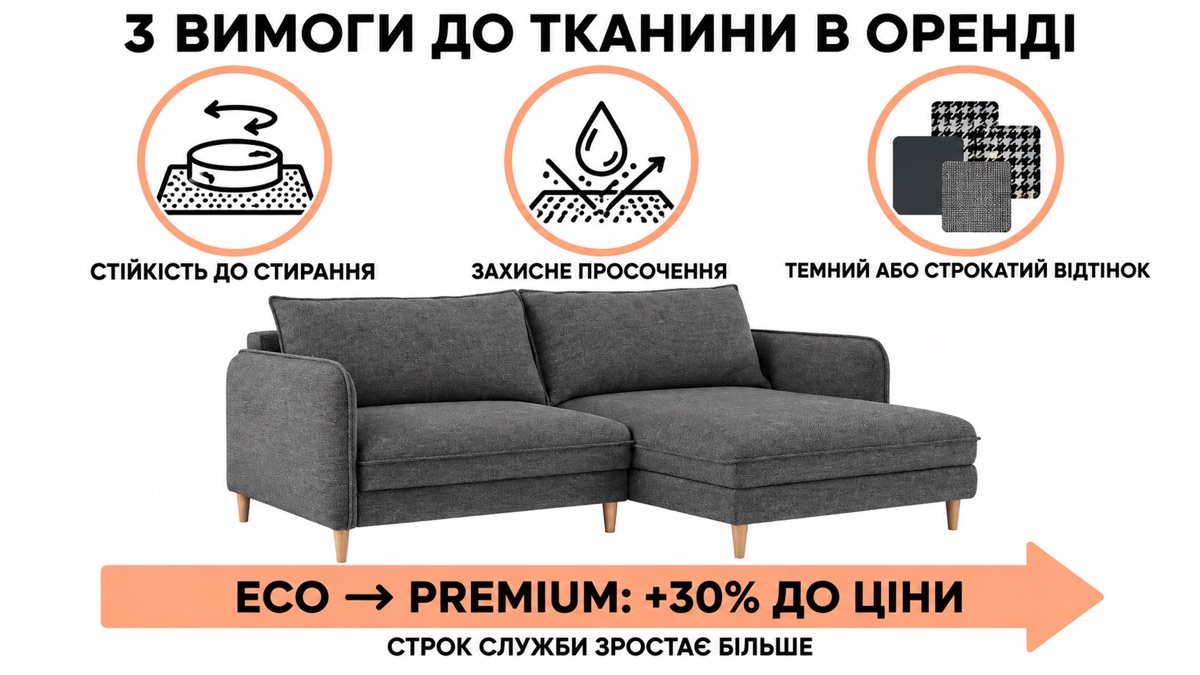
Abrasion resistance. In a year, a sofa in a rental flat gets as much contact as your own does in several. Saving on the fabric tier doesn't pay off here: the price difference between ECO and PREMIUM is 30%, and the difference in service life is bigger.
A protective treatment. The question isn't "will they spill something" but "can it be wiped off". A treatment turns a stain into a one-minute incident rather than a permanent feature of the flat.
A dark or patterned shade. The most practical advice in this article, and the least popular: a light sofa in a rental looks new for about six months. Stains show less on a dark one, and cleaning between tenants can be superficial.
In detail: anti-vandal fabrics: myths and reality and which fabric to choose if you have pets and children.
Removable covers: a question worth asking
Being able to take off and wash a cover changes the economics of a rental flat: instead of reupholstery costing a few thousand, washing costing a few hundred.
Not every model is designed for this, so ask the manager directly about the specific model, not "does that exist at all".
The bed: why legs are better than a storage base
At home, storage under the bed is useful. In a rental it works against you:
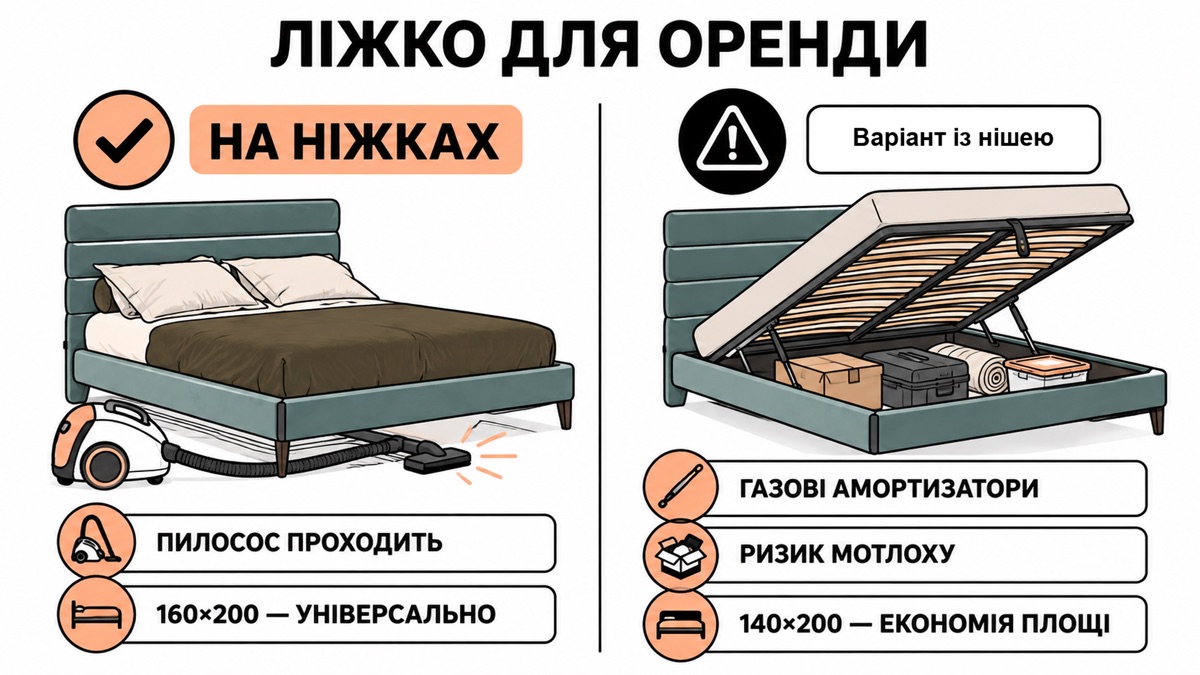
- The mechanism breaks. Gas struts have a limited life, and dropping the base sharply shortens it.
- Things get stored there that you can't see. The storage compartment is rarely checked between tenants.
- Cleaning is harder than under a bed on legs, where the vacuum cleaner simply goes underneath.
Both options compared: a bed on legs or with storage.
Size. For a rental flat, 160 × 200 is the all-round choice: it suits both a couple and a single person, and doesn't need a large bedroom. 140 cm saves space but narrows the range of tenants.
The mattress: not the place to save money
This is the most common subject of complaints and the quickest route to a bad review. A guest won't appreciate the bed frame, but they will write about the mattress the same morning.
Also, a mattress is a consumable: it gets replaced before the bed. Plan for it rather than treating it as a breakdown. On choosing one: how to choose a mattress by firmness.
What not to put in a rental at all
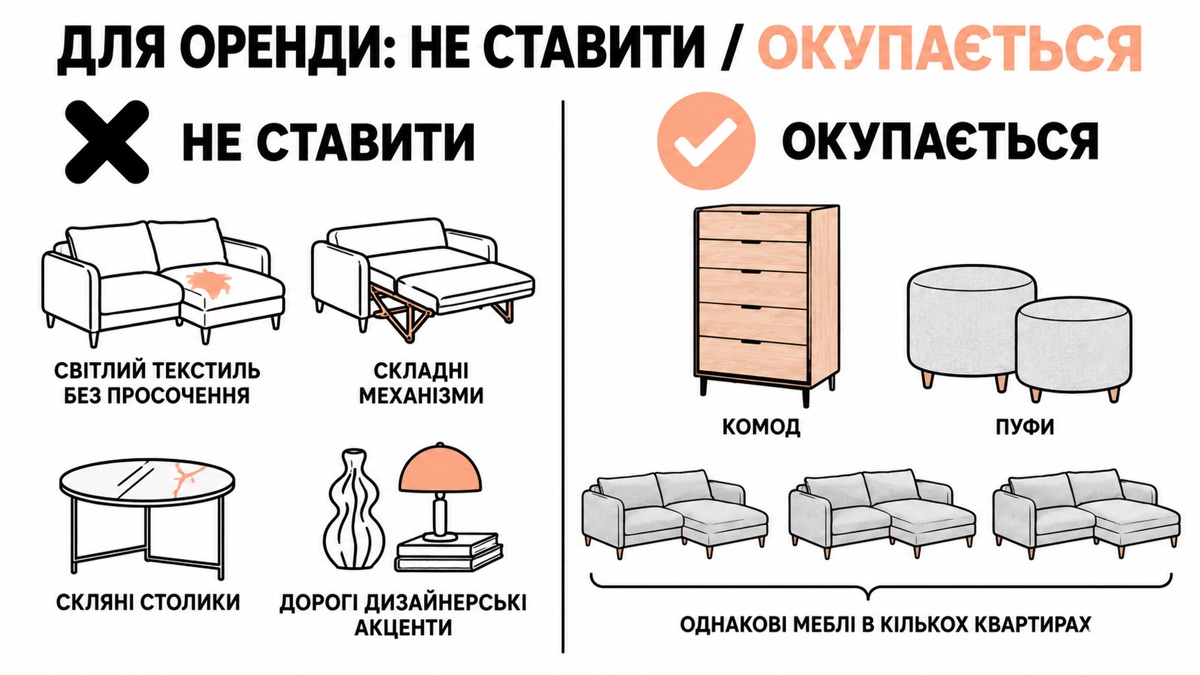
Light textiles without a treatment. Lifespan: until the first tenant with a coffee.
Complicated folding mechanisms. The more complex, the sooner it breaks and the more it costs to repair.
Glass on display. Coffee tables with a glass top are statistically the most frequently broken furniture in rental flats.
Furniture with design ambitions. Nobody appreciates a designer statement in a rental, and you are the one paying for it.
What does pay off
A chest of drawers instead of a wardrobe in a small flat. Simpler, cheaper, less to break, and easier for the tenant to use. A comparison: chest of drawers or wardrobe.
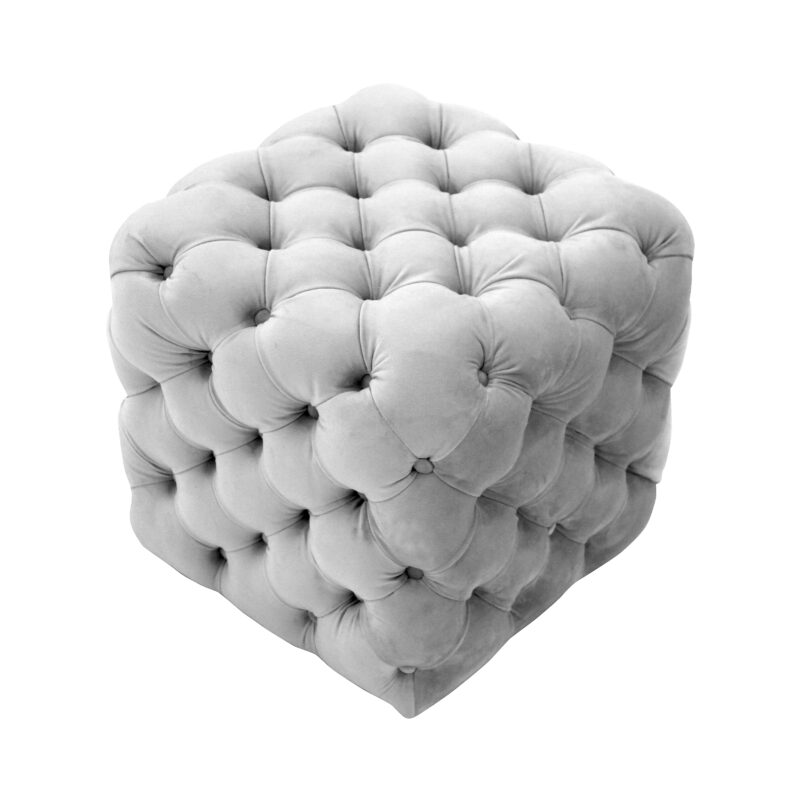
Poufs instead of armchairs. Cheaper, easy to move, no mechanisms, and they don't spoil the room as they wear.
The same furniture in several flats. If you let more than one, identical furnishing gives you the same as in HoReCa: individual pieces can be replaced without a visual mismatch, and a batch is cheaper.
If you have several flats
For several properties it is already a batch, and it is priced differently, with the fabric codes recorded so you can order the same again a year later. The logic is the same as for venues: furniture for a café or hotel: how to order in batches.
Dimensions made to fit, too: in typical rental flats the layout repeats, and a set worked out once can then simply be reproduced.
Read also: how to order furniture in batches and anti-vandal fabrics.
In brief
- Fewer mechanisms, fewer breakdowns; a non-folding sofa if it isn't a place to sleep
- Fabric: abrasion resistance, a treatment, a dark shade, all three together
- A bed on legs is more practical than a storage base; 160 × 200 is the all-round size
- The mattress is a consumable and the quickest route to a bad review
- Avoid: light textiles without a treatment, complicated mechanisms, glass
We choose furniture for rental properties, designed for real-world wear.
Furniture for business →