


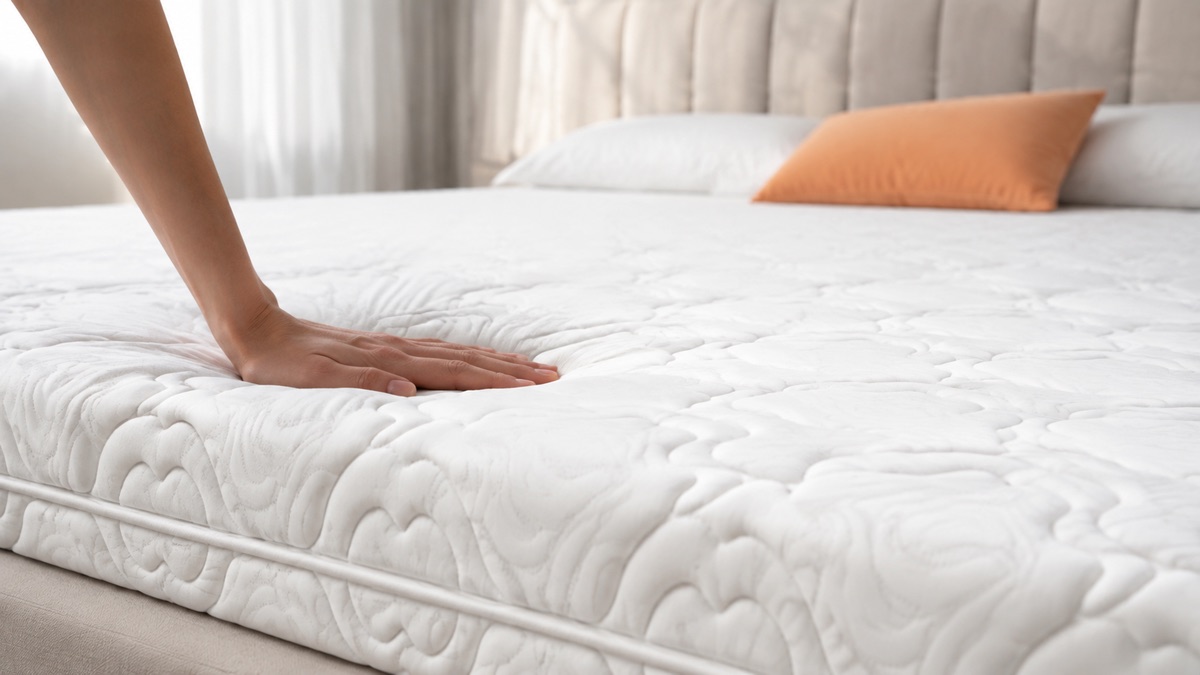
Firmness is the one mattress characteristic you can't judge from a photo and can hardly judge in five minutes in a shop. Yet it's what decides whether you get a good night's sleep.
Let's look at what it's made of and how not to get it wrong.
Firmness isn't density or "hardness"
The most common confusion. A firm mattress doesn't mean "like a plank", and a soft one doesn't mean "you sink right in".
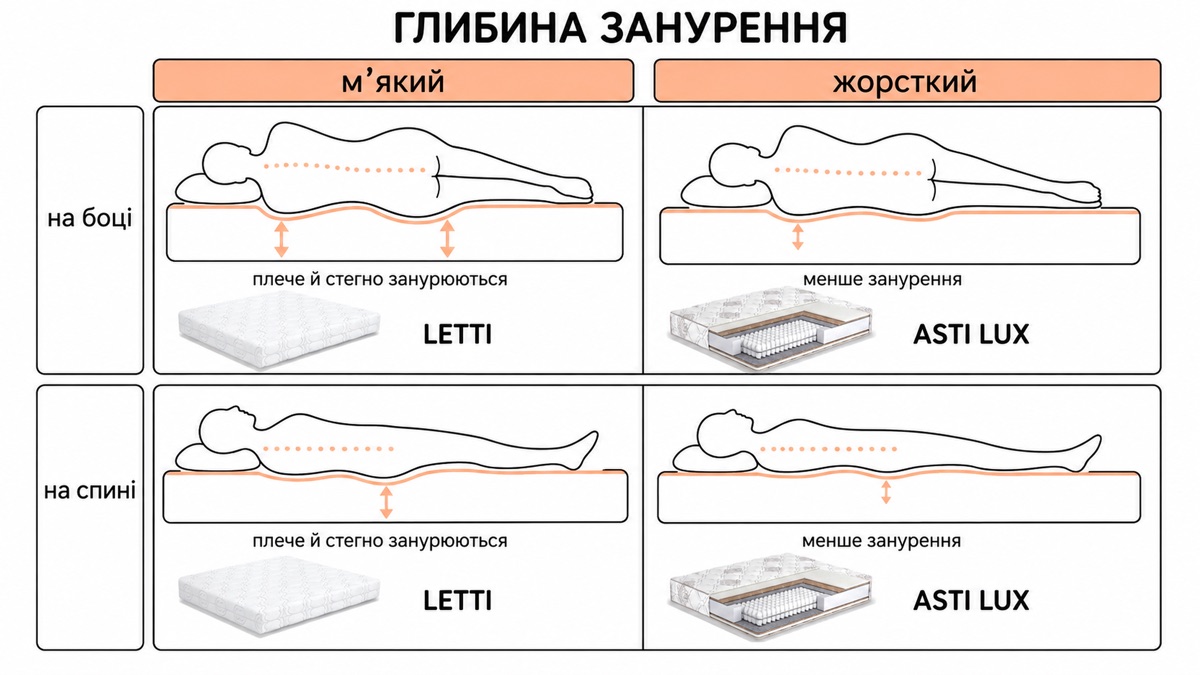
Firmness is how deeply the body sinks into the surface. On a firm mattress you lie as if on top of it. On a soft one, the surface wraps around your contours.
Both can be equally comfortable. The difference is in who suits which.
What firmness is made of
In a modern mattress three things are responsible for it, and all three work together.
The spring unit
A pocket spring unit is the foundation. Each spring sits in its own fabric pocket and compresses independently of its neighbours.
The practical result: when one person turns over, the other side of the mattress doesn't move. On solid foam the wave always travels, and your partner feels it every night.
The unit sets the basic support. But the firmness of the surface is determined not by it but by what lies on top.
Coconut coir
A natural coconut fibre pressed into a sheet. The firmest layer in a mattress.
One layer of coir noticeably raises the firmness. Two layers — one on each side — make the mattress firm, full stop.
Coir doesn't "soften" over time the way synthetic fillings do: it's either there or it isn't.
Polyurethane foam of varying density
The comfort layer above the coir. It's what decides how the mattress feels to the touch in the first few seconds.
Density matters more than thickness here: a thin high-density layer lasts longer than a thick low-density one.
And the layer nobody ever mentions
Felt. It lies between the spring unit and everything above and below it.
Its job is to stop the springs wearing through the upper layers. A mattress without felt starts to "show" its springs after a year, even if the unit is flawless.
This is the component that shows whether corners were cut on a mattress. In the list of materials it looks unremarkable, but it works every night.
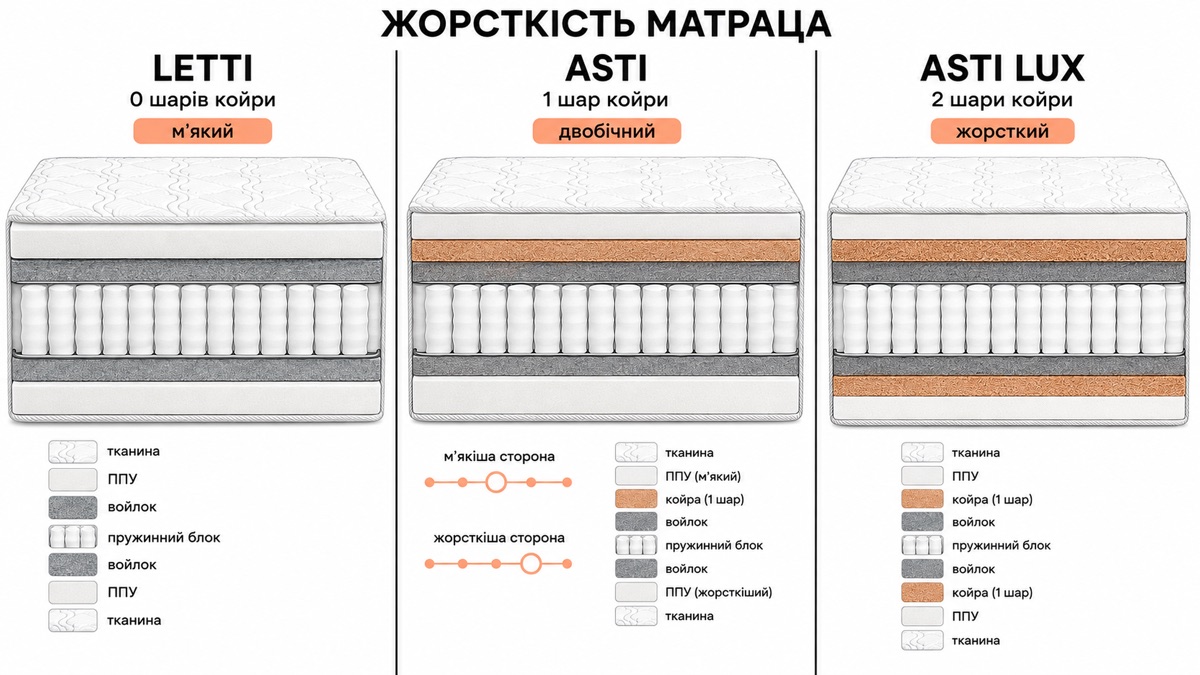
Three levels using one range as an example
To avoid talking in the abstract, I'll show it on our models — they have the same base and a different number of firm layers. It's the clearest way to see how the grading works.
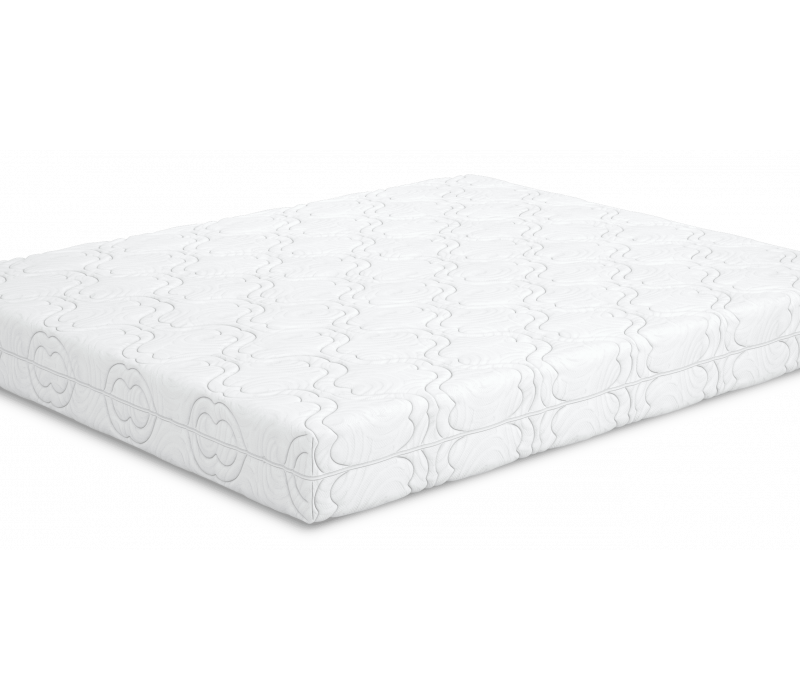
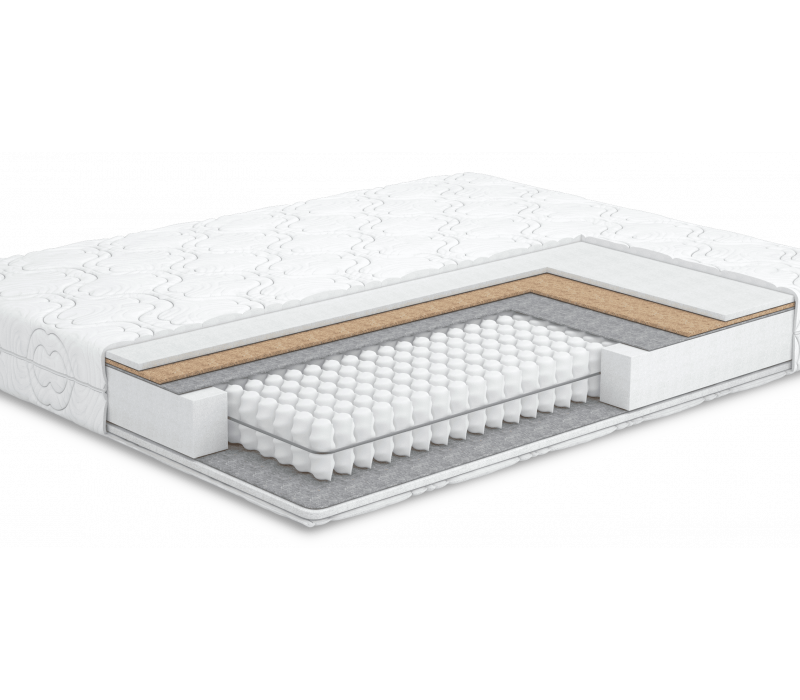
LETTI — soft.
Fabric · polyurethane foam · felt · pocket spring unit · felt · polyurethane foam · fabric.
No coir at all. Above the unit there's only felt and polyurethane foam — the surface gives, and the body sinks noticeably. Symmetrical, both sides the same.
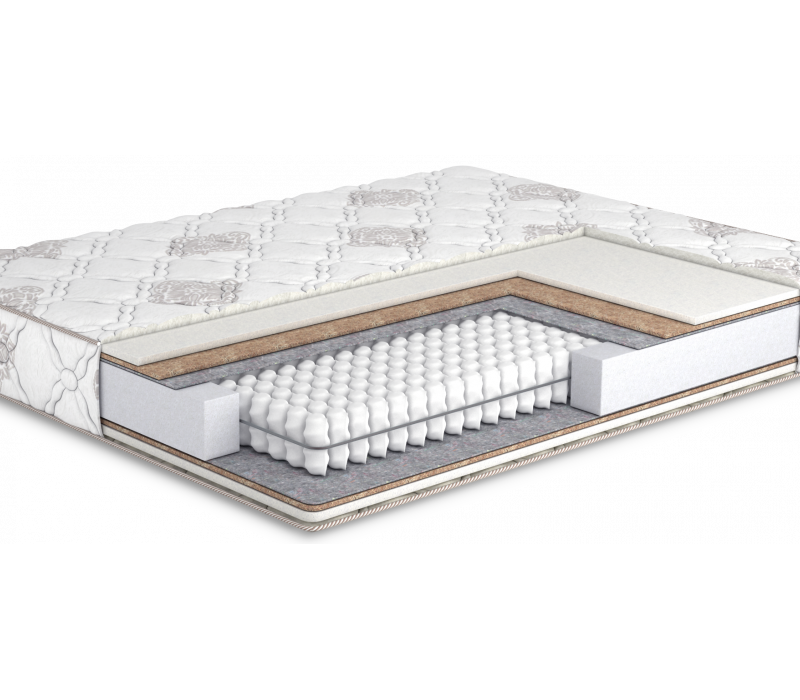
ASTI — two-sided.
Fabric · polyurethane foam of varying density · coconut coir · felt · spring unit · felt · polyurethane foam of varying density · fabric.
Coir on one side only. This means the mattress has two different sides: one firmer thanks to the coir, the other softer.
In practice it's the most interesting of the three: if you didn't get the firmness right, you flip it over and it's a different mattress. One purchase, two options.
ASTI LUX — firm.
Coconut coir on both sides. Symmetrical, both sides firm.
How to tell what suits you
There's no universal answer, but there are guidelines that work more often than not.
Weight matters most. The heavier you are, the firmer the mattress you need so as not to sink in. A light person on a firm mattress lies as if on the surface and gets no support in the lower back — they're usually more comfortable on a softer one.
Sleeping position. Side sleepers usually need a surface that lets the shoulder and hip sink in. Back and front sleepers need a flatter one.
A couple with different weights is the classic problem. The answer is either a compromise in the middle, a two-sided option, or two separate mattresses on one base.
Habit. If you've slept on a firm mattress for twenty years, a sudden switch to a soft one is rarely welcome, even when "by the science" it suits you better.
What not to do
Choose in five minutes in a shop. In five minutes you feel the softness of the surface, not the support. The difference shows on the third or fourth night.
Take "the firmest, because it's healthier". That's a common myth. A mattress that's too firm for a light person gives less support, not more: the body rests on two points instead of being evenly supported.
Ignore the base. A mattress on a solid surface without ventilation lasts noticeably less. A slatted base isn't there for softness but so the mattress can breathe from below.
Size is a separate story
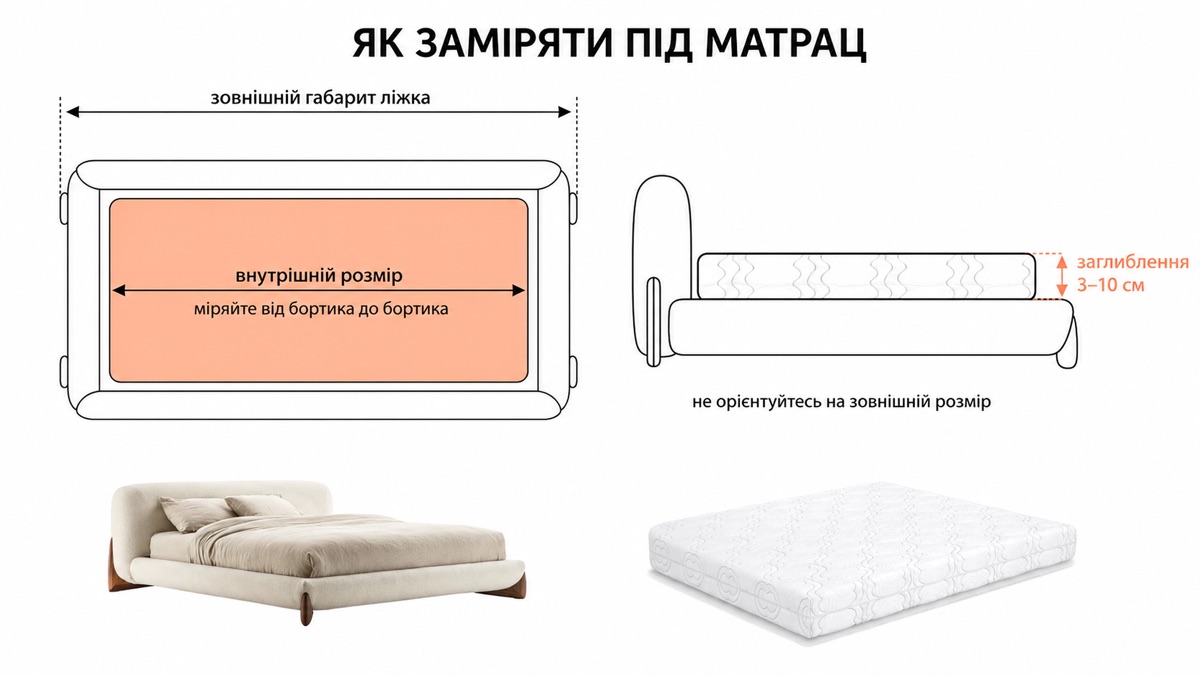
A mattress is bought to fit the internal size of the bed frame, not the external dimensions. The difference is the thickness of the sides, and it can be from 3 to 10 cm on each side.
If the bed is ordered together with the mattress, the size is matched automatically and a mistake is impossible. If you already have a bed, measure from the inside, from side to side.
Read also: how to choose a bed and a double bed: 160 or 180.
In short
- Firmness is set by coconut coir, not by the spring unit
- One layer of coir — medium-firm, two — firm, no coir — soft
- Felt decides whether the springs start to "show" after a year
- Weight matters more than posture and habits
- A two-sided mattress removes the risk of getting it wrong
- Size — from the internal size of the frame
All models are in the Mattresses section. Why we don't use spring units in our sofas is explained in the article "Foam or a spring unit".
A mattress can be added to any MeBelle bed in one click.
Mattresses →