

When you're choosing a sofa, sellers often call a pocket spring unit a sign of a higher class. In mattresses that's fair. In sofas it isn't always, and we'll explain why we gave up springs at our own factory.
Let's be honest straight away: this doesn't mean sofas with a spring unit are bad. It means that for the type of furniture we make, a combination of polyurethane foam of varying density works better. Below are the arguments — the decision is yours.
How a spring unit in a sofa is built
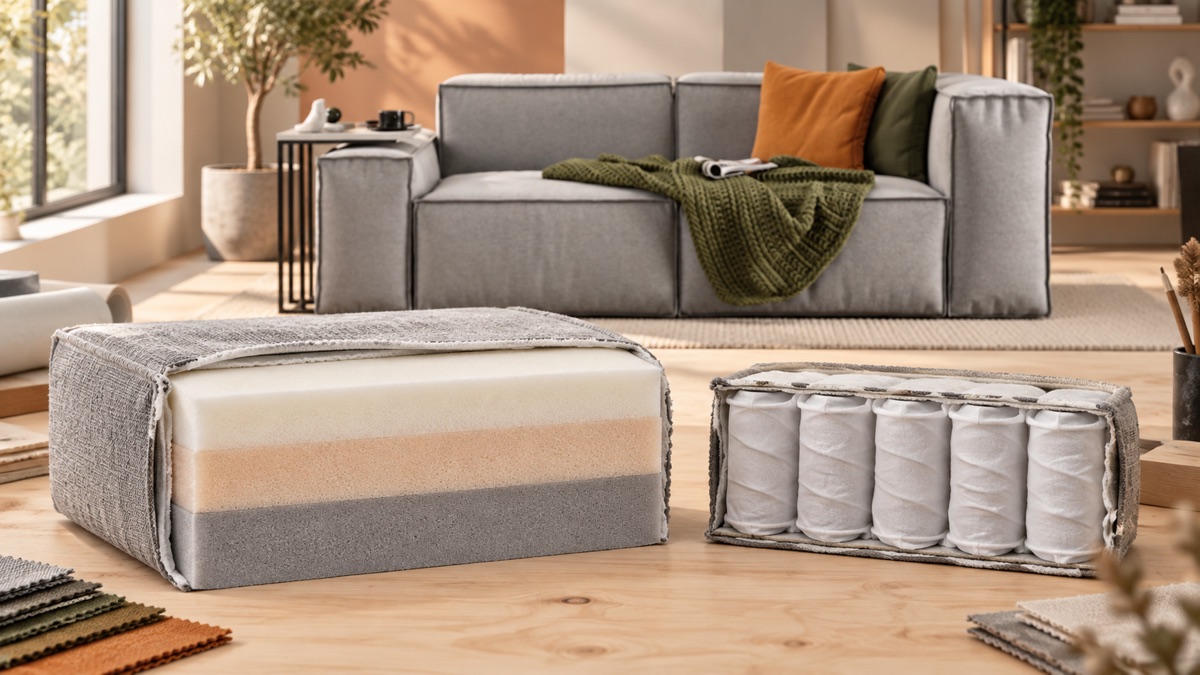
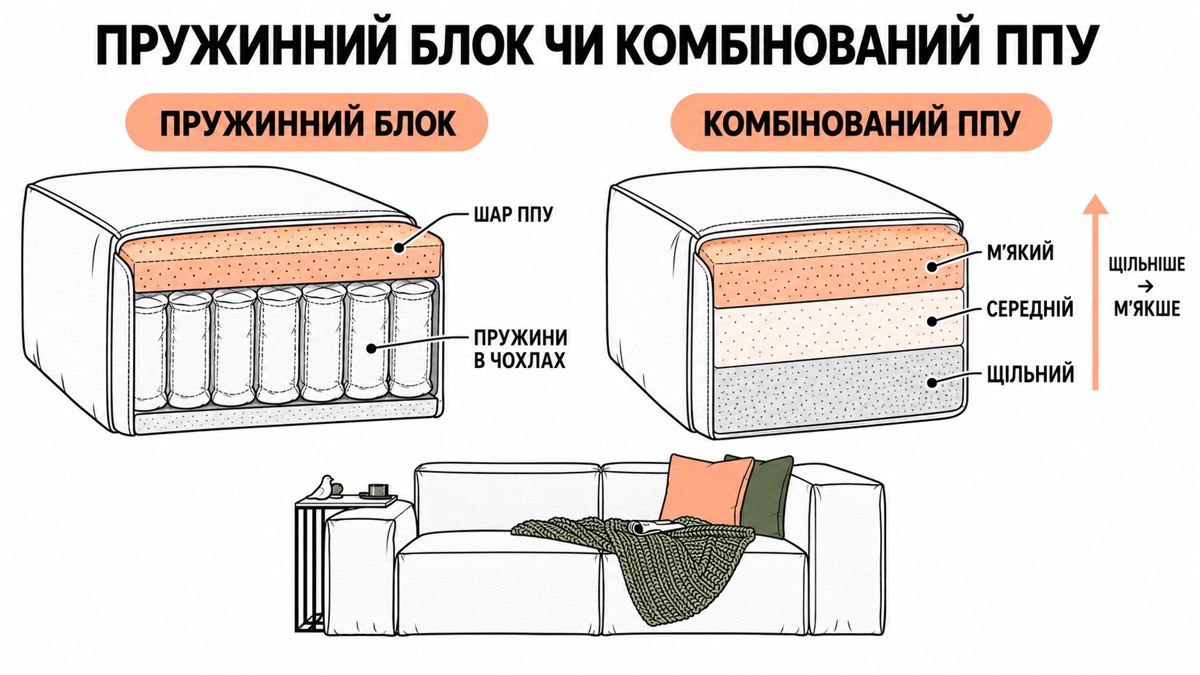
A pocket spring unit is a set of springs, each packed in its own fabric pocket. They work independently: press in one place and the neighbouring springs barely react.
That's where its main advantage comes from — point support. In a mattress this really matters: you lie on it for hours, the weight is distributed unevenly, and the mattress needs to give under the shoulder and hold under the lower back.
In a sofa there's always a layer of polyurethane foam or another material above the spring unit anyway — the springs themselves are never the top layer.
Why it's different in a sofa
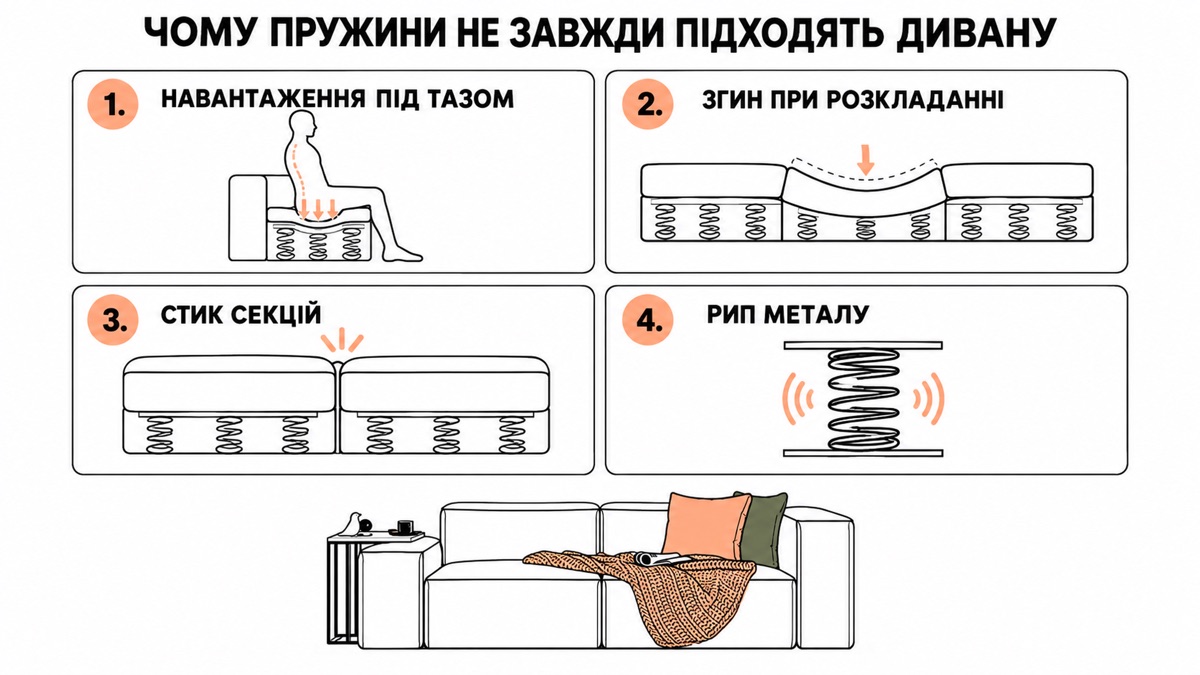
A sofa is mainly furniture for sitting. Even if people sleep on it from time to time. When you sit, the weight is concentrated on a small area under the pelvis rather than spread over the whole body. Here point support gives less than even support.
A sofa folds and unfolds. In sofa beds the construction moves and bends, and the mechanism transfers the load. A spring unit in such a construction is an additional rigid element that has to be placed and fixed somewhere, and it makes the construction heavier.
The join between sections. An unfolded sofa has a place where the seat and the backrest meet. If one section has springs and the other doesn't, the difference in springiness is felt exactly where a person lies across it with their lower back.
The unit's metal frame. The springs are fixed into a frame. Over the years, metal parts in a construction that moves regularly may start to respond to every movement — the sound of an old sofa that many people know.
What combined polyurethane foam does
The key word here is combined. It isn't one solid layer of foam, as many imagine.
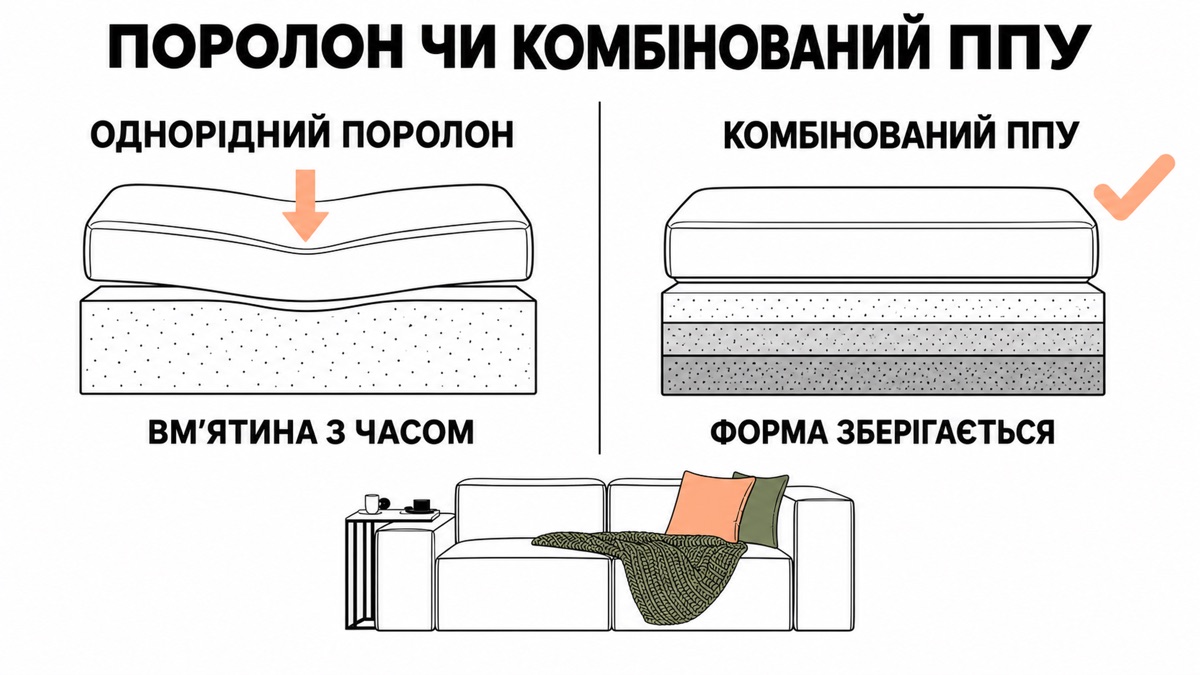
We lay several layers of different density. The denser ones at the bottom provide support: they hold their shape and don't let the seat sag. The softer ones on top provide comfort — they're what you feel when you sit down.
This gives an even surface with no areas that behave differently. And, which matters for a sofa, the same behaviour folded and unfolded.
One more argument, less obvious: repairability. If a layer sags after many years, it can be replaced — contact us and we'll quote the replacement. Within the warranty period it's free, after that it's a paid service. With an integrated spring unit such a repair is more complicated and more expensive.
The main myth: "foam sags"
This is the most common objection, and there's something to it — but it applies to cheap uniform low-density foam, not to combined polyurethane foam.
The difference between them is roughly the same as between chipboard and solid wood: formally both are "wood", but they behave completely differently.
What really affects durability:
Density. The higher the density, the better the material holds its shape. Cheap furniture uses a single low-density layer — and that's what sags within a year.
The number of layers and their order. One layer can't provide support and comfort at the same time. That's why a combination is needed.
Matching the load. The filling for a kids' sofa and for a sofa two adults sit on every day is chosen differently.
So the question isn't "foam or springs", but "which foam exactly and how it's laid".
When a spring unit makes sense
So it doesn't look as if we're defending our own choice at any cost.
In a mattress — yes. There point support really works in favour of the spine, and the construction doesn't move.
In deep non-folding sofas, where a person mostly half-reclines, a spring unit also makes sense.
But for sofa beds that are folded and unfolded every day, we deliberately chose a different path.
What this means for you in practice
The filling across our whole range is the same — from a pouf to a large corner sofa. This isn't "saving on cheaper models": the price difference between models goes on the design, the size and the fabric, not on what's inside.
You don't choose between "standard" and "improved" filling and pay extra for the second. There's only one.
If you're not sure which density will suit you, send us your height, weight and how you plan to use the sofa. This is a detail where our manager really can help, and it's better to settle it before ordering.
Read also: sofa dimensions and a sofa for everyday sleeping.
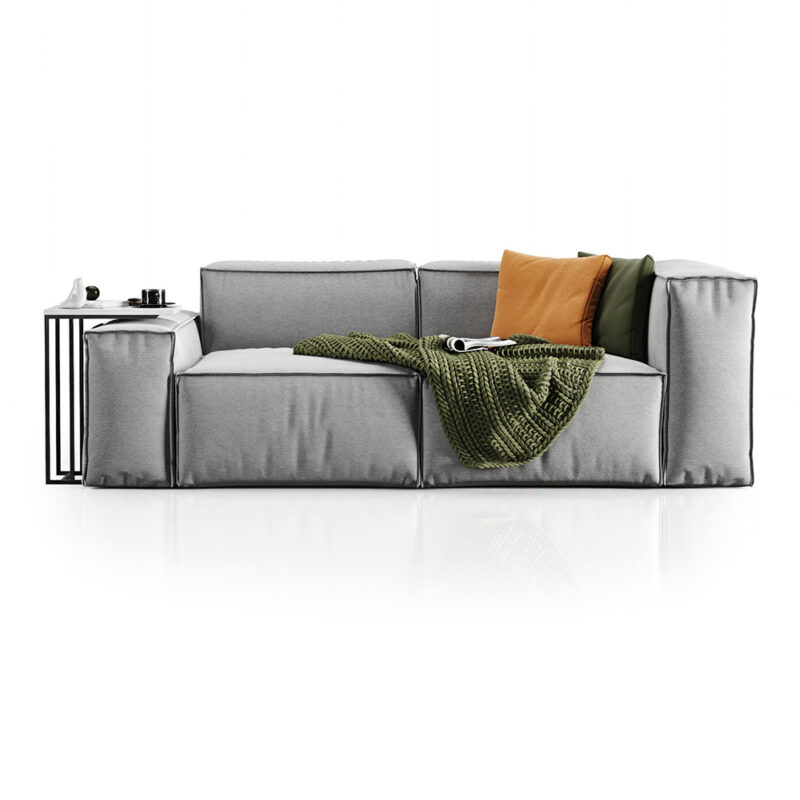
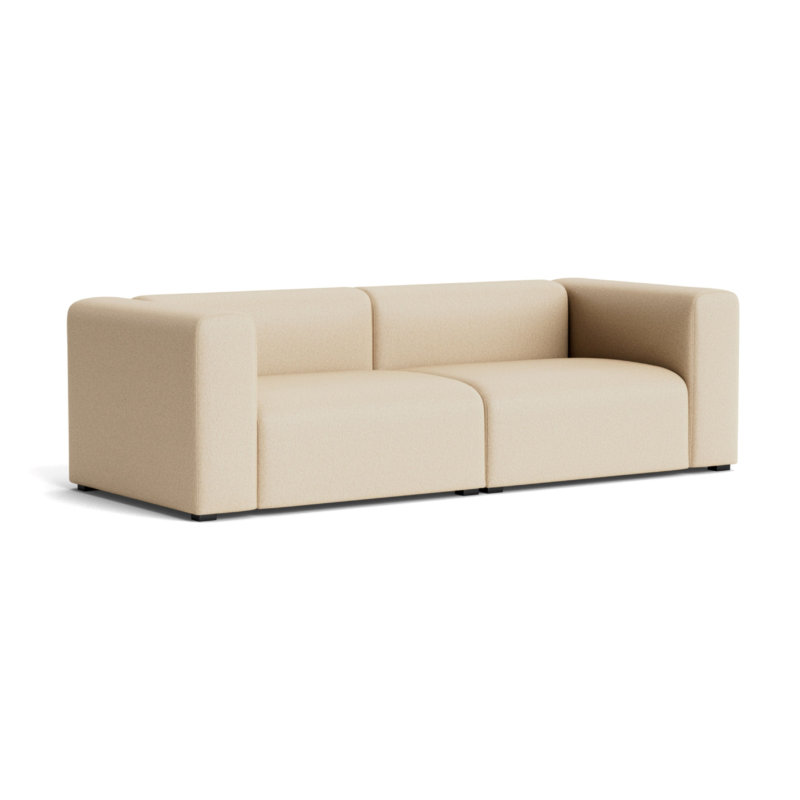
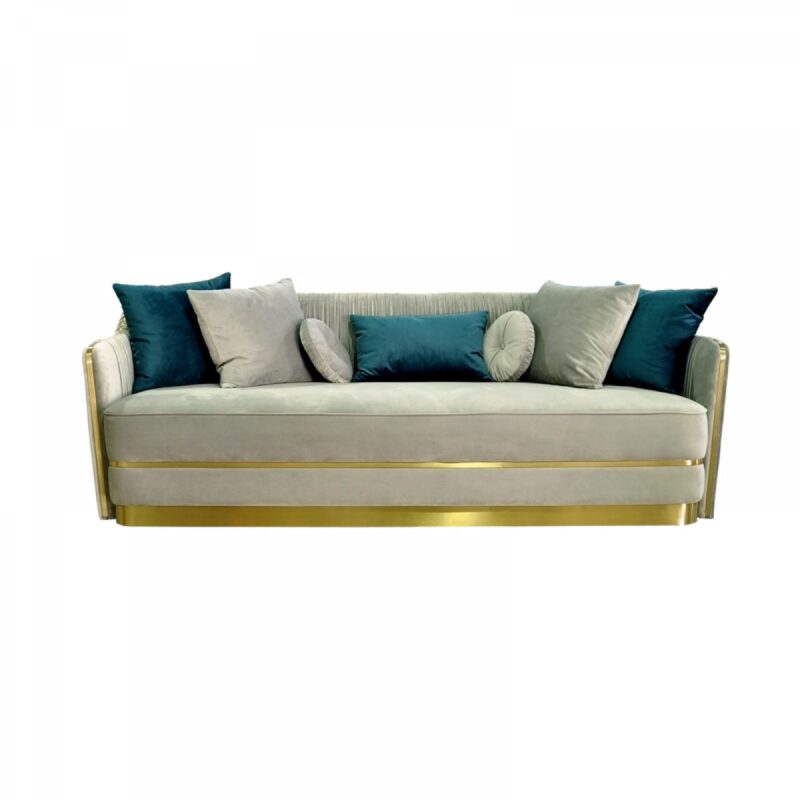
See our sofas with combined polyurethane foam of varying density — the filling is the same across the whole range.
Go to the sofa catalogue →