

The term "anti-vandal fabric" sounds as if it describes a material that can't be damaged. In fact it's a marketing name for fabrics with a tight weave and a protective treatment — they're much more resistant to scratches, moisture and dirt than ordinary upholstery, but they aren't invulnerable. Let's look at the myths and the reality.
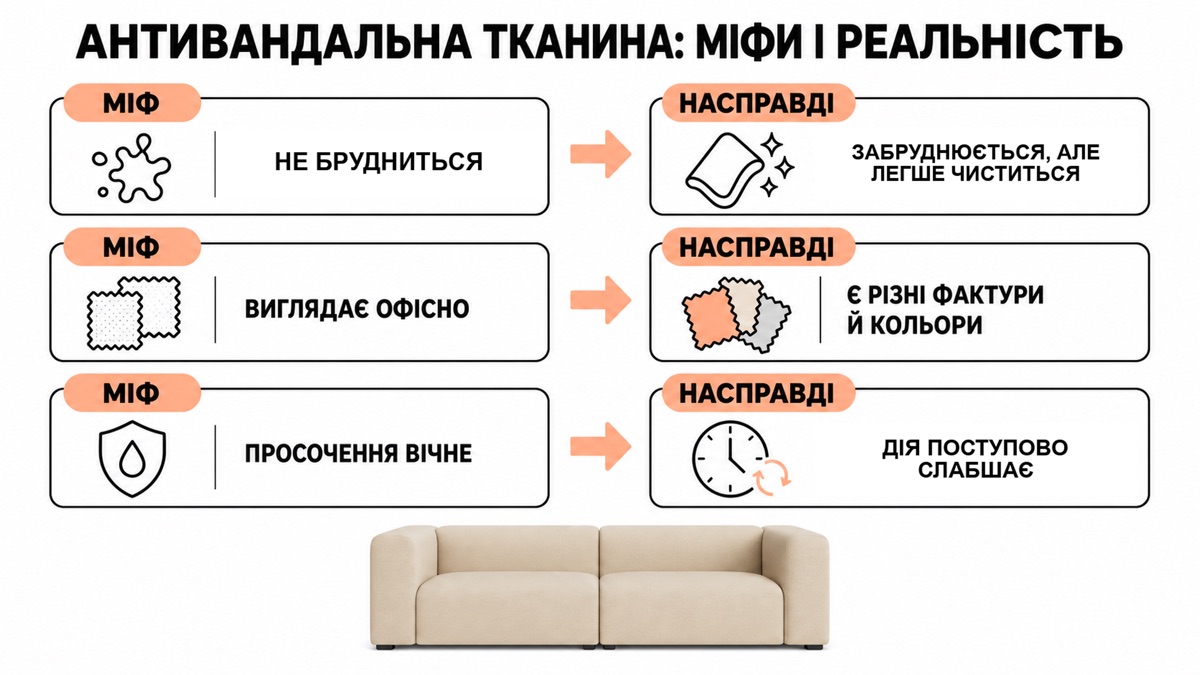
Myth 1: it never gets dirty
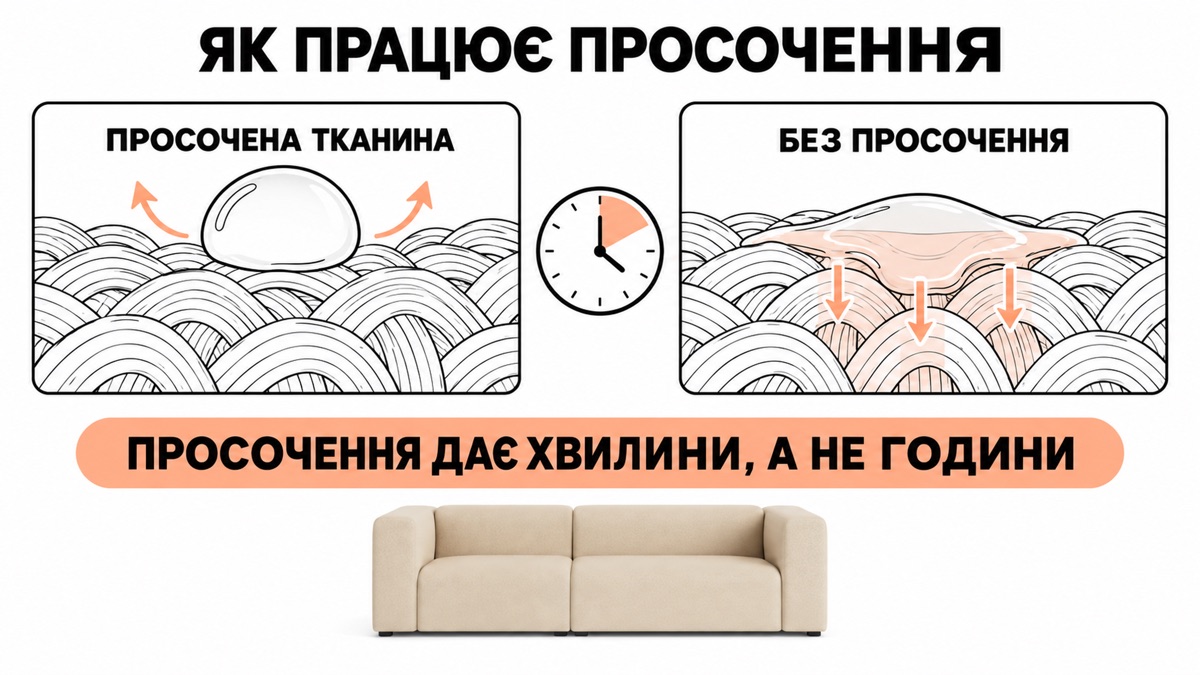
In reality, a protective treatment only slows down how quickly liquid soaks into the fibres, giving you time to wipe the stain — it doesn't make the fabric completely immune to dirt. The basic care rules are the same — see "How to look after your sofa".
Myth 2: it looks coarse and "office-like"
Modern anti-vandal options come in a wide range of colours and textures — from velvety to basket-weave. Finding an attractive option for any interior is perfectly realistic: see the palette in the article "Types of upholstery fabric", which brings together all the ECO, PRESTIGE and PREMIUM categories.
Myth 3: the protective treatment lasts for ever
A treatment is something applied to the fibres, not a property of the fabric itself, so after many cleans and years of use its effect gradually weakens. That's normal: the fabric doesn't "go bad", liquid simply starts to soak in faster, and you have to deal with stains more quickly. The conclusion is simple — even the most practical upholstery doesn't cancel out basic care.
What is real
Such fabric really does stand up better to pets' claws, point scratches and regular use thanks to its tighter weave, and a water-repellent treatment makes fresh liquid stains easier to remove. It's important to understand the limits too: no upholstery will protect against a sharp blade or bleach, so "anti-vandal" is about resistance to everyday household risks, not absolute immunity.
How to assess a fabric before buying
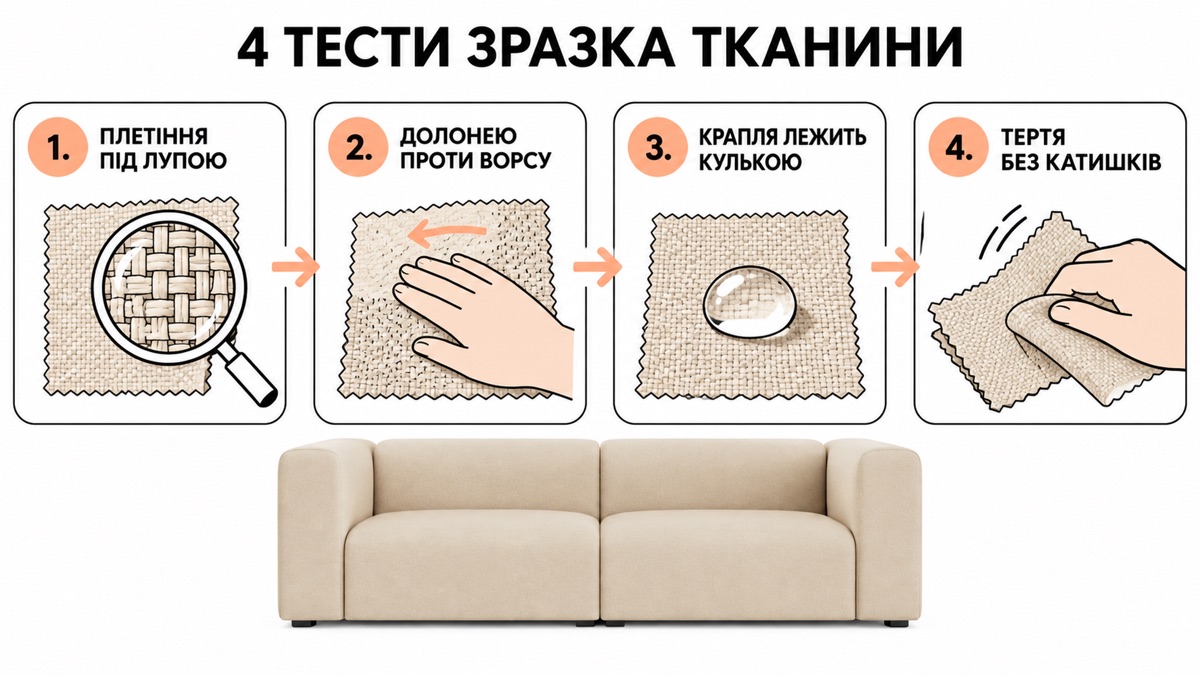
It's best to assess a fabric on a physical sample: ask for a swatch of the option you've chosen and carry out a few simple tests.
- Look at the weave density. The denser the structure and the fewer visible gaps between the threads, the better the fabric copes with wear and claws.
- Run your palm against the pile. A good fabric quickly returns to an even look without "bald patches".
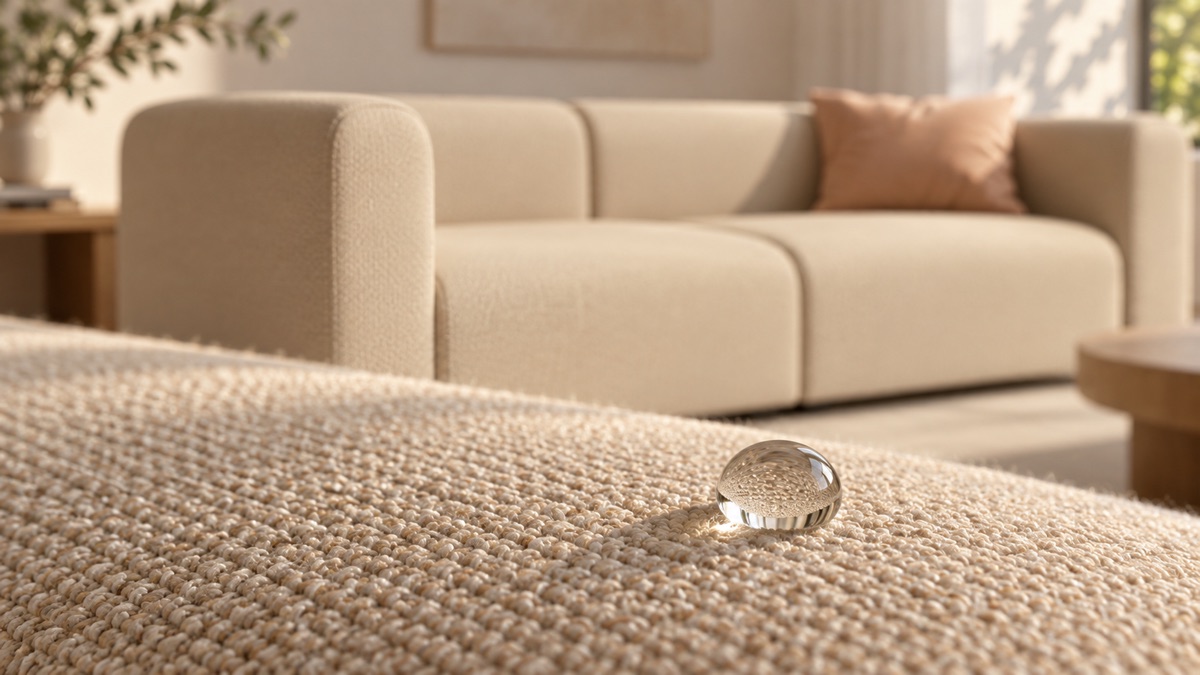
- Put a little water on the sample. On treated fabric a drop stays as a bead on the surface for a while instead of soaking in instantly.
- Rub the sample with a dry hand. A durable material won't get fuzzy or pill after a few vigorous rubs.
Who should choose it
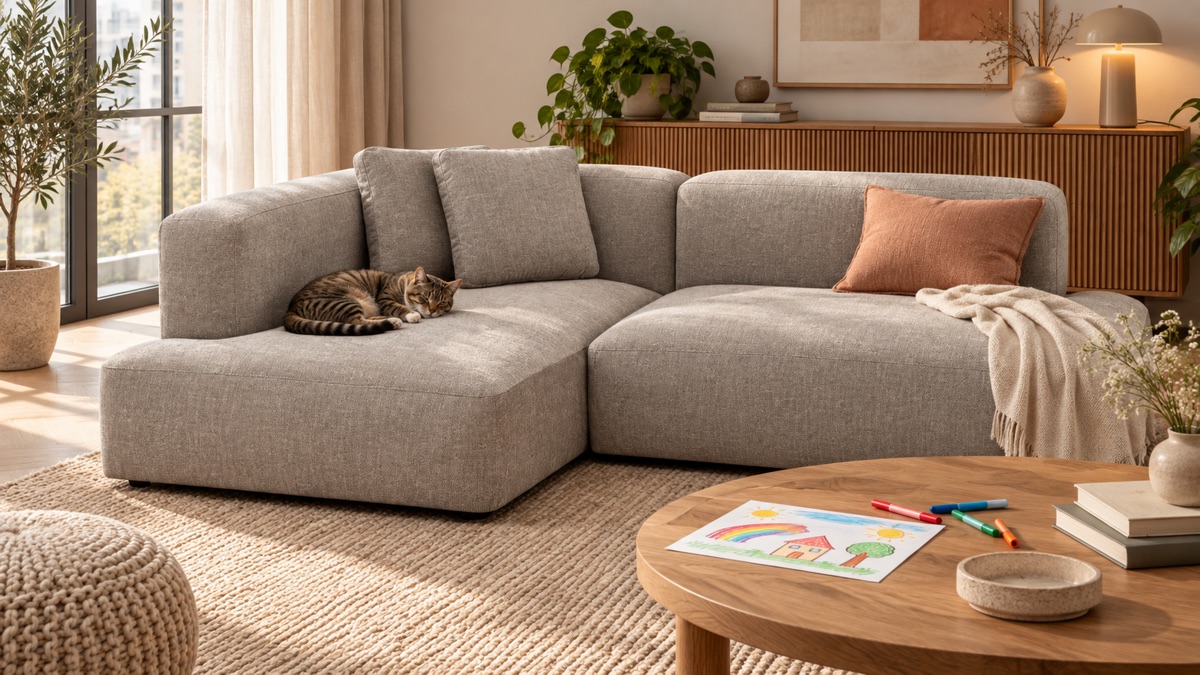
- Families with children and pets — daily wear is above average.
- For HoReCa — cafés and hotels, where furniture is used intensively.
- For sofas in a living room that's rarely used, a classic fabric without a treatment will do.
How to look after a treated fabric
The rules are the same as for ordinary upholstery, with one adjustment: harsh chemicals and hard rubbing destroy the protective layer faster than anything else. Blot fresh stains with a dry cloth, use mild products, don't overdo wet cleaning — and the treatment will keep working noticeably longer. Pet hair is easy to pick up from a tightly woven fabric with a rubber brush, and pile fabrics are worth brushing with a soft-bristled brush after cleaning and drying so the pile lies evenly.
Read also: fabric for a home with children and pets and types of upholstery fabric.
In short
- "Anti-vandal" fabric means a tight weave plus a treatment, not an invulnerable material.
- The treatment gives you time to wipe a stain but doesn't cancel out care.
- The choice of textures and colours today is as wide as for ordinary fabrics.
- Families with children and pets and the HoReCa sector benefit most.
- Mild products without harsh chemicals extend the life of the protective layer.
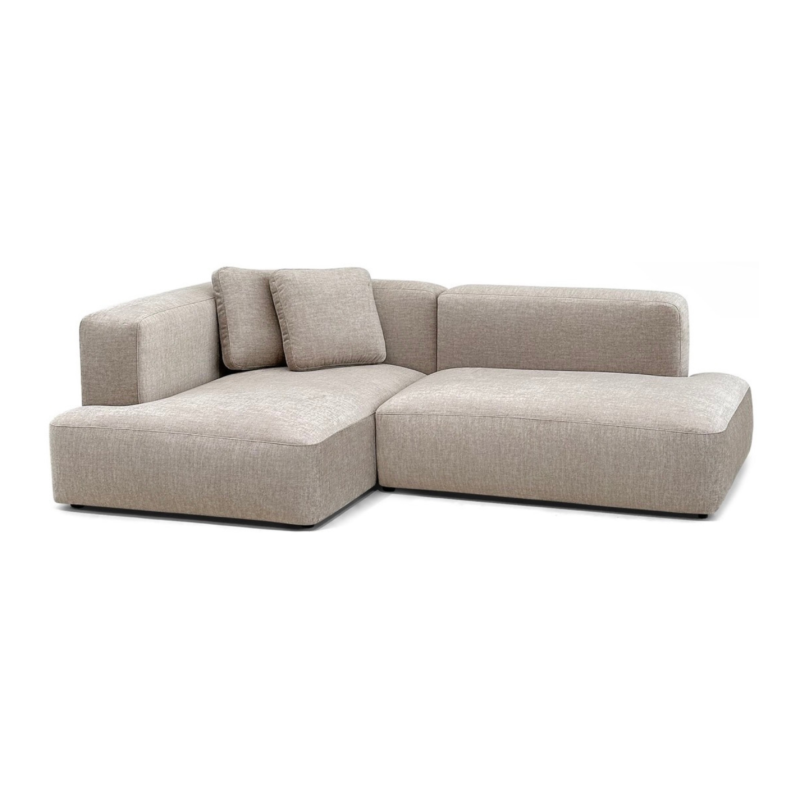
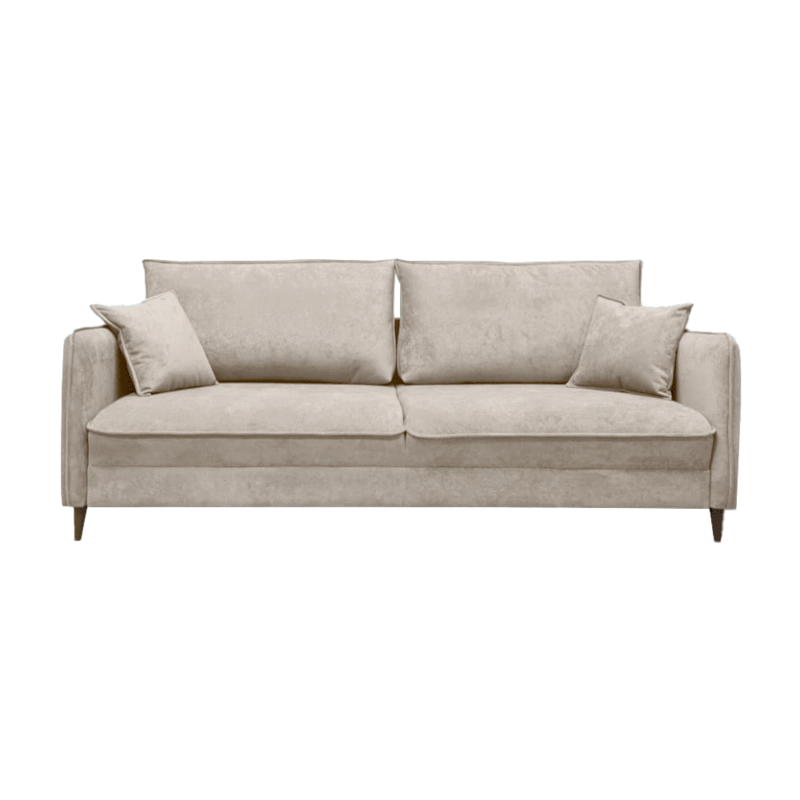
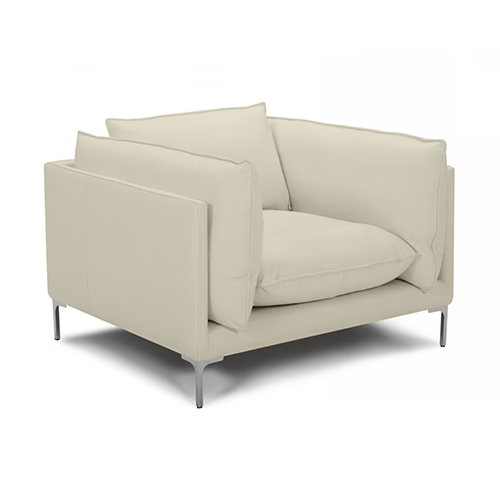
Choose a sofa and practical upholstery that can keep up with your family's busy life.
See sofas →