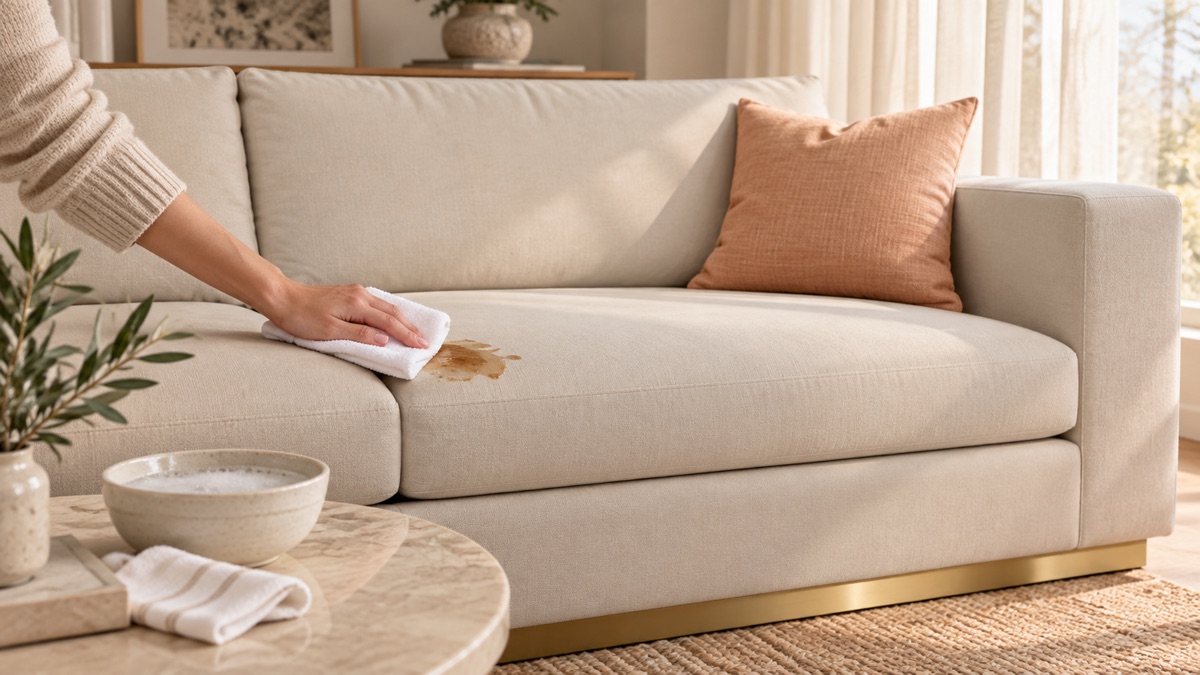


Looking after a sofa regularly doesn't take much time, but it noticeably extends the life of the upholstery and keeps it looking good. Here are five simple habits worth adopting — plus a list of mistakes that make a sofa age faster than it should.
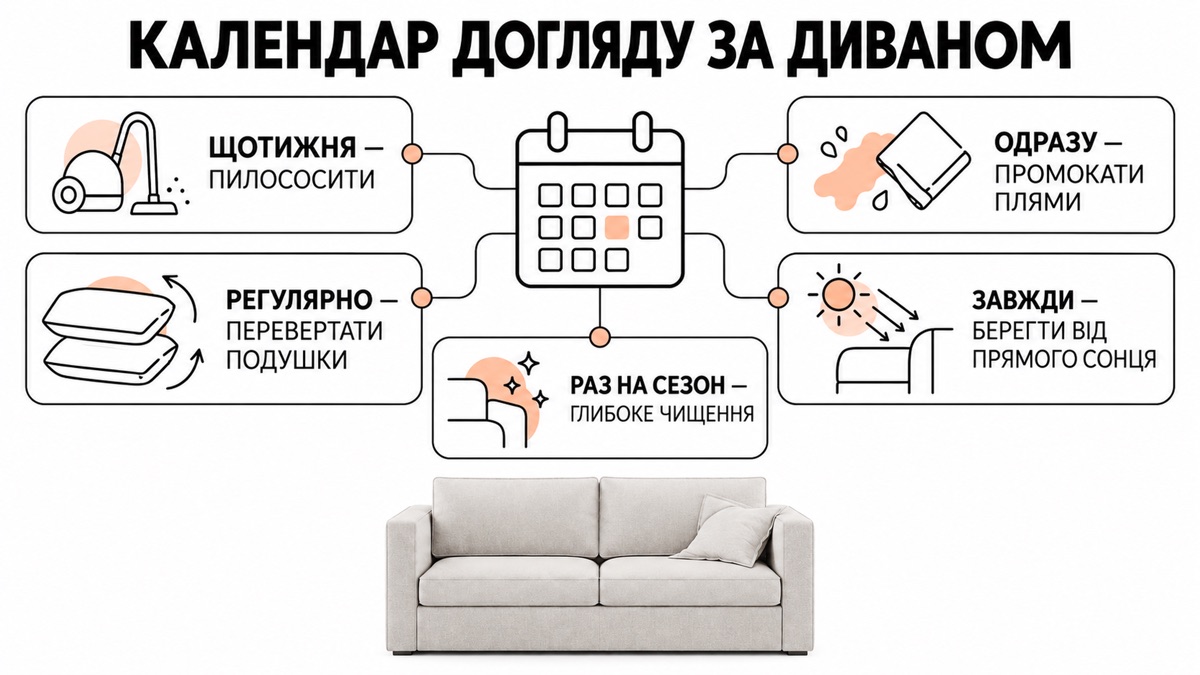
1. Vacuum weekly
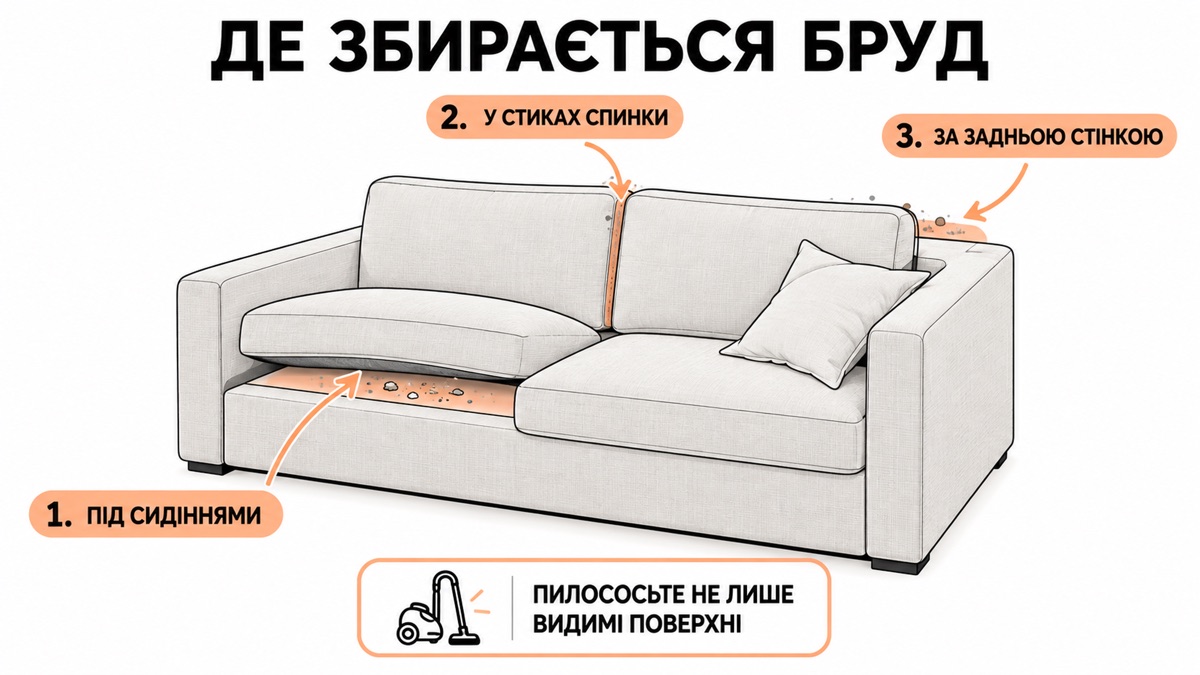
Dust and small particles settle in the fibres of the fabric and eventually wear it through at the folds. A soft upholstery attachment once a week prevents this and freshens up the look of the upholstery. Don't forget the areas under the seat cushions and the joins of the backrest — that's where most crumbs and dust collect. Five minutes a week here saves hours of fighting ingrained dirt later.
2. Deal with stains straight away
A fresh stain is much easier to remove than one that has had time to soak into the fibres. Blot (don't rub) with a cloth and use a product suited to the fabric type — the recommendations differ for natural and synthetic materials (more in the article "Types of upholstery fabric").
3. Turn and plump the cushions
Turning the seats and cushions regularly spreads the load evenly across the filling and prevents it losing its shape too early. It's easy to combine with cleaning: turn the cushions over and vacuum underneath them while you're at it.
4. Avoid direct sunlight
Ultraviolet light gradually fades even good fabrics. If the sofa stands by a window, use curtains or UV-protective film. Incidentally, fabrics with a protective treatment are more resistant to more than just stains — read "Anti-vandal fabrics: myths and reality".
5. A deep clean once a season
Home care keeps the sofa clean, but professional cleaning every few months removes dirt that an ordinary vacuum cleaner can't reach and freshens the fabric at a deeper level. If professional cleaning isn't on the cards yet, at least once a season go over the upholstery more thoroughly than usual: with the cushions removed, in the folds and along the back of the sofa.
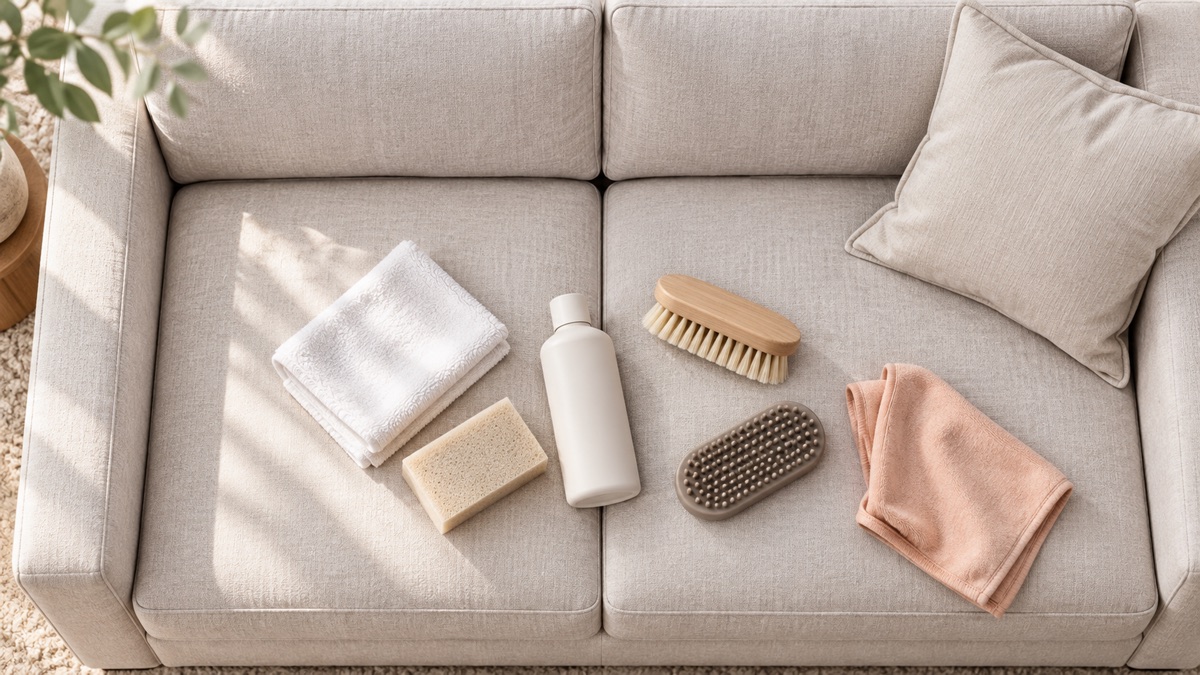
What to keep to hand: a basic care kit
So that looking after the sofa doesn't turn into a treasure hunt, keep a small kit in one place — then dealing with a stain takes a minute, not half an evening of searching.
- Microfibre cloths — gently pick up dust and moisture without leaving lint on the fabric.
- A soft sponge — for applying a soapy solution without unnecessary rubbing.
- A soft-bristled brush — lifts the pile of velour fabrics after cleaning.
- A neutral detergent — free of chlorine and harsh solvents, which can bleach the upholstery.
- A rubber brush or glove — if you have pets: it picks up hair from upholstery better than a vacuum cleaner.
Common mistakes that are easy to avoid
Most upholstery problems come not from a lack of care but from the wrong kind of care. Here's what not to do.
- Cleaning without a test. Always try any new product on an inconspicuous area first — for example, on the back or underside of the sofa.
- Too much water. Soaked upholstery takes a long time to dry, and moisture that reaches the filling can cause smells and tide marks.
- Stiff brushes on delicate fabrics. They "comb out" the pile and leave worn patches that can't be hidden.
- Always sitting in the same place. The filling sags unevenly — change your favourite spot from time to time.
Read also: how to clean stains off a sofa and anti-vandal fabrics.
In short
- Vacuum the sofa with a soft attachment once a week, including under the cushions.
- Blot stains straight away, don't rub, and test the product on an inconspicuous area.
- Turn the cushions so the filling wears evenly.
- Protect the upholstery from direct sunlight — ultraviolet fades fabric.
- Plan a deep professional clean once a season.

Planning a new sofa? Choose a model with practical upholstery that's easy to look after.
Go to the sofa catalogue →