

A chest of drawers and a wardrobe are not "low" and "tall". They are two different ways of storing clothes, and the choice between them comes down to one figure that people hardly ever ask about.
Depth decides everything
Clothes are stored in two ways: on hangers or folded. And each has its own depth requirements.
Hangers need at least 55 cm. Standard hangers are about 45 cm wide, plus a margin for the doors and so the clothes aren't pressed against the back panel. Less depth means hanging things sideways, and then a wardrobe stops being a wardrobe.
For folded clothes, 40 cm is enough. A jumper, a T-shirt or jeans take up 35–40 cm when folded. Any deeper and the back of the shelf becomes a place where things disappear and never come back.
Here is how it looks in our models:
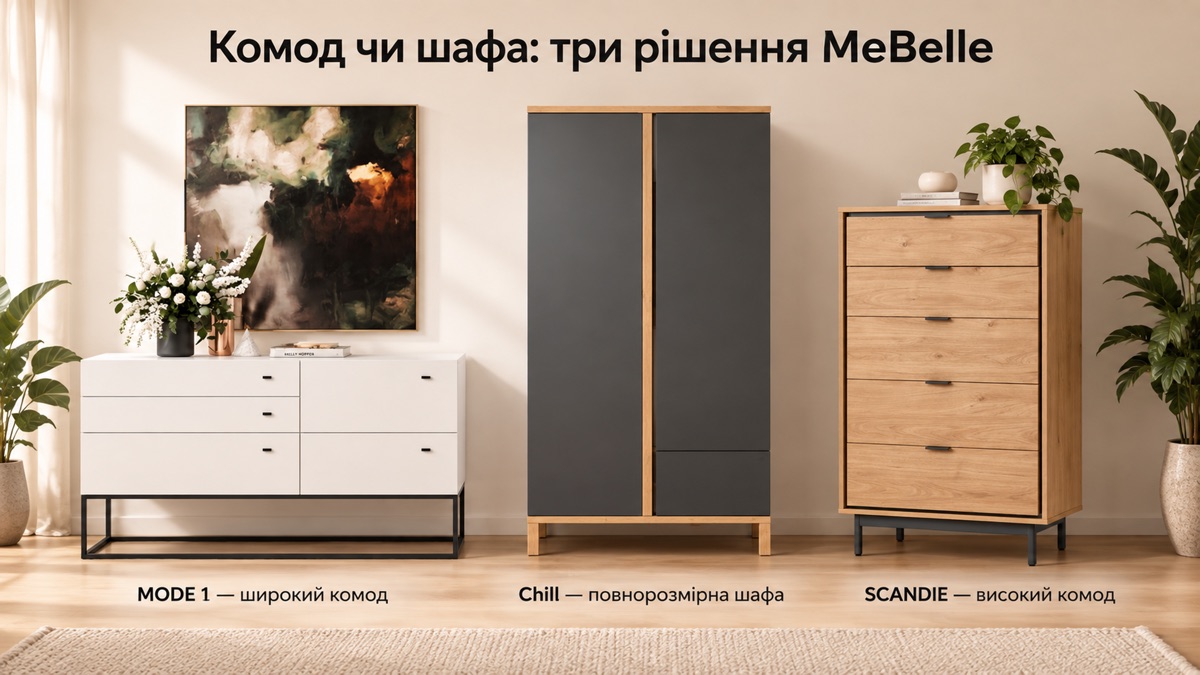
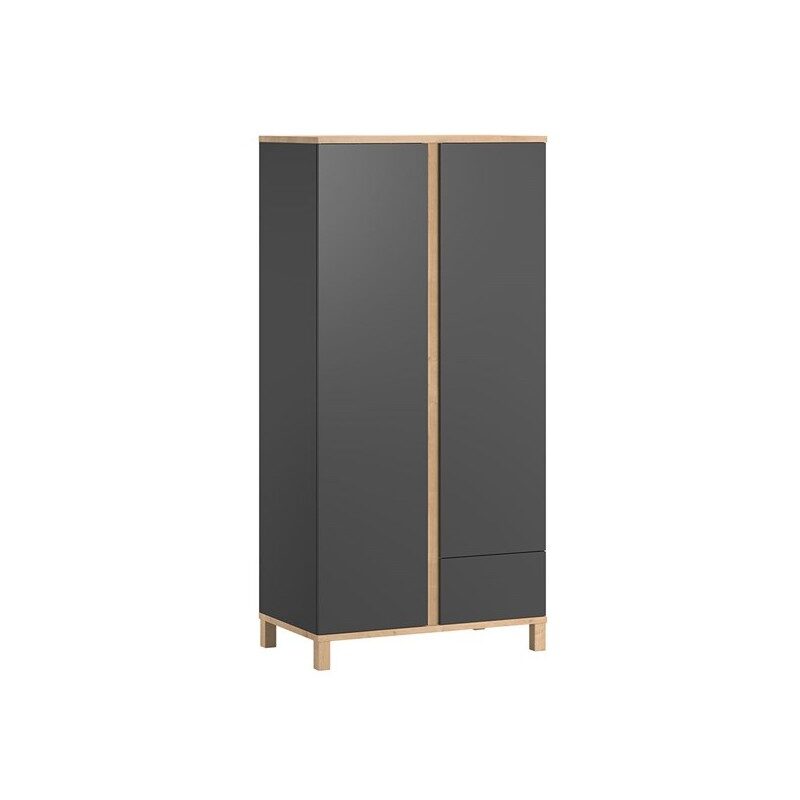
- Wardrobes: 50–61 cm deep. Chill and Chill 2 are 53 cm, MODE 50 cm, Only 54 cm, Chill 3 61 cm.
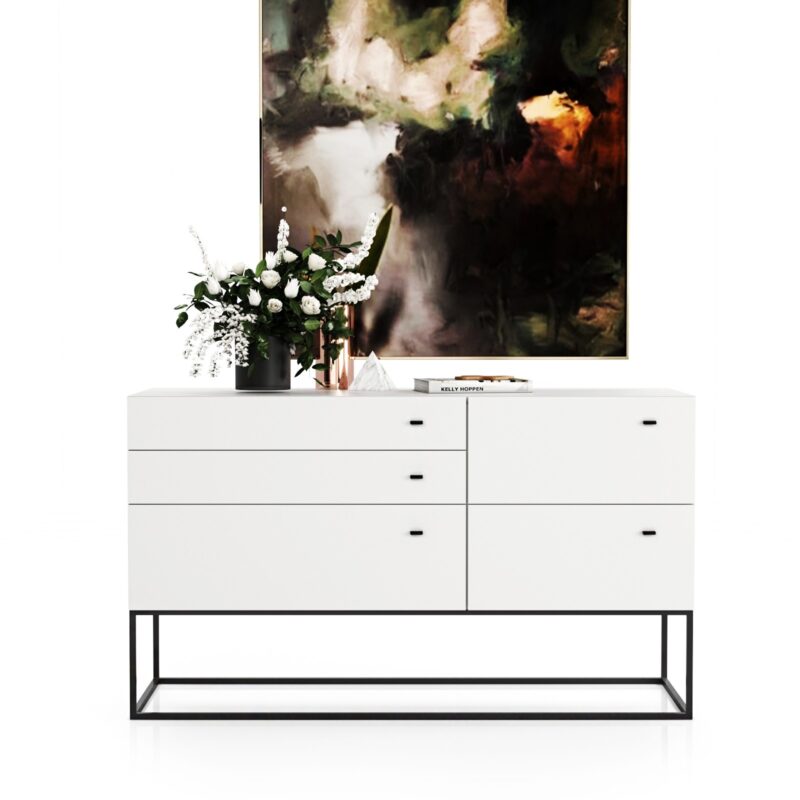
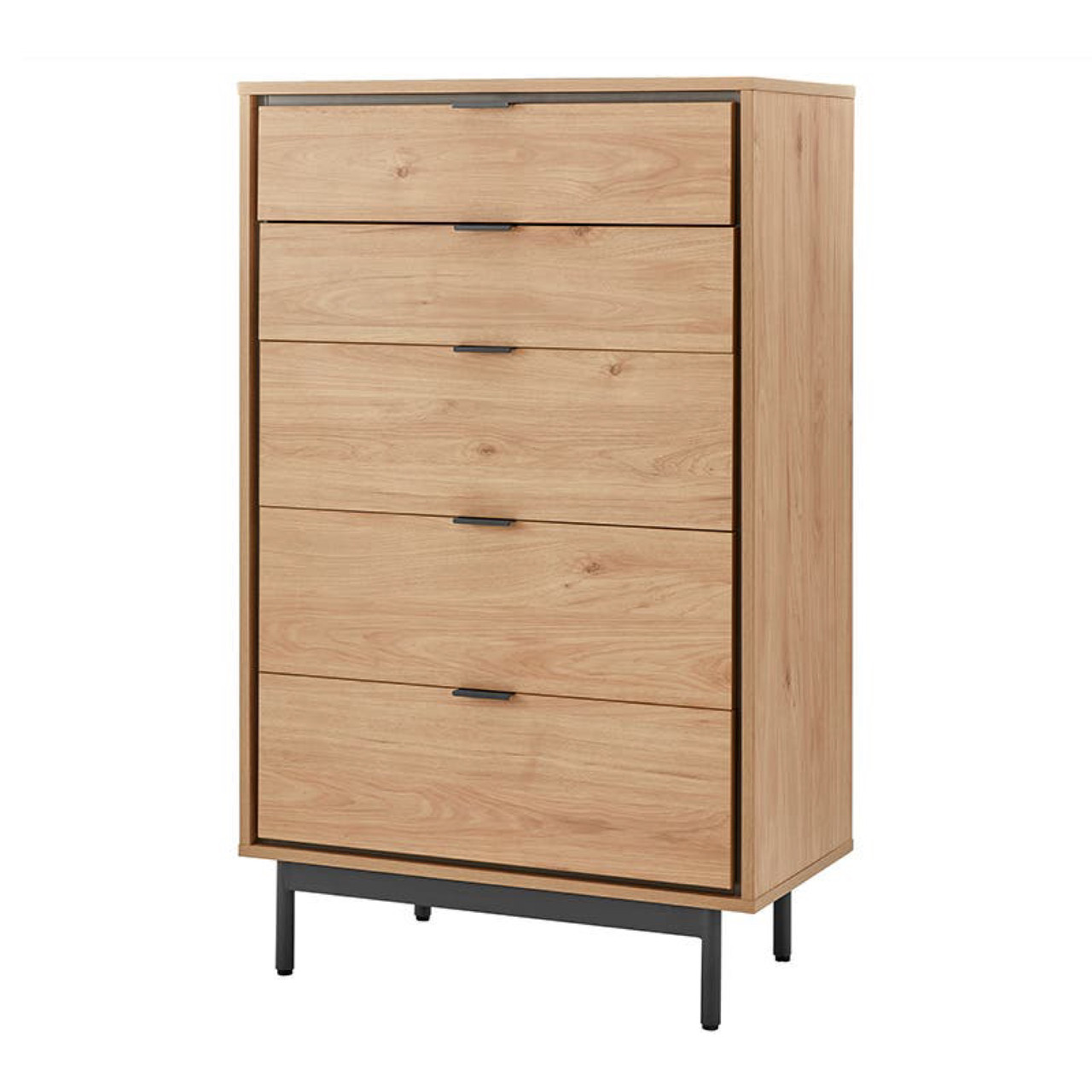
- Chests of drawers: 40–53 cm deep. Deshi and SCANDIE are 40 cm, MODE 1 41 cm, VOK and SOLID 45 cm, NAGRI 49 cm, Chill 53 cm.
The practical conclusion. If the room already has somewhere to hang coats and shirts, a chest of drawers will be enough. If not, no number of drawers will make a chest of drawers replace a wardrobe.

Chests of drawers: two different types that get confused
Within one category we have pieces with opposite logic.
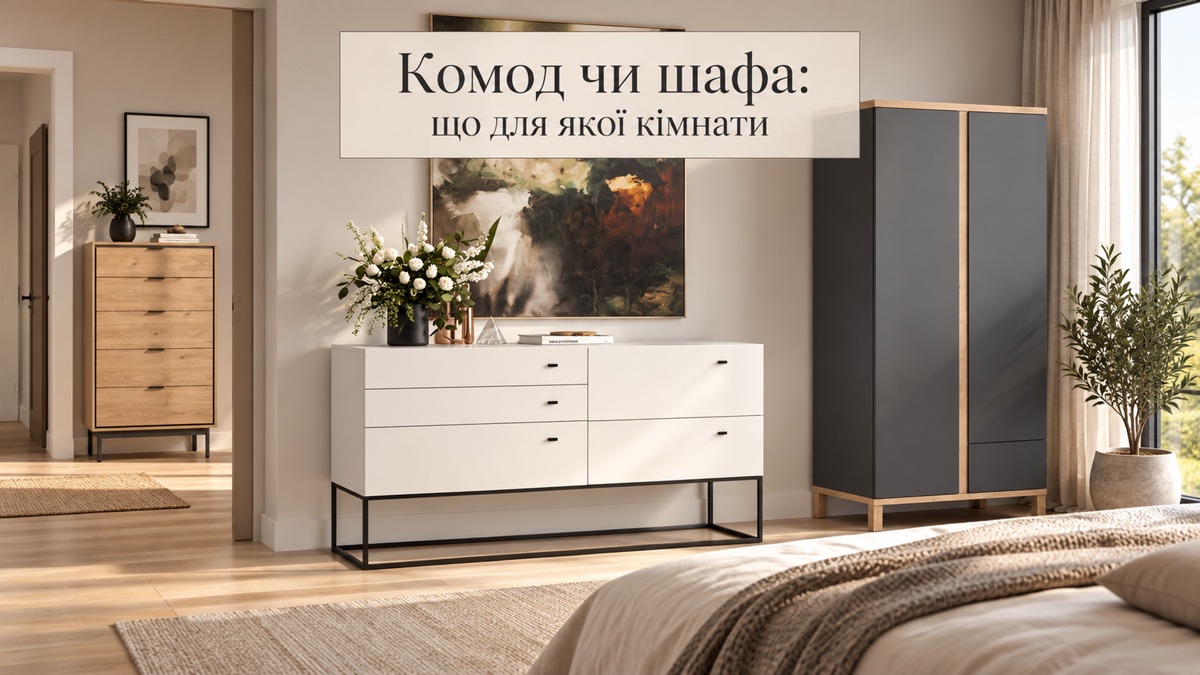
Low and wide. NAGRI 1 is 178 × 49 × 61 cm, VOK 190 × 45 × 80 cm, Deshi 2 120 × 40 × 80 cm. A chest like this works as a horizontal surface: you put a TV, a lamp or plants on it. It doesn't divide the room and sits well in a living room.
Tall and narrow. SCANDIE is 73 × 40 × 120 cm, SOLID 1 90 × 45 × 113 cm, Deshi 80 × 40 × 100 cm. This is a different piece: it takes up little floor but a lot of vertical space. It holds as much or more while using half the floor area. For a narrow bedroom or a corner it is often the only workable solution.
How to choose between them. Ask yourself what you are short of: storage or a surface. If it's a surface, low and wide. If it's only storage and the room is tight, tall and narrow.
Wardrobes: what to look at besides depth
Height. Ours range from 170 cm (Only) to 223 cm (Chill 3). The difference is fundamental: up to 180 cm you can reach the top shelf by hand; above that you need a chair. A tall wardrobe holds more, but the top section inevitably becomes a store for seasonal things rather than a working space.
Width. From 90 cm (Chill) to 225 cm (MODE). A simple rule applies here: one person with a full wardrobe needs about 100 cm of hanging rail. A 90 cm wardrobe is one set for one person. The 225 cm MODE is enough for a couple.
A separate note on shelving. The AMBER wardrobe-shelving unit (104 × 170 cm) is open storage. It looks lighter and doesn't dominate the room, but it demands order: everything in it is always on view.
Which for which room
Bedroom. A wardrobe as the basis, a chest of drawers as an addition. The logic: outerwear and shirts on hangers in the wardrobe, underwear and loungewear in the chest. If the floor area allows only one, choose the wardrobe, because folded clothes can go on its shelves, but you can't hang a coat in a chest of drawers.
Living room. A chest of drawers, almost always a low one. A wardrobe in a living room reads as a wall and eats up space that is worth more in this room than storage. A low, wide chest also gives a surface, which a living room is always short of.
Child's room. The chest of drawers wins. A child takes things out of a drawer and puts them back on their own, which doesn't work with a high rail until the teenage years. Plus safety: a low piece is less dangerous than a tall one that can tip over.
Hallway. A narrow chest of drawers, 40 cm deep. A deeper one simply won't fit, and 40 cm is enough for shoes and small items.

Two mistakes when buying
A chest of drawers "for the TV" instead of a TV stand. A chest of drawers is taller: 61–120 cm compared with 40–67 for TV stands. The TV will end up too high, and you'll have to watch with your head tipped back. The right height is covered separately in the article on a TV stand for your screen size.
Not measuring what opens. A drawer pulls out 40–50 cm, and so do hinged wardrobe doors. If there is a bed opposite, work out this distance separately: the piece may fit but not open.
Non-standard sizes
We make cabinet furniture to fit your space: width, depth and height. This is particularly useful here: a recess for a wardrobe is rarely a standard width, and a difference of 10 cm between "fits" and "doesn't fit" decides everything.
And from a reference too. Send the manager a photo, and our technologist will look at the construction and tell you what can be reproduced.
Read also: hinged or sliding doors and your dream walk-in wardrobe.
In brief
- Hangers need 55 cm of depth or more, folded clothes 40 cm
- Our wardrobes are 50–61 cm, our chests of drawers 40–53 cm: that is the real difference
- Chests of drawers come in two types: low and wide (surface) and tall and narrow (volume)
- Bedroom: wardrobe plus chest of drawers; living room: chest of drawers; child's room: chest of drawers; hallway: narrow chest of drawers
- Measure not only the piece but also the space it needs to open
Chests of drawers and wardrobes in one style, made to your size.
Chests of drawers →