

The most expensive mistake when buying a sofa isn't the colour or the mechanism. It's when the sofa arrives and doesn't go through the door, doesn't unfold all the way, or eats up a walkway that wasn't on the plan.
The short answer
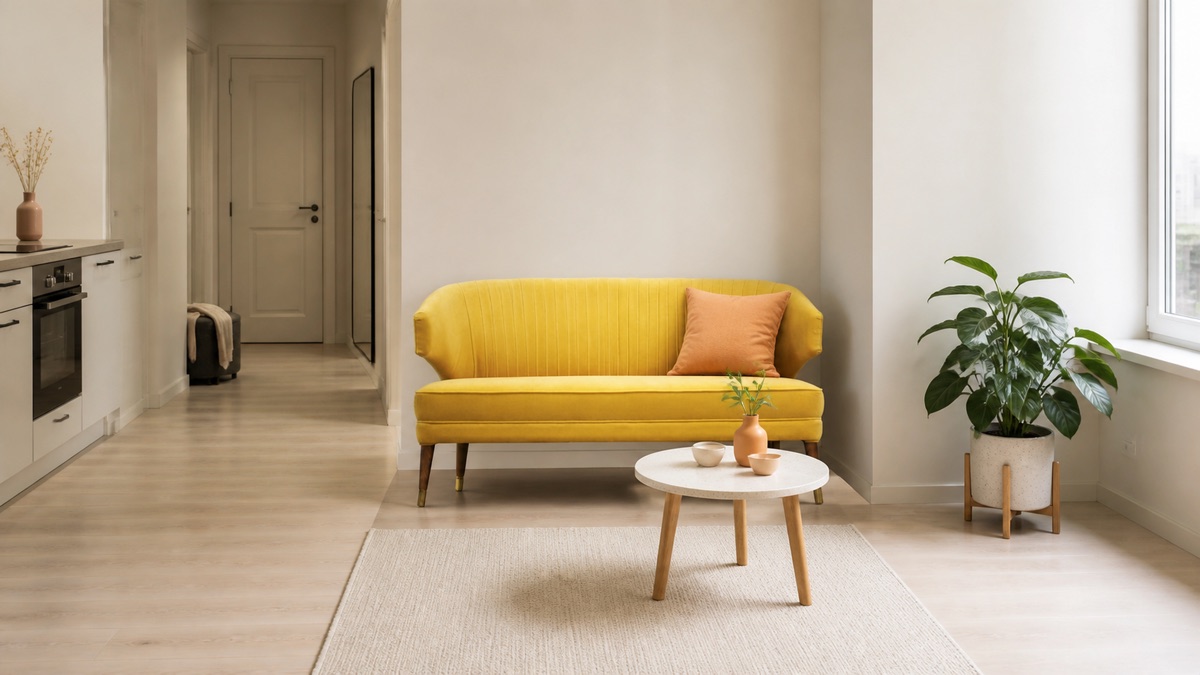
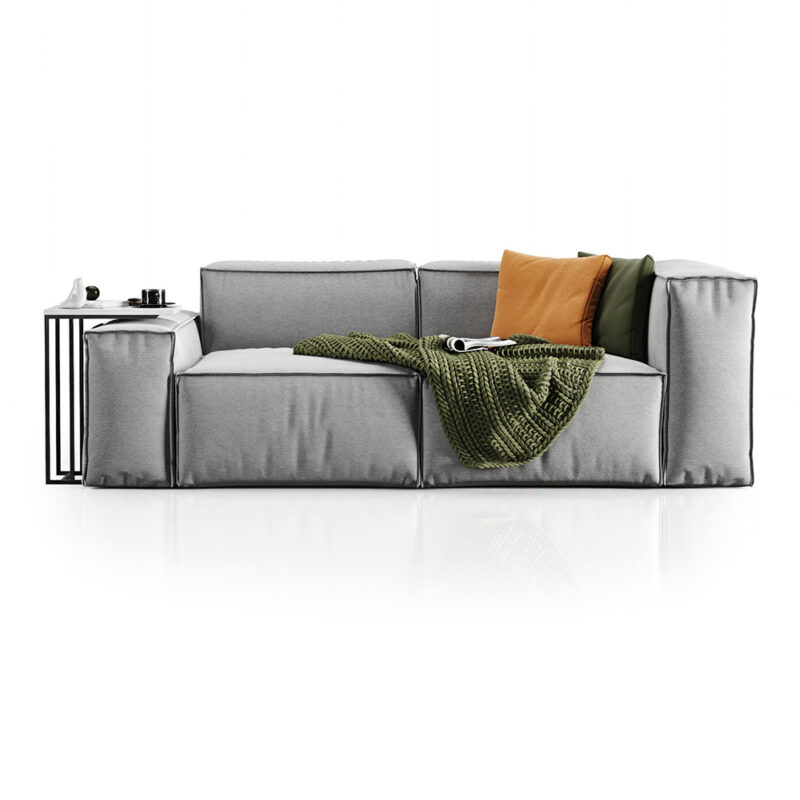
A straight sofa for two is 140–160 cm, for three 200–220 cm; the most versatile size for a living room is 180–200 cm. A corner sofa is described by two numbers: 220 × 150 cm suits a compact living room from 14 m², 260 × 170 cm a standard one of 16–20 m². Armrests take 20–25 cm on each side, so a 200 cm sofa gives a sleeping area of about 150–160 cm. How height and depth affect the seat is covered in the article sofa height and depth.
This article is about the numbers worth checking before you pay.
Overall dimensions and sleeping area are different numbers
This is the main misunderstanding in the whole topic.
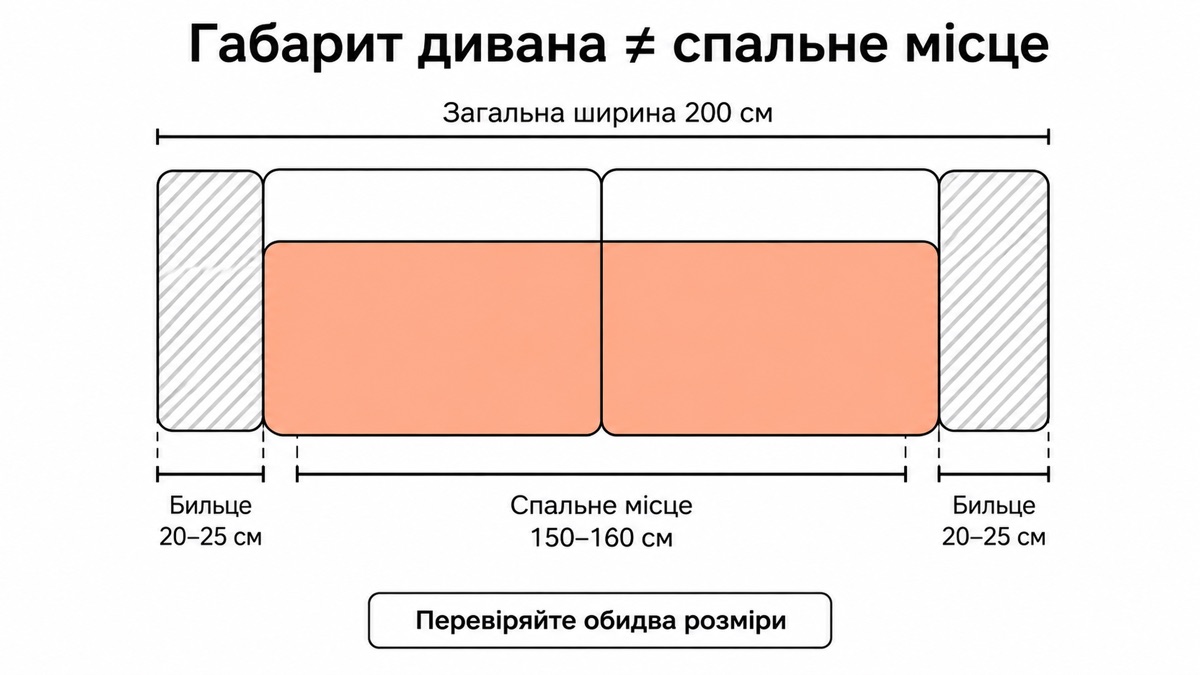
Overall dimensions are how much sofa stands in the room. Sleeping area is how much surface a person has when the sofa is unfolded.
The second is always smaller, and the main reason is the armrests.
When the sofa is unfolded, the armrests don't go anywhere: they frame the sleeping area on both sides. On our models an armrest takes 20–25 cm depending on the model. So a sofa 200 cm wide gives a sleeping area about 150–160 cm wide.
That's why you need to look at two numbers in the description, not one. If only the overall dimensions are given, ask for the sleeping area separately. If it's missing from the description, that usually means it isn't flattering.
Straight sofas: standard sizes
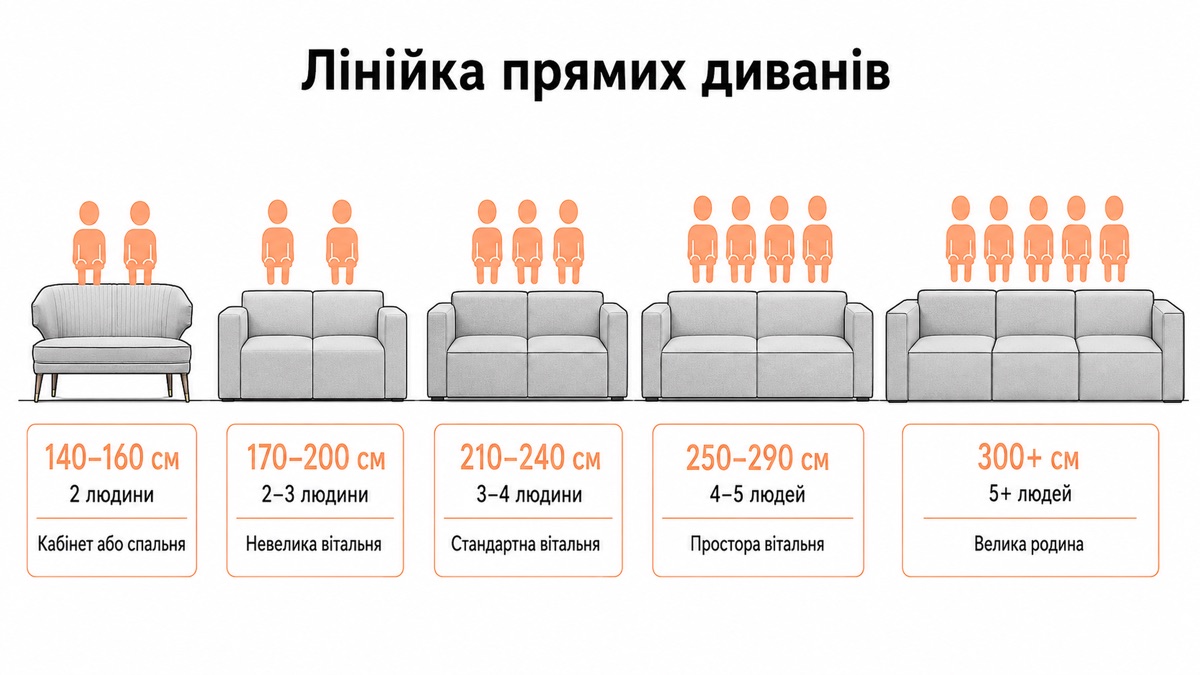
| Width | Seats | Typical use |
|---|---|---|
| 140–160 cm | 2 | Kitchen, small room, study |
| 180–200 cm | 2–3 | The most common size for a living room |
| 220–240 cm | 3–4 | Spacious living room, main sofa |
| 250–280 cm | 4–5 | Large room or studio |
| over 300 cm | 5+ | A sofa the room is built around |
Depth is usually 90–110 cm. A smaller depth saves space but makes the seat less "deep" — you sit on such a sofa rather than lie. A depth over 100 cm is for those who like to curl up with their feet on the seat.
Backrest height is 75–95 cm. A low backrest makes the room look lighter; a high one supports your head when sitting.
Corner sofas: how to calculate
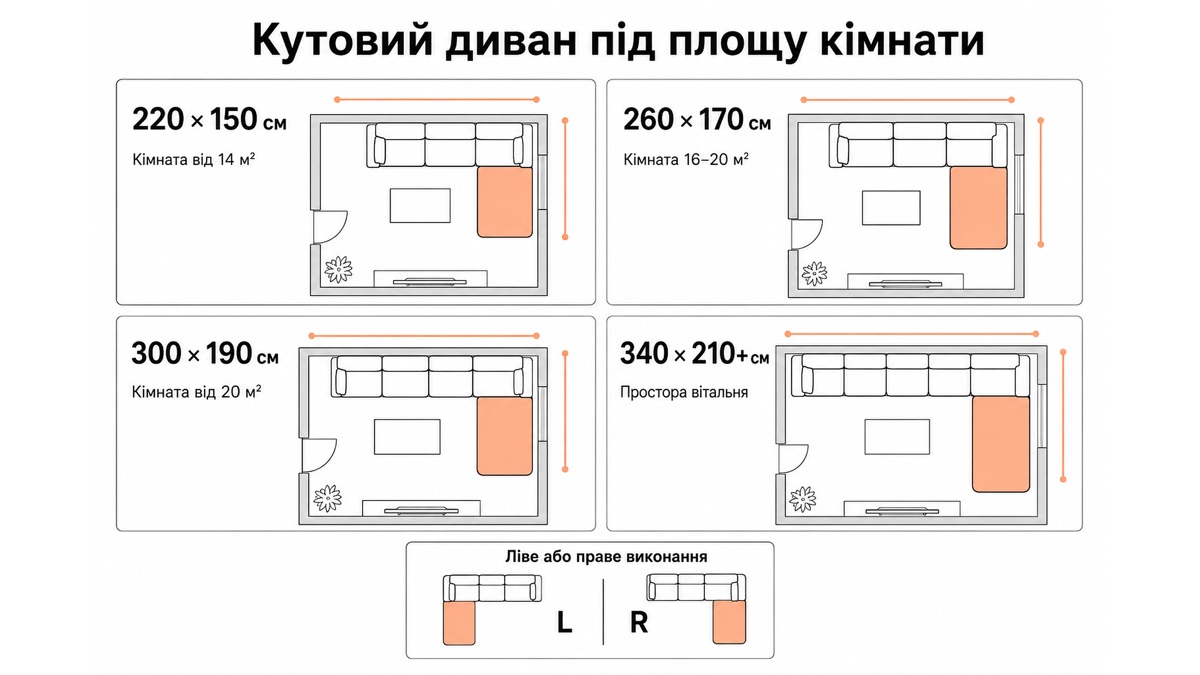
A third dimension appears here — the length of the corner section.
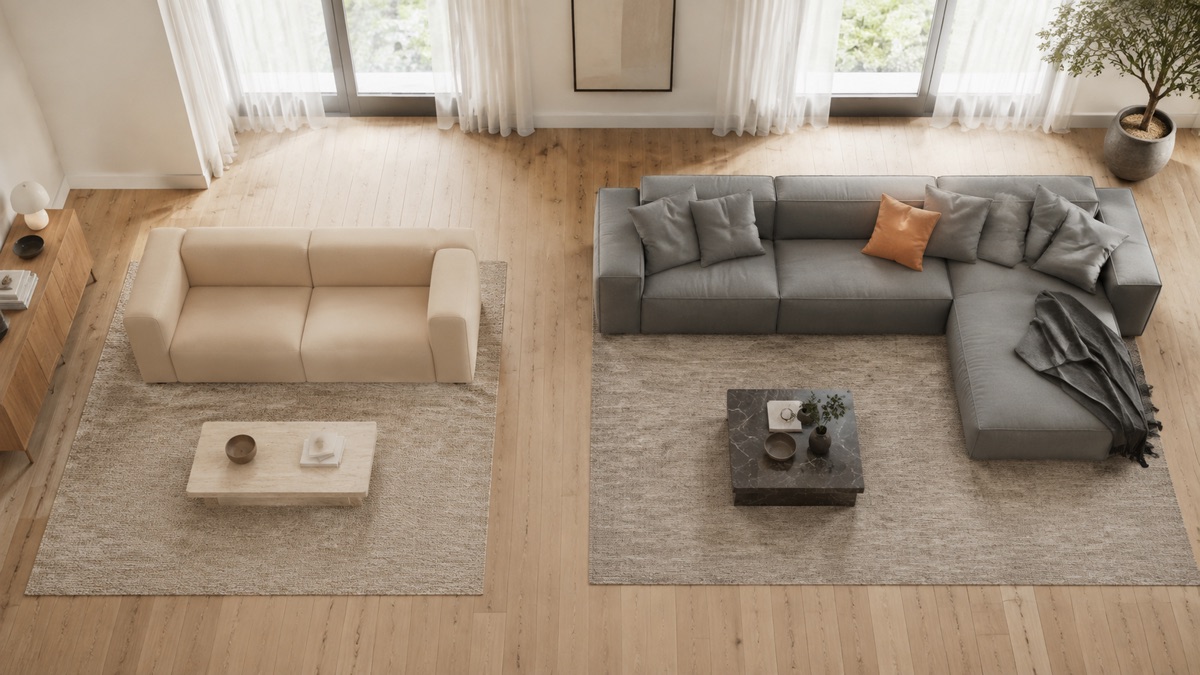
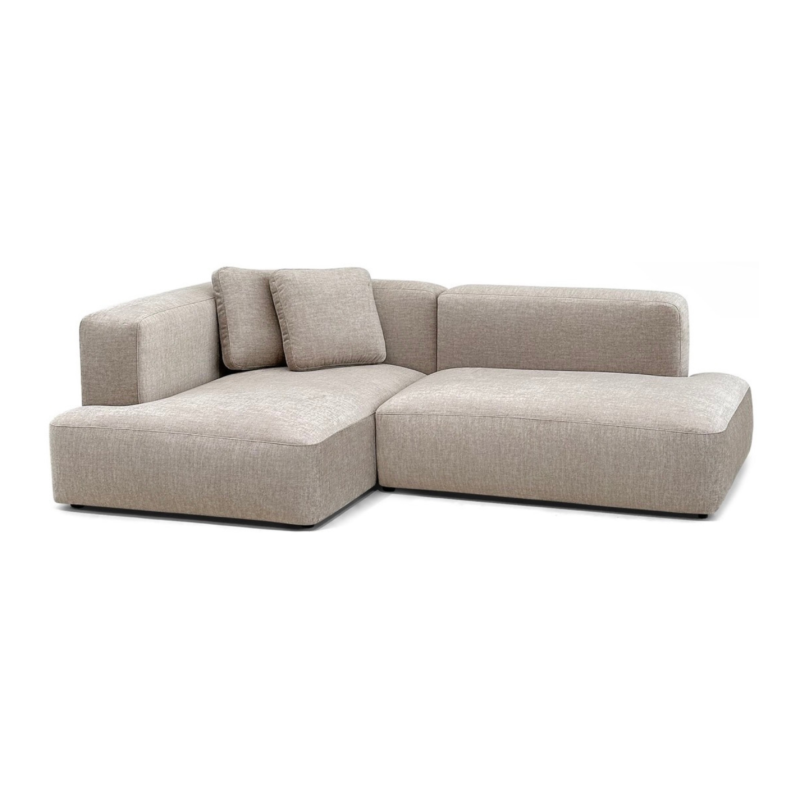
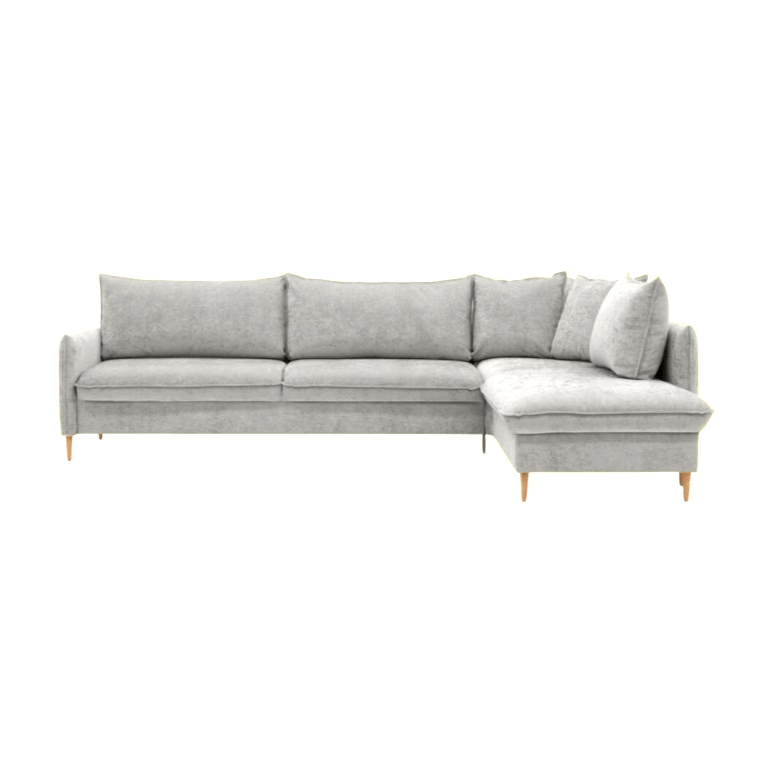
A corner sofa is described by two numbers: length of the main section × length of the corner section. For example, 280 × 180 cm.
| Size | For which room |
|---|---|
| 220 × 150 cm | Compact living room, from 14 m² |
| 260 × 170 cm | Standard living room, 16–20 m² |
| 300 × 190 cm | Spacious room, from 20 m² |
| 340 × 210 cm and larger | Large living room or studio |
These are general market guidelines. For comparison: in our corner sofas section, the overall length of the models ranges from 200 to 420 cm, so there's something for most of these scenarios.
Left- and right-hand versions refer to which side the corner is on when you stand facing the sofa. A mistake here can't be fixed: you'll have to replace the sofa or live with an awkward layout.
Before ordering, draw the room from above and mark where the window, the door and the TV are. The corner is placed so it doesn't block the walkway.
How much space you need to unfold it
The number people remember last, though it should be first.
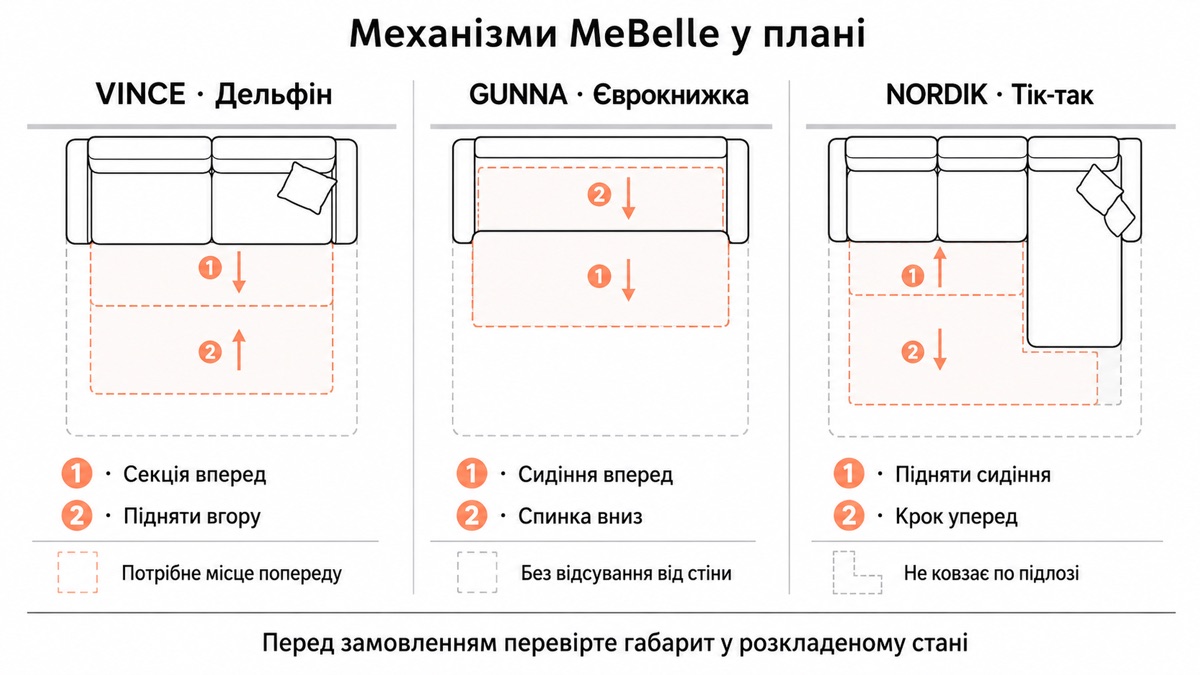
The mechanism determines where the sofa moves when it unfolds:
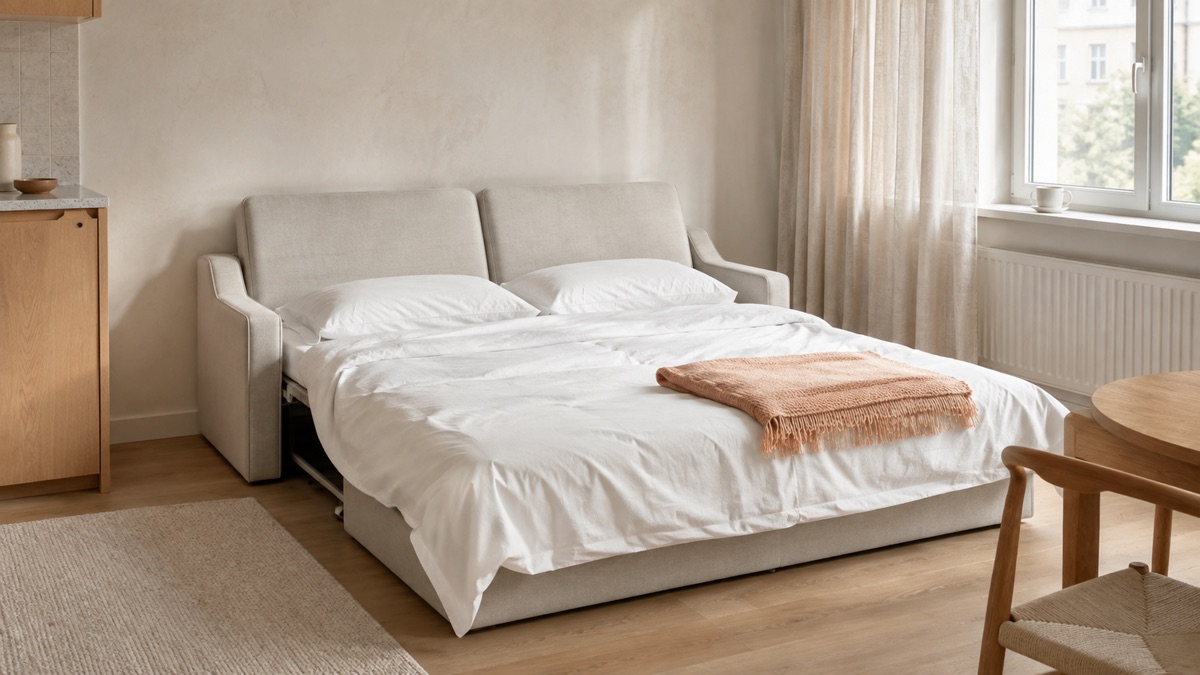
Dolphin — the lower section pulls out forwards. The sofa can stand flush against the wall. You need free space in front, roughly the length of the sleeping area minus the depth of the sofa.
Eurobook — the seat pulls out forwards and the backrest folds down into its place. It doesn't need moving away from the wall either, but you need 30–40 cm in front of the sofa.
Accordion — unfolds forwards in three folds. It needs the most space in front.
Book — the backrest tilts backwards, so the sofa has to be moved away from the wall by 10–15 cm. This is the most common cause of disappointment: someone puts the sofa flush against the wall and it won't unfold. Our catalogue doesn't have this mechanism — precisely because it takes space where there's usually not enough.
A practical tip: before ordering, put masking tape on the floor along the outline of the unfolded sofa. Five minutes of work that saves you from a mistake costing tens of thousands.
More about our two main mechanisms in the article "Eurobook or Dolphin".
Sizes for sleeping
If the sofa is your main bed, the guidelines are different.
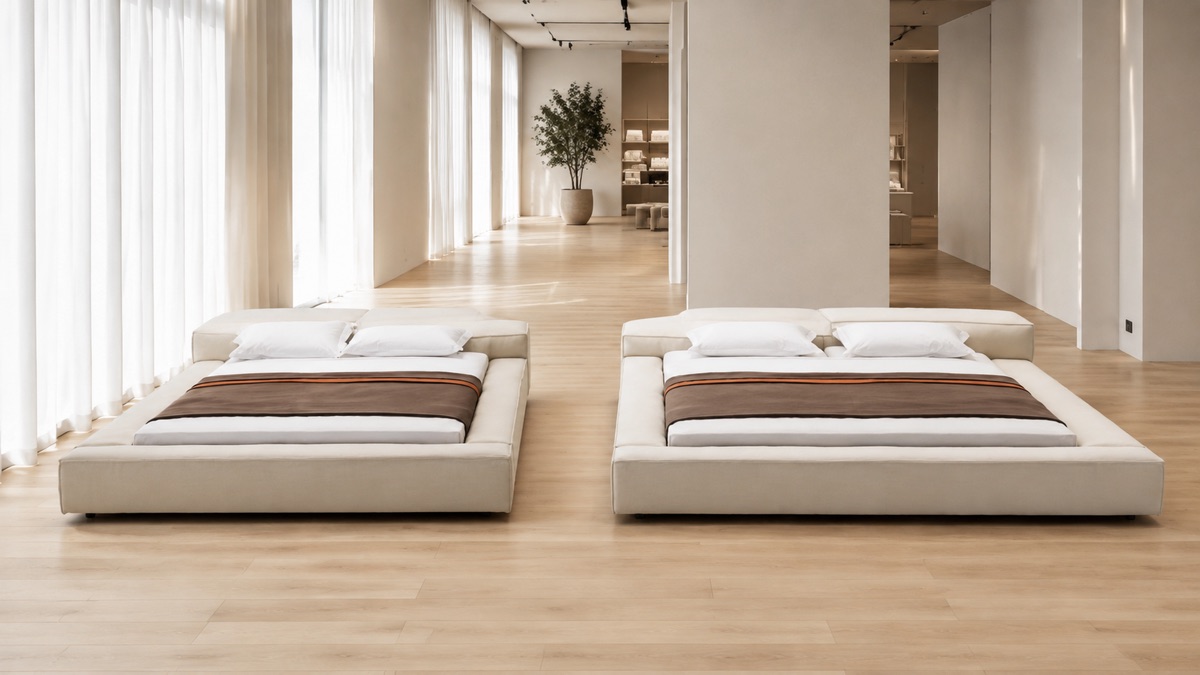
A length from 190 cm is the minimum for an adult. Anything shorter is fine for guests, whatever the catalogue calls it.
Width for one — from 80 cm is comfortable, from 90 cm is roomy. For two — from 140 cm is possible, from 160 cm is comfortable.
So a sofa with a 140 × 190 sleeping area for a couple is a small-double format: you can sleep on it, but it's tighter than a double bed.
Separately: an even surface. An unfolded sofa is made of several sections, and there's almost always a step where they meet. You won't notice it the first night — a month later you'll notice it every night. Ask whether you get one continuous flat surface.
What to measure in the room
Three things, and none of them is about the sofa itself.
1. The width of the wall minus sockets and radiators. A sofa that hits a radiator stands with a gap, and the gap has to be factored into the calculation.
2. The walkway. Between the sofa and the coffee table you need 40–45 cm to get through. Between the sofa and the opposite wall — from 70 cm if it's the main walkway in the room.
3. The delivery route. The most important and most often forgotten. Measure the width of the front door, the room door, the lift and the diagonal of the stairwell.
A 240 cm wide sofa arrives in several boxes, but the largest part is still 240 cm. If it doesn't fit in the lift, it will be carried up the stairs — and at some turn it may simply not get round.
When standard sizes don't fit
The most common scenario is a recess the sofa is 5–10 cm too big for. Or the opposite: there's more space, and a standard sofa leaves an awkward gap.
This is when changing the dimensions solves everything. Changing only the fabric doesn't affect the production time. Changing the dimensions or the design needs separate approval from our technologist — and a little more time. It's worth building this difference into your planning.
You can work out your size on the Custom-made sofa page.
Read also: sofa dimensions: height and depth and a corner or a straight sofa.
In short
- Overall dimensions and sleeping area are different numbers; armrests take 20–25 cm on each side
- A 180–200 cm straight sofa is the most versatile size for a living room
- A corner sofa is described by two numbers, and a left/right-hand mistake can't be fixed
- The mechanism decides whether the sofa can stand flush against the wall
- For everyday sleeping — length from 190 cm, width from 160 cm for two
- Measure not just the wall but also the delivery route
- Masking tape on the floor costs five minutes and saves the purchase
You can choose a model in the Sofas and Corner sofas sections.
Need a non-standard size? Work out your sofa in the configurator.
Configurator →