

Furnishing a hotel differs from furnishing a flat not in scale but in logic. What lasts ten years at home may look worn out in a hotel room within two. Below are seven things we recommend thinking through before you start choosing models.
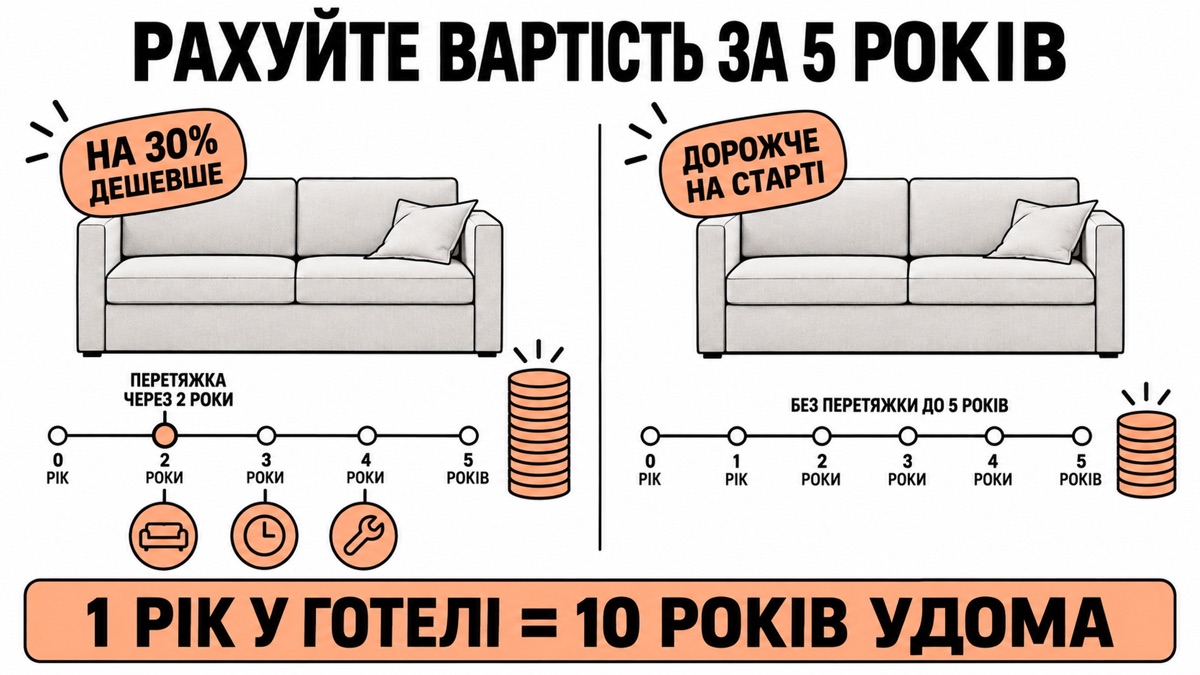
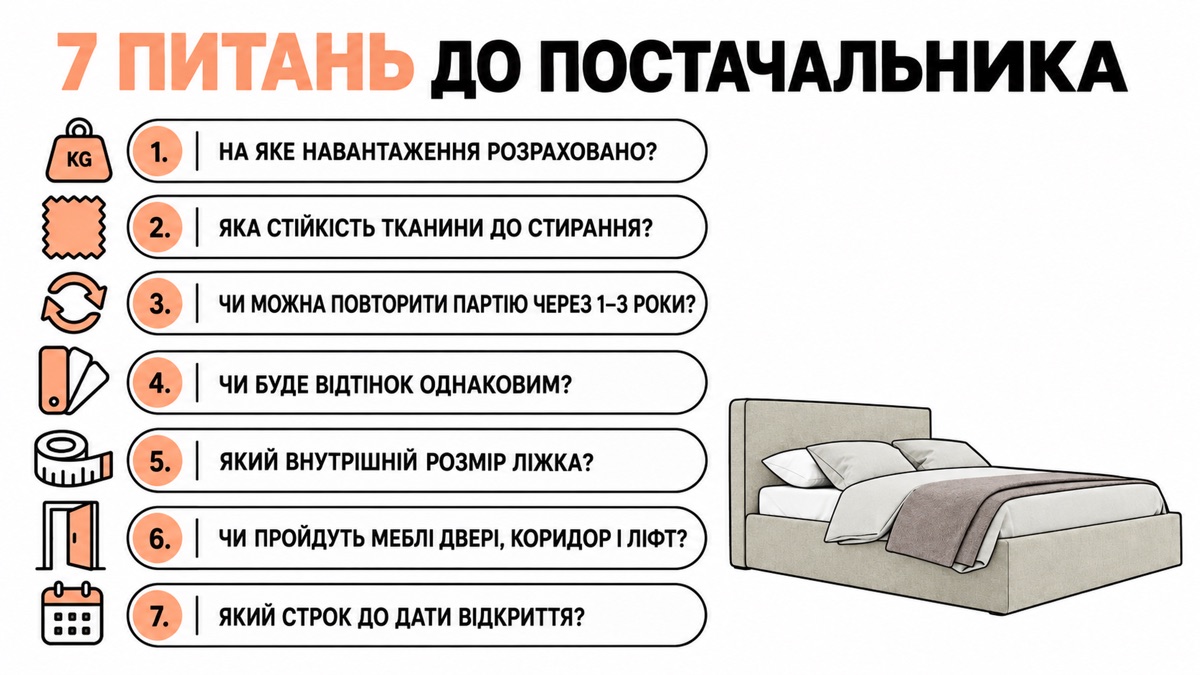
1. Count the cost over the service life, not the price per unit
The most common mistake on a first purchase is comparing suppliers by the price per item.
A sofa that costs 30% less but needs reupholstering after two years instead of five ends up more expensive. Plus hidden costs: a room that's out of use during a replacement doesn't bring in money.
So the question for a supplier should be not "how much does it cost" but "what load is it designed for".
2. Fabric durability is the key parameter
In a hotel room the guests change every day. In a year the furniture goes through what furniture at home goes through in ten.
When choosing fabric for a hotel, you look not at the colour but at the abrasion resistance figures. This is a technical characteristic of a particular collection, and different collections within the same price category differ significantly on it.
It's also worth considering:
Ease of cleaning. Stains in hotel rooms are inevitable. Fabrics with a water-repellent treatment let you remove most marks without calling in specialists.
Compatibility with cleaning products. Your staff already use certain chemicals. Not every treatment can withstand them — it's worth checking in advance, not after the first clean.
Fade resistance. Relevant for rooms with large south-facing windows.
3. Repeatable batches — something people remember too late
This is the problem clients most often bring to us after other suppliers.
A year later you need to furnish five more rooms — after an extension, after a refurbishment, after replacing damaged furniture. It turns out the model has been discontinued, the fabric is no longer supplied, and the "similar" one differs in shade, and the difference shows.
The question worth asking before signing the contract: will you be able to repeat this batch in a year or three?
A factory keeps the project specification and can repeat it. A shop reselling someone else's furniture can't, because it doesn't control the range.
4. Identical rooms depend on a single batch
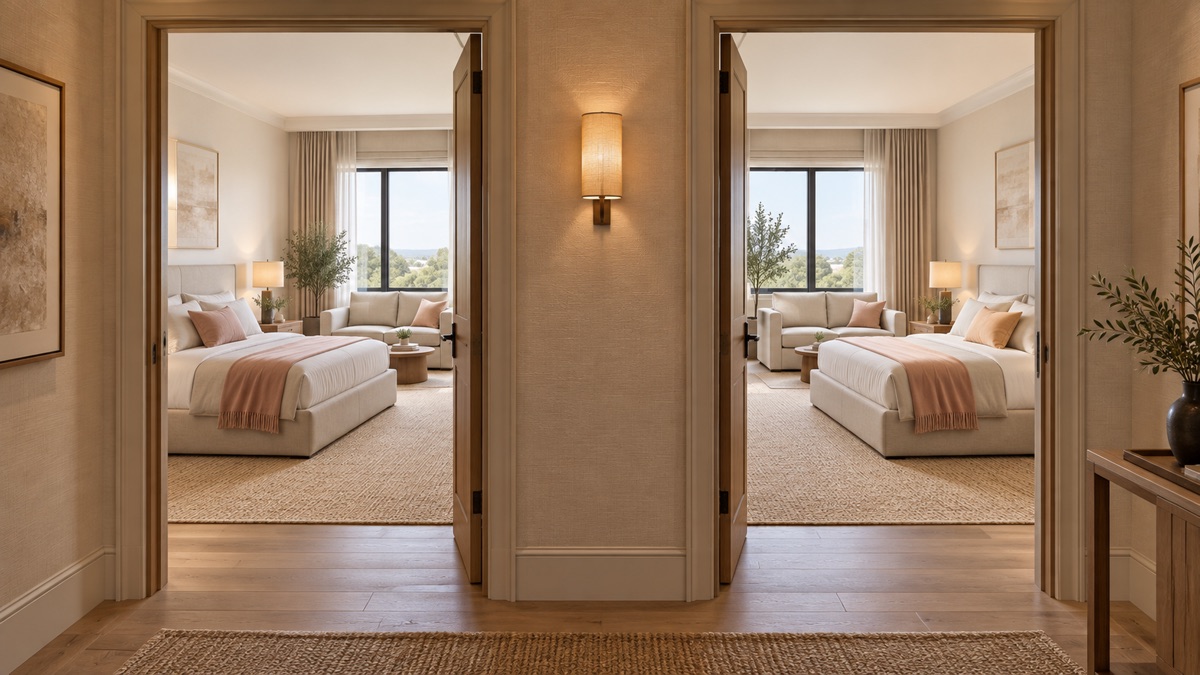
Twenty rooms of the same category should look the same. It's a basic guest expectation and a sign of the property's standard.
In practice, differences arise when furniture is made in different batches from different rolls of fabric. The shade may differ only slightly, but side by side it's noticeable.
So the whole volume for one room category is best ordered at the same time.
5. Bed and mattress — a set, not two purchases
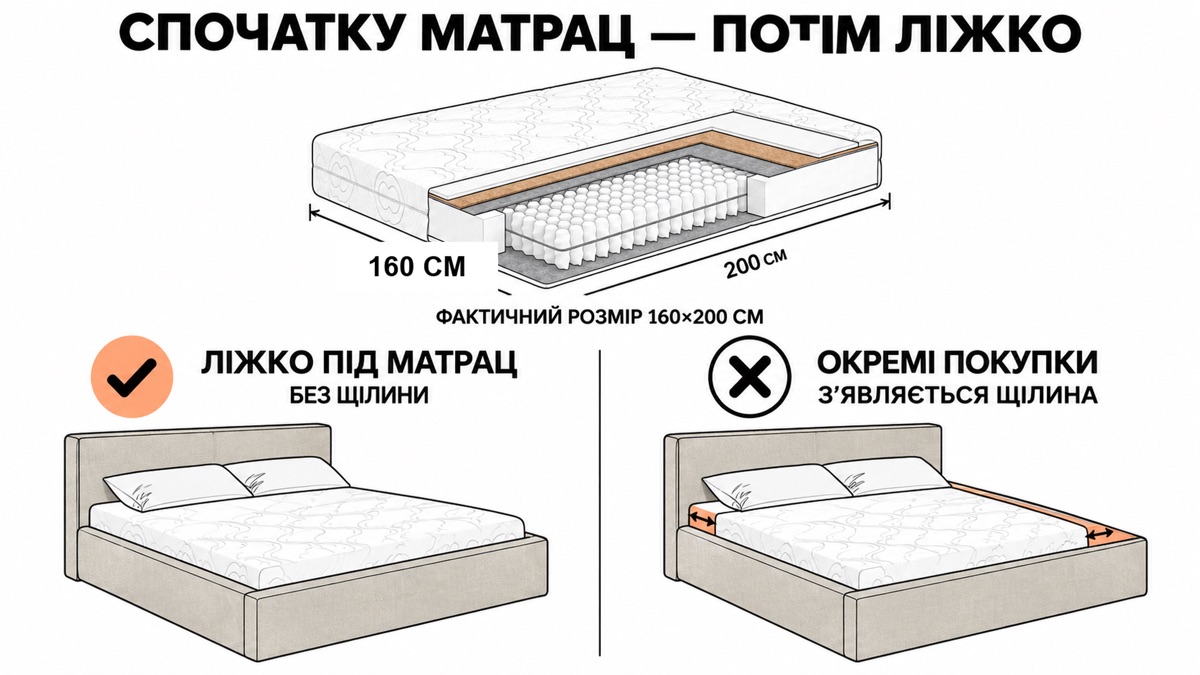
The most frequent guest complaint in new hotels isn't the firmness of the mattress but the gap between the mattress and the bed frame.
It appears when the bed and the mattress are bought separately, going by the nominal size. "A 160×200 bed" doesn't always mean the internal size of the sleeping area is exactly 160×200 too — it depends on the frame design.
The right order: first decide on the mattress, then order the bed to its actual dimensions. Or buy them as a set from one manufacturer.
6. Room dimensions matter more than the catalogue
A hotel room usually has no spare centimetres. Standard catalogue models often either don't fit or leave dead space.
This is a situation where making to size doesn't cost much more but gives a noticeably better result. Especially for small rooms and apartments with awkward geometry.
Separately: check not only the rooms themselves but also the delivery route — door widths, the turn in the corridor, the size of the service lift. For large items this is decisive.
7. Plan the schedule from the opening date, not the order date
Producing a batch isn't the same as buying in a shop. The lead time depends on the volume, and it has to be built into the overall launch schedule together with the renovation and installation.
Tell the supplier the opening date straight away. A good manufacturer will plan production around it and offer to split deliveries into stages if that's more convenient for installation.
In short
Fabric durability matters more than colour. Repeatable batches matter more than a discount. The bed is ordered to fit the mattress, not the other way round. And the whole volume for one room category — in one batch.
If you're at the planning stage, send us the number of rooms and the layout. We'll work out the specification and give you realistic lead times, even if you're still comparing suppliers.
Read also: how to order in batches and anti-vandal fabrics.
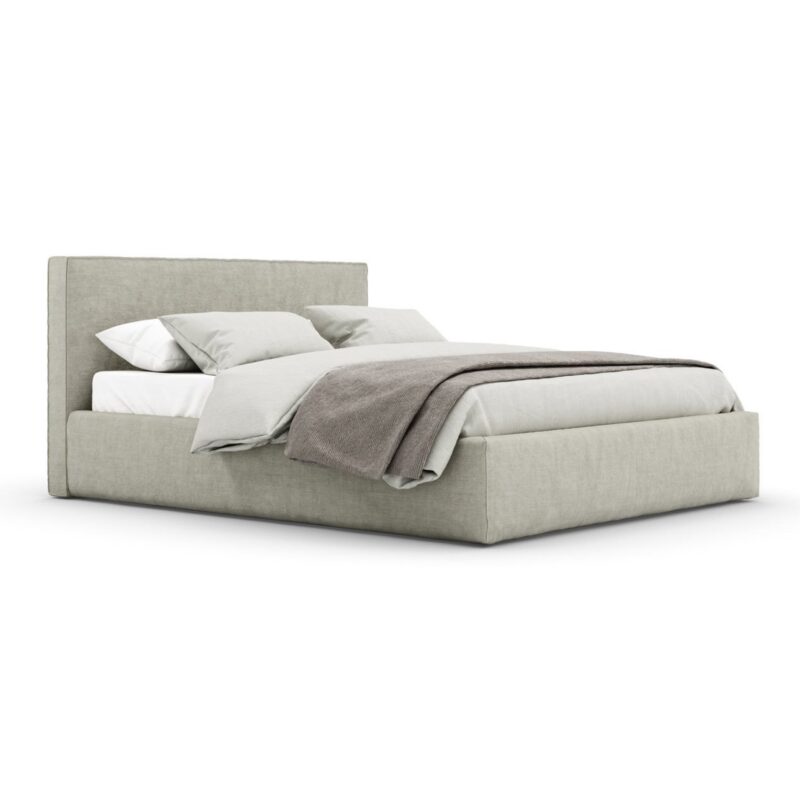
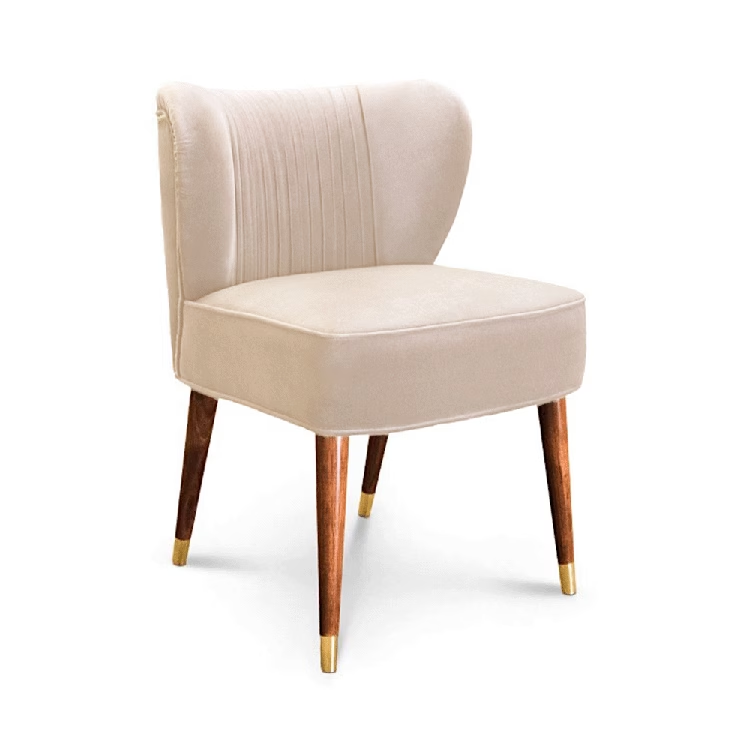
We furnish hotel rooms and public areas — from a few rooms to an entire property.
Hotel furniture →