

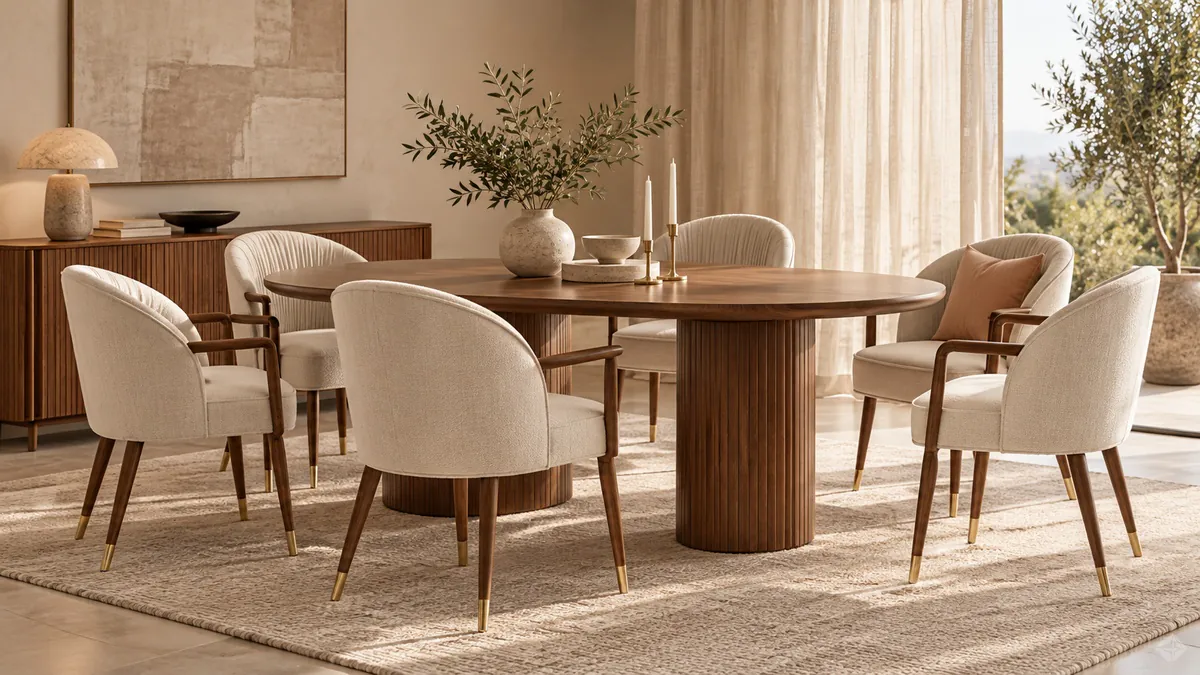
A chair with armrests looks more substantial, and it is more comfortable for lingering after dinner. But it is also the chair most likely to cause an unpleasant surprise: it arrives, and you can't push it up to the table because the armrests hit the tabletop.
Here is how to check this before you buy, and when armrests are really worth the space.
Short answer
Armrests make sense if people sit at the table for a long time and there is enough room: such a chair is wider (from 60 cm instead of 50) and can't be placed right next to its neighbour. And before you buy, be sure to measure the height to the underside of the apron: the top of the armrest should be at least 2 cm lower.
The main check: the apron, not the tabletop
The apron is the frame under the tabletop that joins the table legs. That is what the armrest hits, not the tabletop. On a standard 75 cm table the apron takes up 8–12 cm of height, so there is less free space under the table than it seems.
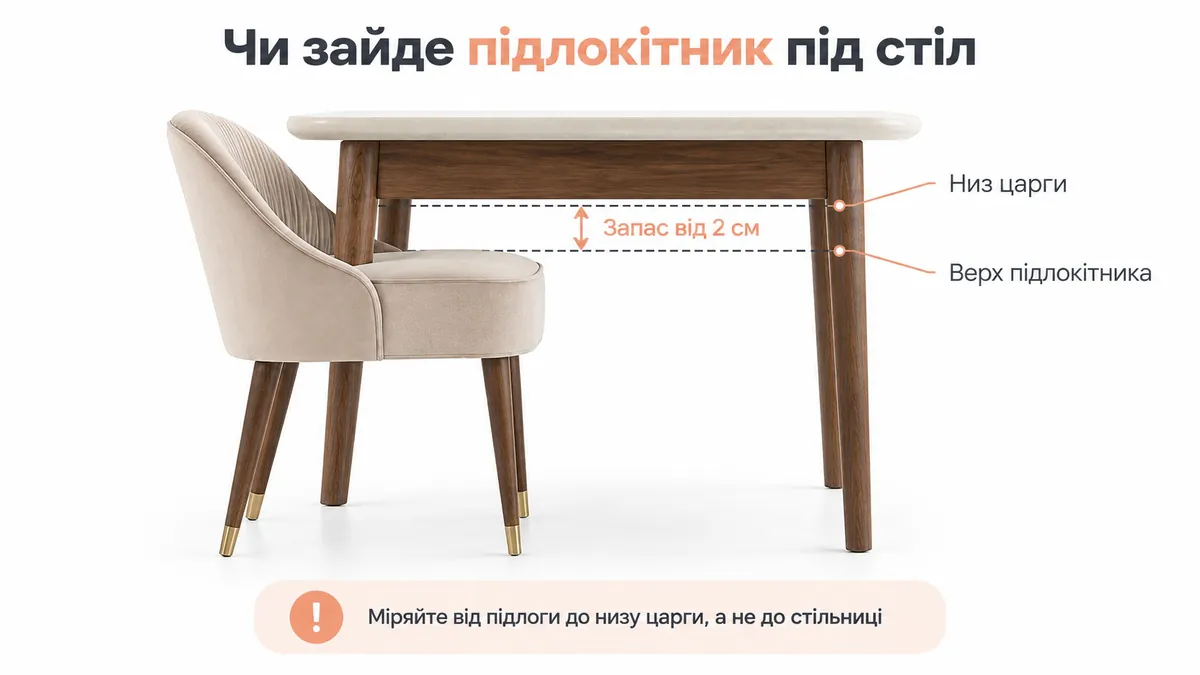
How to check:
- With a tape measure, from the floor to the underside of the apron where the chair will stand.
- On the chair's product page, find the armrest height from the floor. If it isn't listed, ask the manager.
- The armrest should be at least 2 cm lower than the apron. Otherwise the chair will stand away from the table, and your elbows will hang in the air.
If the table has no apron (the tabletop sits on a pedestal or on corner legs without a frame), measure to the underside of the tabletop; the rule is the same.
How much space armrests take up
The norm at a table is 60 cm of width per person. A chair without armrests takes up 50 cm or less of that, and neighbours share the elbow room. A chair with armrests is wider in itself, from 60 cm, and a gap is left between such chairs so people can get up without bumping their neighbour.
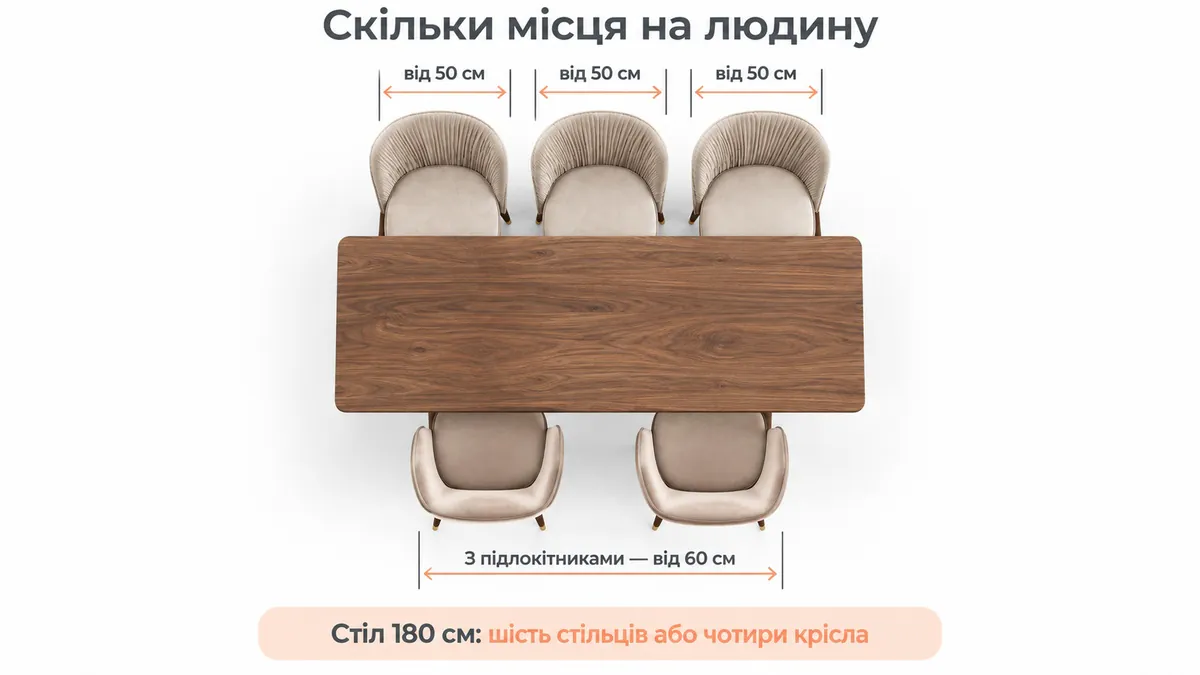
In practice, a 180 cm table seats six chairs without armrests (three on each side) or four with armrests. A detailed table for tables from 120 to 240 cm is in the article how many chairs will fit at your table.
When armrests are worth the space
- People sit at the table for a long time: dinners with guests, board games, working on a laptop. Your arms rest on the armrests and your shoulders relax.
- Older people find it easier to get up by pushing on the armrests.
- At the ends of the table: there is room there, and two chairs with armrests at the head of the table look like a feature, even if ordinary chairs stand along the sides.
When it is better without
- A small kitchen: chairs without armrests tuck fully under the table and the walkway stays clear.
- A table with a low or deep apron: the armrests simply won't go under.
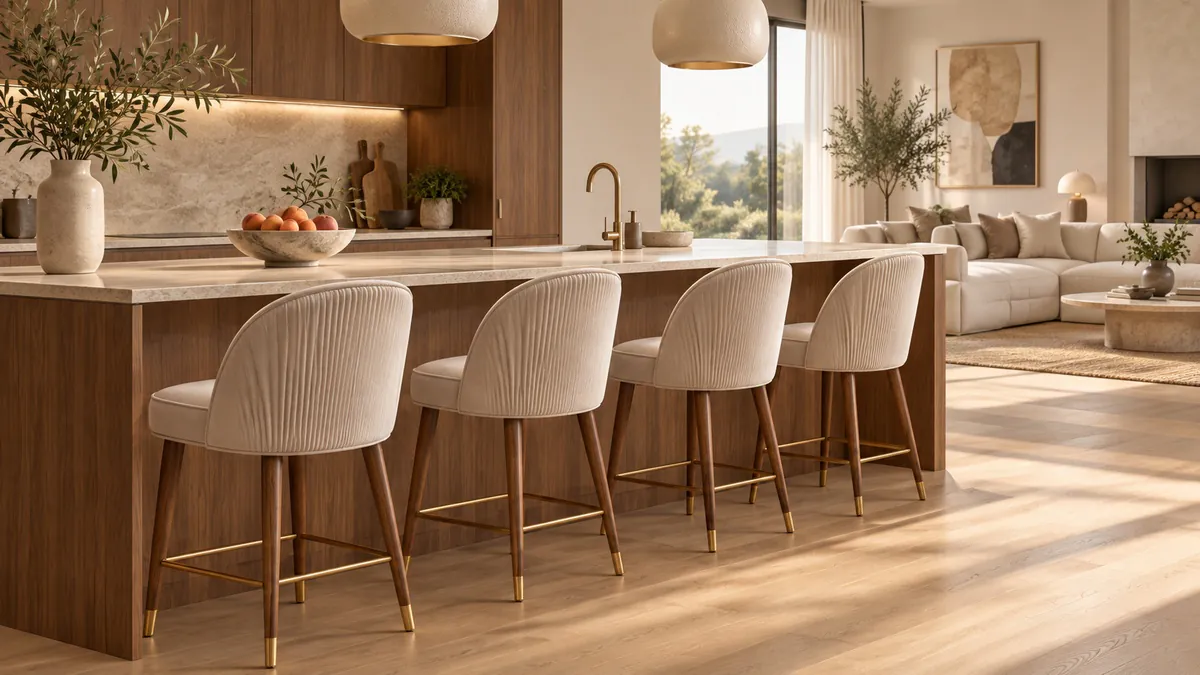
- A kitchen island or breakfast bar: people sit there briefly, and armrests make it hard to sit down from the side.
What MeBelle offers
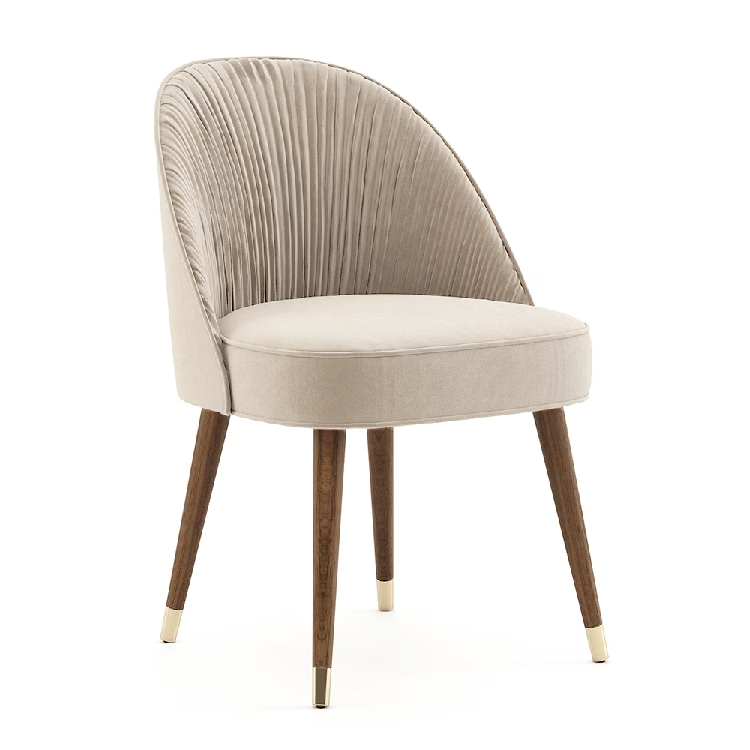
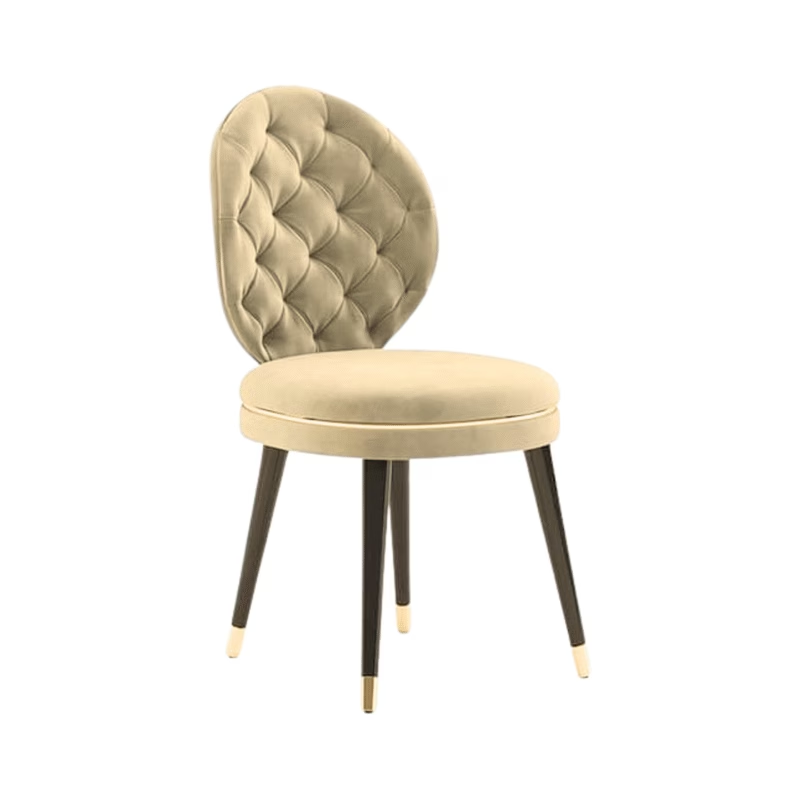
Most of our dining chairs have no armrests: they push right up to the table and can be placed closer together. Widths range from 48 cm on Dali to 60 cm on Sea.
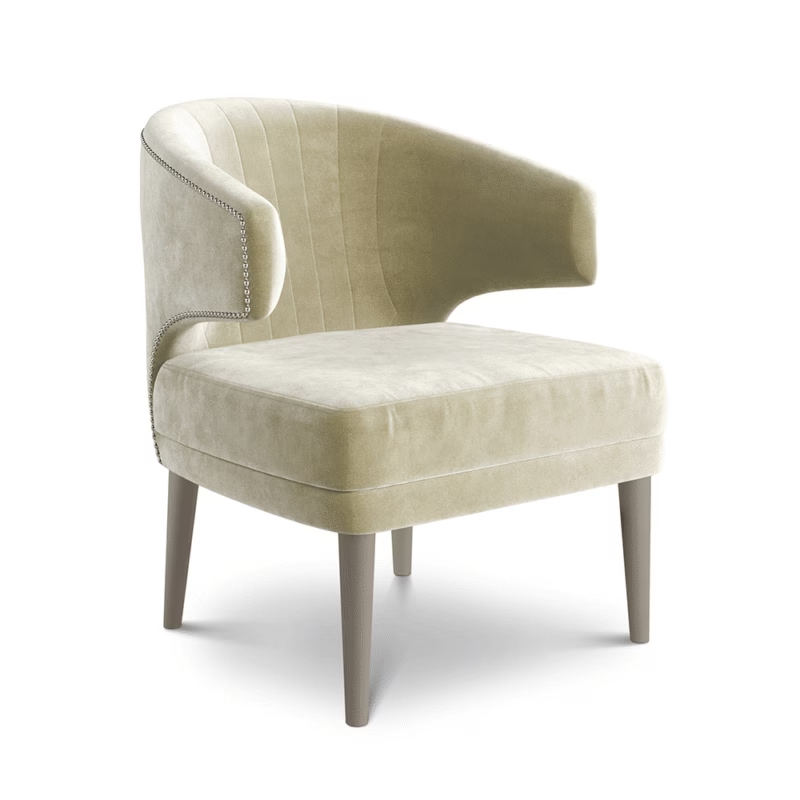
There is one chair with armrests in the range: Novial, 58 × 58 × 79 cm. Before ordering, send the manager the height to the underside of your table's apron, and they will check it against the armrest height.
If you need a place for long sitting away from the table, look at armchairs rather than chairs: they have different rules for depth and backrest height.
In brief
- The armrest hits the apron, not the tabletop: measure to its underside
- The top of the armrest should be at least 2 cm below the apron
- A chair without armrests is from 50 cm wide, with armrests from 60 cm
- A 180 cm table: six chairs, or four with armrests
- Small kitchen, island, low apron: better without armrests
MeBelle chairs for the living room and kitchen, with a choice of fabric.
Choose chairs →