

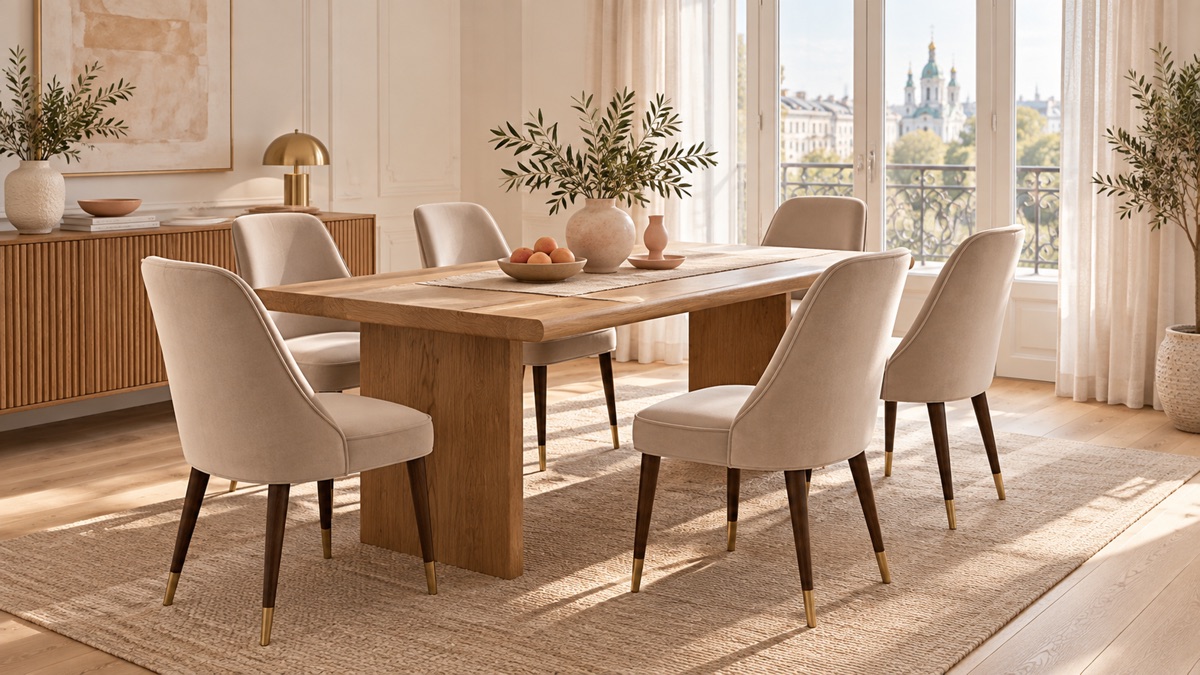
Chairs are usually bought by eye: four in a set, six if the family is bigger. And then it turns out that on special occasions the sixth seat exists only on paper: you can sit there, but you can't eat.
Let's do the maths honestly.
How much space one person needs
The norm is 60 cm of width per person at the table. This isn't the width of the chair but the width of the zone: plate, glass, elbows. Less and neighbours start elbowing each other; more and the table looks empty.
This is where the main confusion lies: chair width and place width are different figures. A 50 cm chair doesn't mean a person will be fine with 50 cm. But the chair width determines how many physically fit in a row.
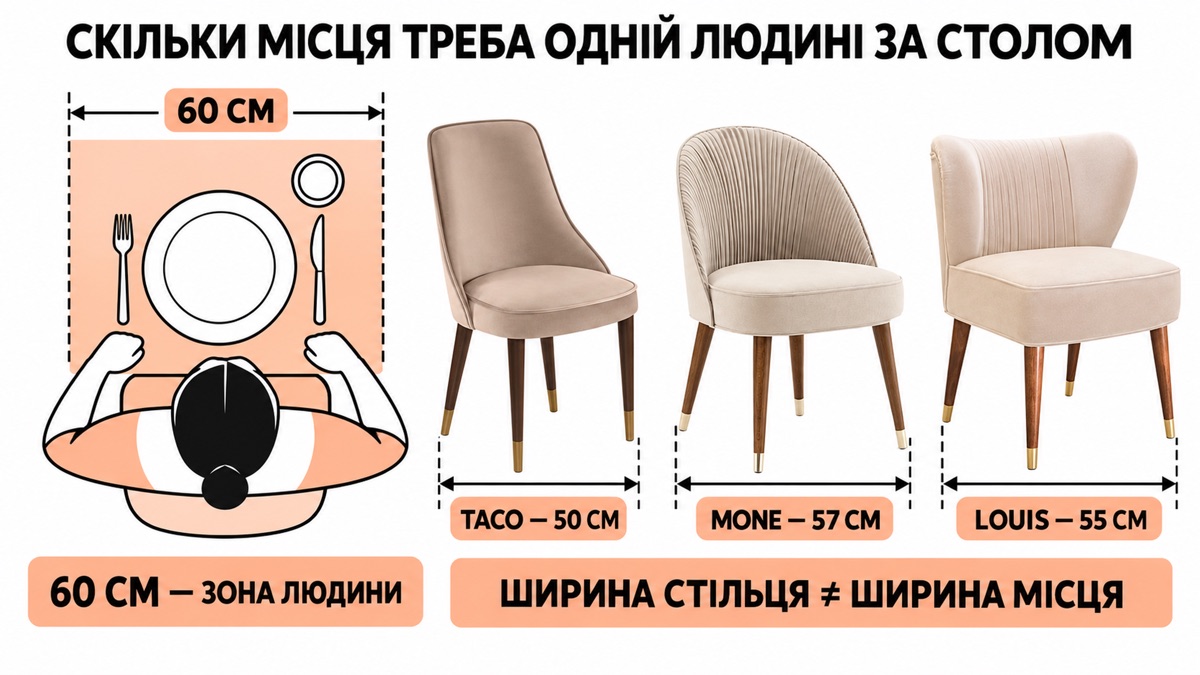
The width of our chairs
The difference is bigger than it seems: twelve centimetres between the narrowest and the widest:
- Dali: 48 cm (the narrowest)
- Taco: 50 cm
- Louis and Pourvie: 55 cm
- Muse: 56 cm
- Mone: 57 cm
- Novial: 58 cm (with armrests)
- Sea: 60 cm (the widest)
At a 160 cm table this makes a difference of one seat: three Dali chairs at 48 cm fit, while three Sea chairs at 60 cm are a squeeze.
Counting by table length
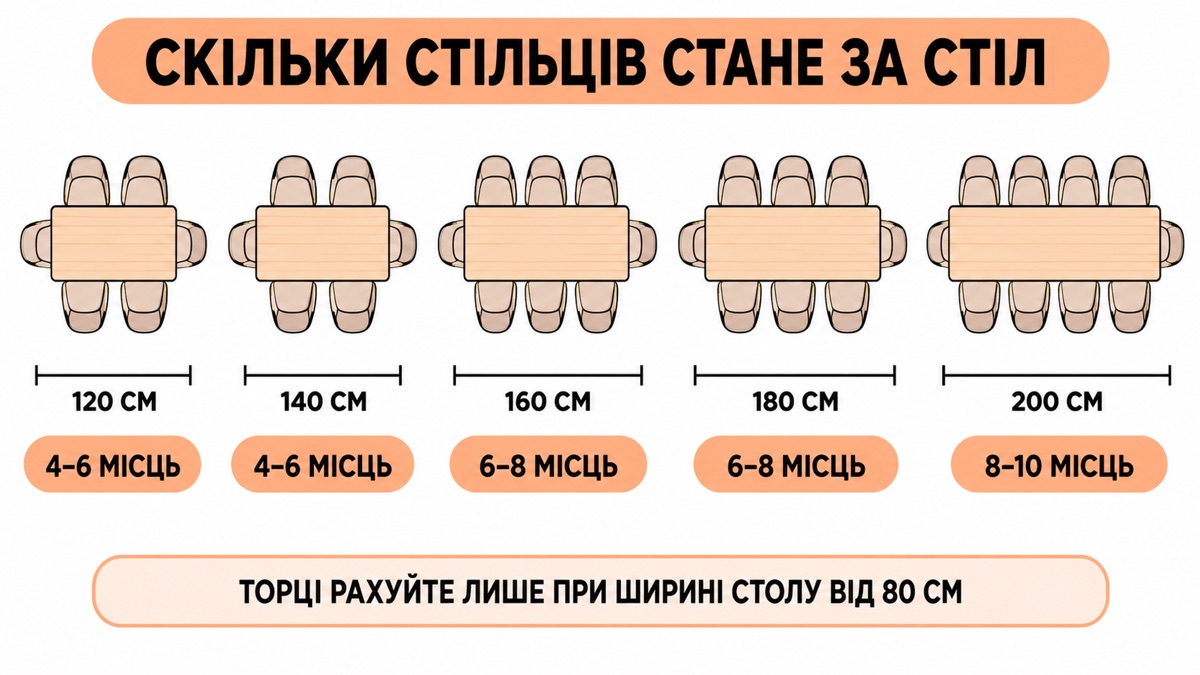
The formula is simple: table length ÷ chair width = how many fit on one side. Plus one at each end, if the table allows.
| Table length | Per side (48–50 cm chair) | Per side (56–60 cm chair) | Total with ends |
|---|---|---|---|
| 120 cm | 2 | 2 | 4–6 |
| 140 cm | 2 | 2 | 4–6 |
| 160 cm | 3 | 2 | 6–8 |
| 180 cm | 3 | 3 | 6–8 |
| 200 cm | 4 | 3 | 8–10 |
| 240 cm | 4 | 4 | 8–10 |
About the ends. To seat someone at the end, the table needs to be at least 80 cm wide; otherwise they will sit with their knees against the neighbours' chair legs. On a narrow 70 cm table, don't count the ends.
How much space you need behind a chair
The figure that ruins the best-laid plans.
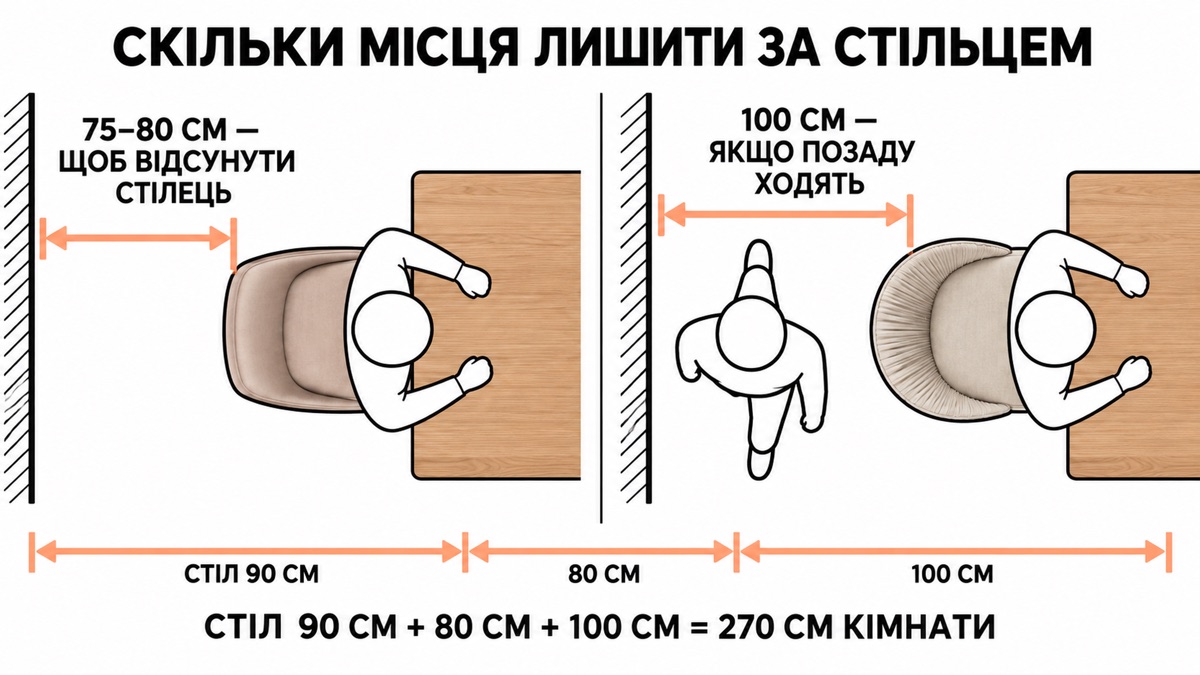
75–80 cm from the edge of the table to the wall. This is the distance you need to push the chair back and stand up. Any less and you have to climb out sideways.
100 cm if people walk behind the chair. In a walk-through dining room or a studio kitchen, someone needs to be able to pass behind a person who is sitting.
Add it up: a 90 cm wide table plus 80 cm on one side plus 100 cm on the other is 270 cm of room width for the dining area. This is often where it turns out the table needs to be smaller.
Three models for three different tasks
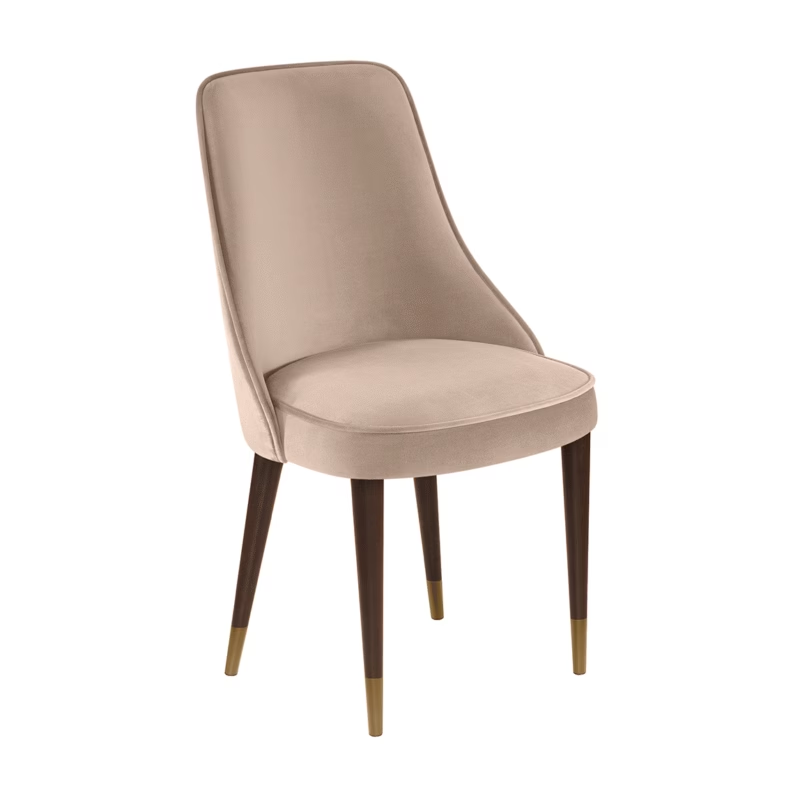
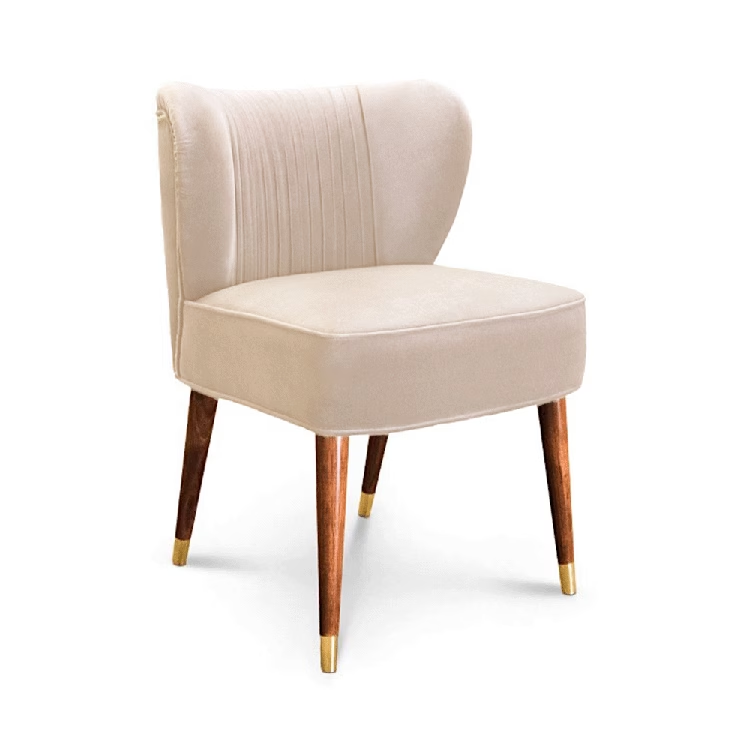
Taco (50 × 55 × 86 cm): when there are lots of guests. The narrow silhouette gives more seats at the same table. It is the choice for people who entertain regularly and count every centimetre.
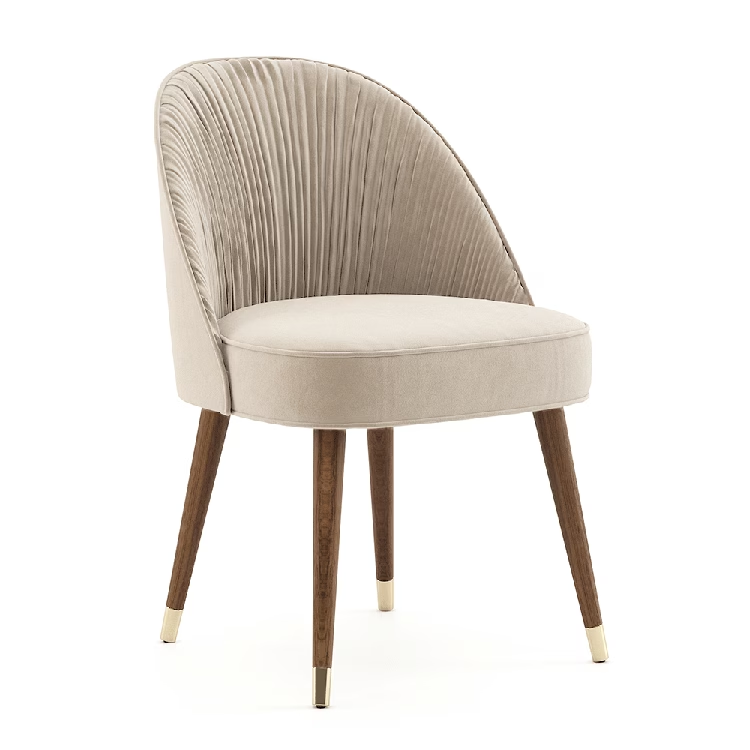
Pourvie (55 × 51 × 85 cm): the shallowest, at 51 cm. This matters not at the table but between meals: a chair pushed under the table sticks out less, and the walkway stays clear. In a studio kitchen you notice the difference every day.
Novial (58 × 58 × 79 cm): the only one with armrests. Among dining chairs this is rare. Armrests make long evenings noticeably more comfortable, but they eat up width: fewer of them fit at the same table. A compromise that makes sense if people sit at the table for hours, not twenty minutes.
Backrest height: not only about looks
Our range goes from 74 cm (Louis) to 100 cm (Muse).
Low backrest (74–81 cm): Louis, Mone, Novial, Sea. The chairs don't block the view, the table doesn't look fenced in, and the room feels more spacious. For a studio kitchen, where the dining area is visible from the living room, this is the right choice.
High backrest (85–100 cm): Pourvie, Taco, Dali, Muse. Creates a strong vertical rhythm and makes the dining set a feature. Plus real back support up to shoulder-blade level. The downside: in a small room, four high backrests read as a fence.
A practical rule. A studio kitchen up to 20 m²: low backrests. A separate dining room: whatever you like.
How many chairs to buy
The number of people who eat there every day, plus two. Not the maximum number of guests at New Year.
The reason is simple: spare chairs stand in the corners of the room 360 days a year and spoil it. For occasional big gatherings it is cheaper and smarter to have poufs: they don't look like surplus furniture because they have a function of their own. On sizes: pouf size: 40, 50 or 100 cm.
If the table is non-standard
We upholster chairs in the same fabric collections as sofas, so the dining area can be tied to the living room with one material. We also change dimensions to order: if you need a chair narrower than 48 cm for a particular table, our technologist will work it out.
And from a reference too: send the manager a photo of a model you liked elsewhere.
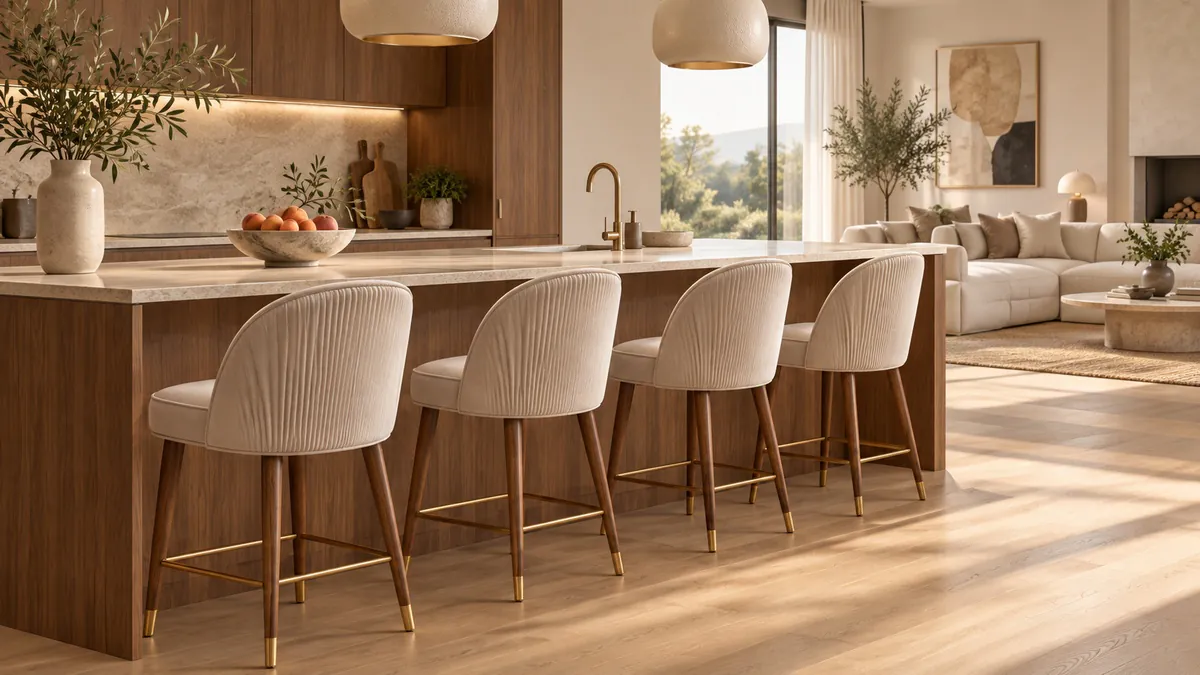
Read also: chair height for a 75 cm table, bar stool or counter stool for an island and café furniture in batches.
If you are thinking about chairs with armrests: when they won't fit under the table; on fabric for the kitchen: velour, basket-weave fabric or eco-leather.
In brief
- 60 cm of width per person is the norm for the zone, not the chair width
- Our chairs are 48–60 cm: at a 160 cm table that is a difference of one seat
- Behind a chair you need 75–80 cm to the wall, 100 cm if people walk there
- Count the ends only if the table is at least 80 cm wide
- Buy for everyday numbers plus two, not for special occasions
MeBelle chairs: 320 fabrics to choose from, made to order.
Choose chairs →