

"Designer armchair" appears in the description of almost any armchair priced above average. Because of that, it has stopped meaning anything.
Let's try to give it its meaning back: where a designer's work actually shows, and what is simply marketing.
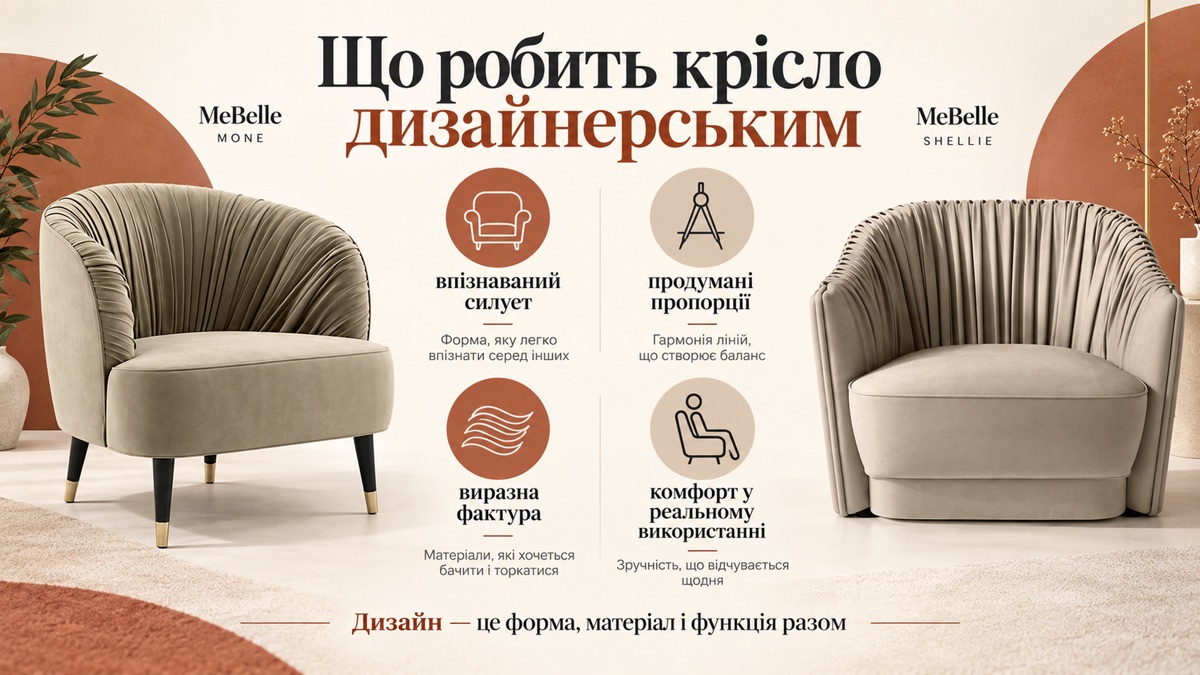
Three signs of a designer's work
The form follows the seating position, not the other way round
With an ordinary armchair, the silhouette is drawn first and a person is fitted into it afterwards. With a designer one it's the reverse: first they decide how a person will sit, and the form grows out of that.
It's easy to check. Sit down and don't adjust anything. If within a minute you want a cushion behind your lower back or to shift position, the form was drawn, not calculated.
The armchair looks finished from every side
An armchair rarely stands with its back to the wall — it's placed at an angle, in the middle of the room, next to the sofa. So the back is visible almost all the time.
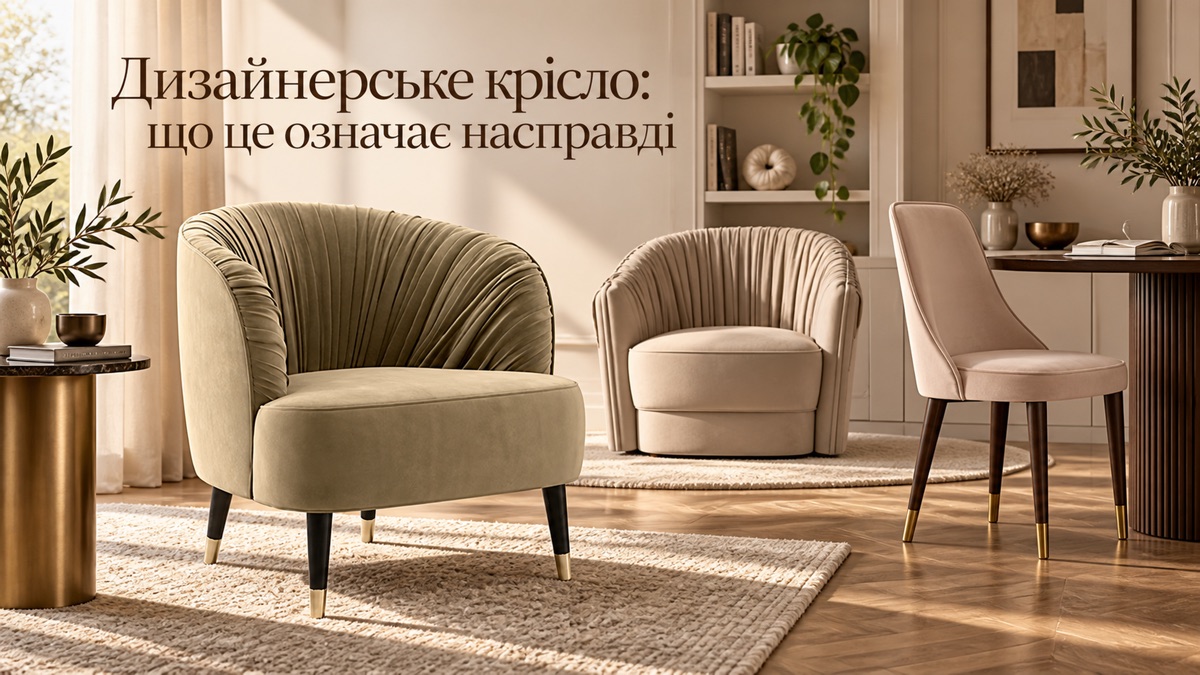
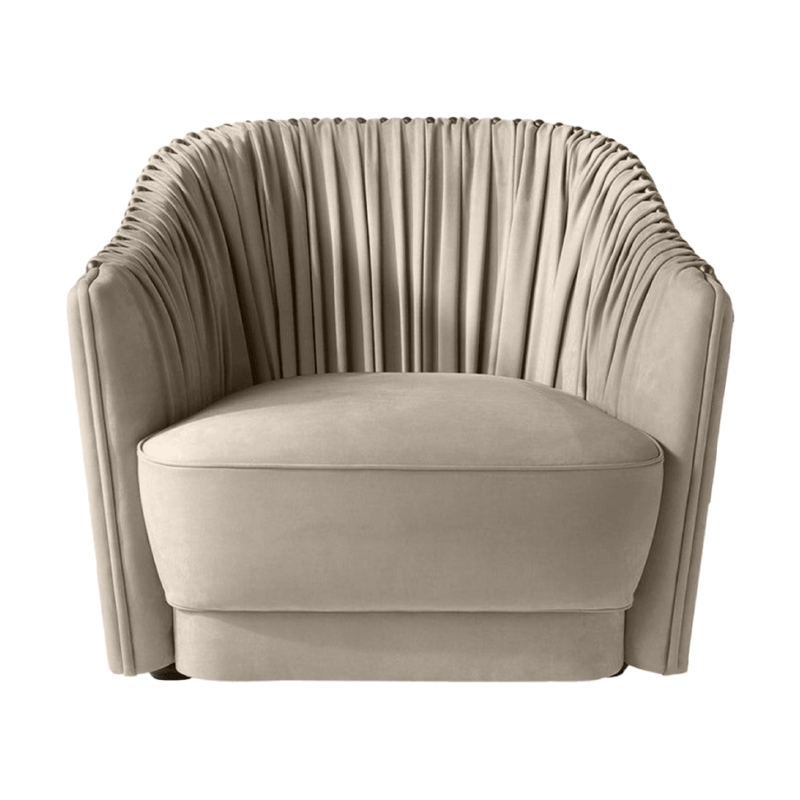
On cheap models the back is just a panel wrapped in fabric. On well-thought-out ones it has its own shape, seams and texture. This is the simplest way to tell them apart: walk around the armchair.
The legs are part of the idea, not just a stand
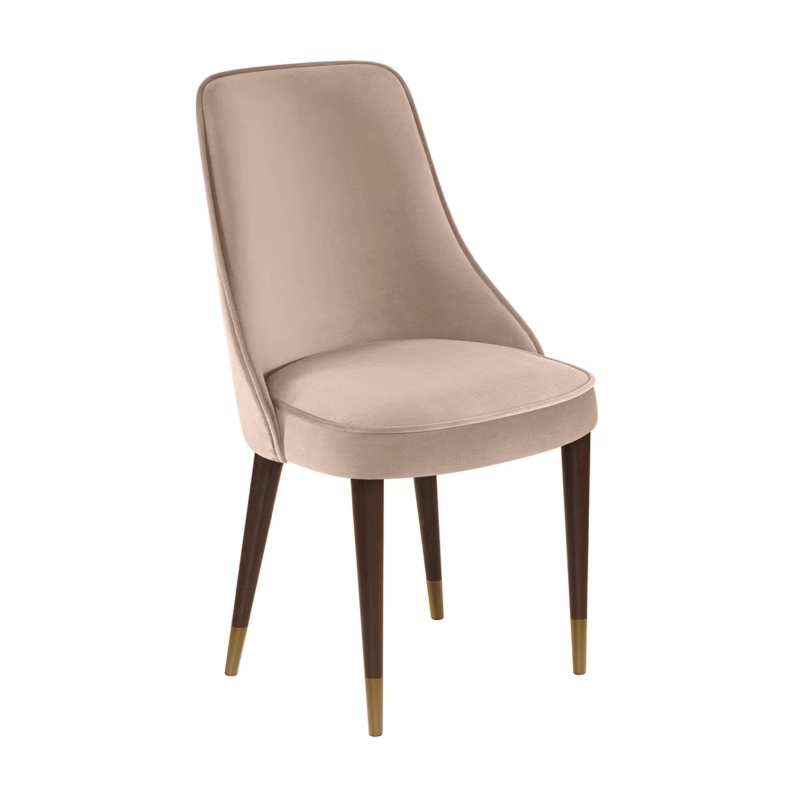
The legs of an armchair do two things at once: carry the weight and set the character. Thin metal legs make an armchair look light; wooden ones make it warmer; hidden plastic ones mean the designer wanted the supports out of sight altogether.
Our range has all three approaches: ash on Lavita, Mone and Novial, metal on Kamal, Only and Saarika, plastic on Shellie.
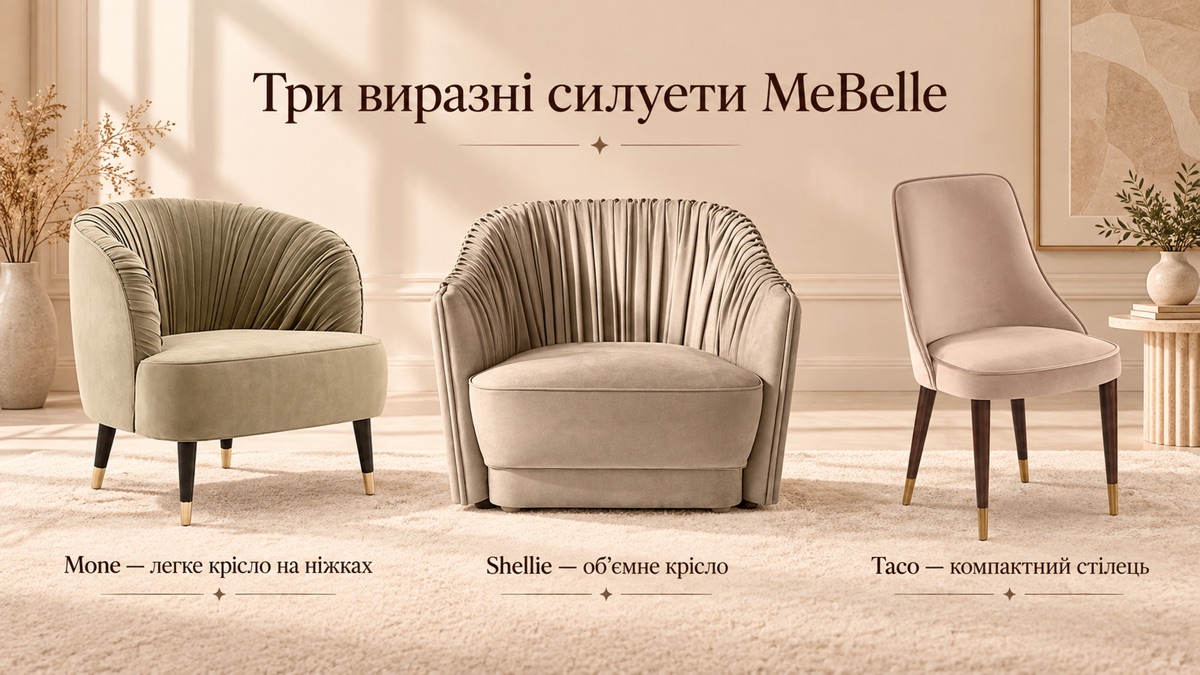
What isn't designer
An unusual colour. The fabric can be changed in ten minutes in the configurator — that's a feature of the order, not of the armchair.
A complex form in itself. An armchair can be fanciful and uncomfortable at the same time. Complexity without function is decoration, not design.
A high price. More often it tells you about the materials and the production run than about work on the form.
Dimensions: what to check before buying
An armchair takes up less space than a sofa, and that's exactly why it's often bought "by eye". Three figures worth checking:
- Width. Our range varies a lot: Only and Novial are 70 cm, while Sussex is 110 cm. A forty-centimetre difference is noticeable straight away in a small living room.
- Depth. Saarika is 67 cm, Kamal is 102 cm. A deep armchair is meant for sitting half-reclined; a shallow one for sitting upright, with a book or a cup.
- Backrest height. Kamal and Only are 70 cm, Lavita is 104 cm. A high backrest supports the neck; a low one keeps the space open and doesn't visually divide the room.
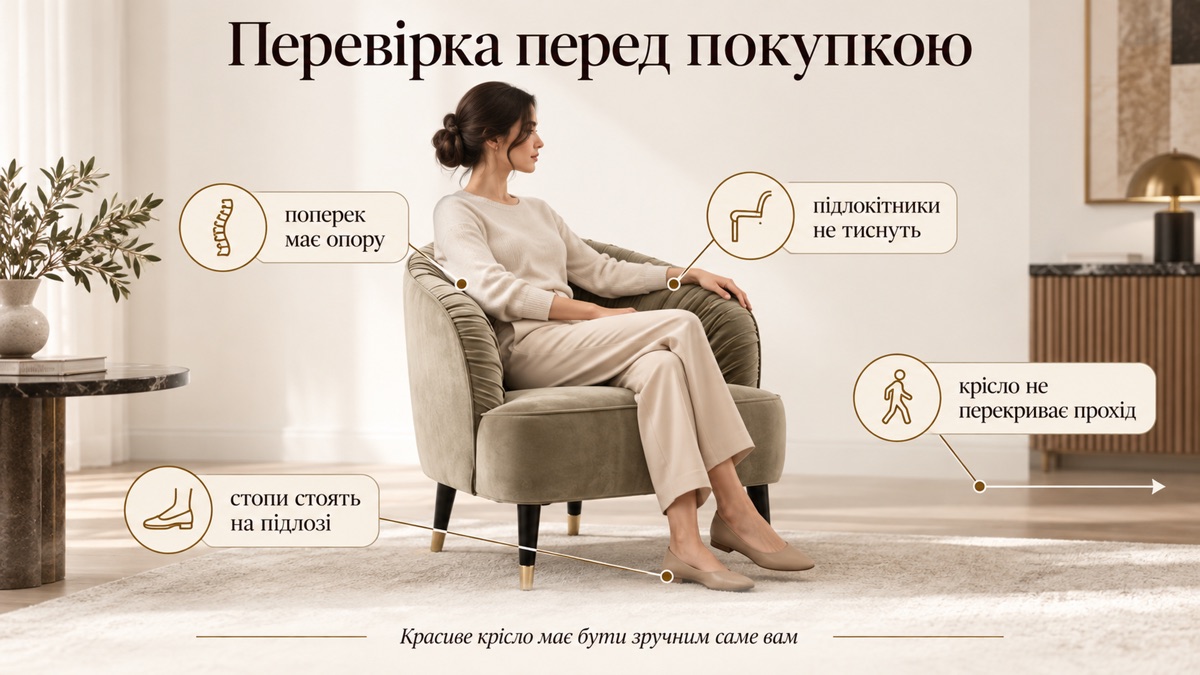
So a "designer armchair" isn't one form but a solution for a particular use. An armchair for reading and an armchair for talking with guests are different objects; how to choose one specifically for reading is covered separately in the article a reading armchair.
Armrests: a detail that decides a lot
Most of our models have them — Kamal, Lavita, Mone, Novial, Only, Saarika, Shellie. But it's more useful to know when you're better off without them.
Without armrests an armchair is easier to push under a table, takes up less space in a walkway and looks more compact. It's the choice for a small room or for an armchair at the dining table.
With armrests — if people sit in it for a long time. Without them your arms are either on your lap or hanging down, and after half an hour you notice it.
A word on frameless ones
A beanbag chair follows a different logic. It has neither form nor legs: it takes the shape of whoever sits in it. Ours are REST and AIR.
Comparing them with framed armchairs by the signs above makes no sense. They win elsewhere: in a kids' room, on a balcony, as an extra seat you can move with one hand.
An armchair to go with a sofa
The most common scenario is buying an armchair after the sofa. There's a rule here people usually learn too late: the armchair shouldn't be a scaled-down copy of the sofa.
The same fabric plus the same form gives the feel of a nineties furniture-shop suite. It looks livelier to have an armchair of a different form in the same fabric — or the same form in a contrasting colour, but not both at once.
Since our armchairs are upholstered from the same collections as our sofas, both options are available: you can take the exact shade of the sofa or deliberately go for contrast.
If you need an armchair that isn't in the catalogue
The dimensions of an armchair are a parameter just like the fabric. We change the width, depth and backrest height to order.
We also make armchairs from a reference. Send our manager a photo or a link to a model you liked elsewhere — our technologist will look at the construction and tell you what's feasible. It's the usual custom-order route, not a separate service.
Read also: how to choose an armchair and furniture trends.
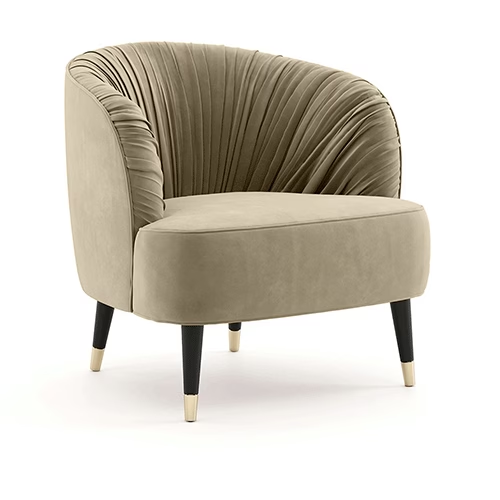
In short
- Walk around the armchair: the back is visible almost all the time
- Sit down and don't adjust anything — the form should hold you on its own
- Width across the range is 70 to 102 cm, depth 67 to 92 cm — check against your room
- Armrests are needed where people sit for a long time
- An armchair to match a sofa — the same fabric or the same form, but not both together
Designer armchairs made in Ukraine — with no mark-up for the name.
Armchairs →